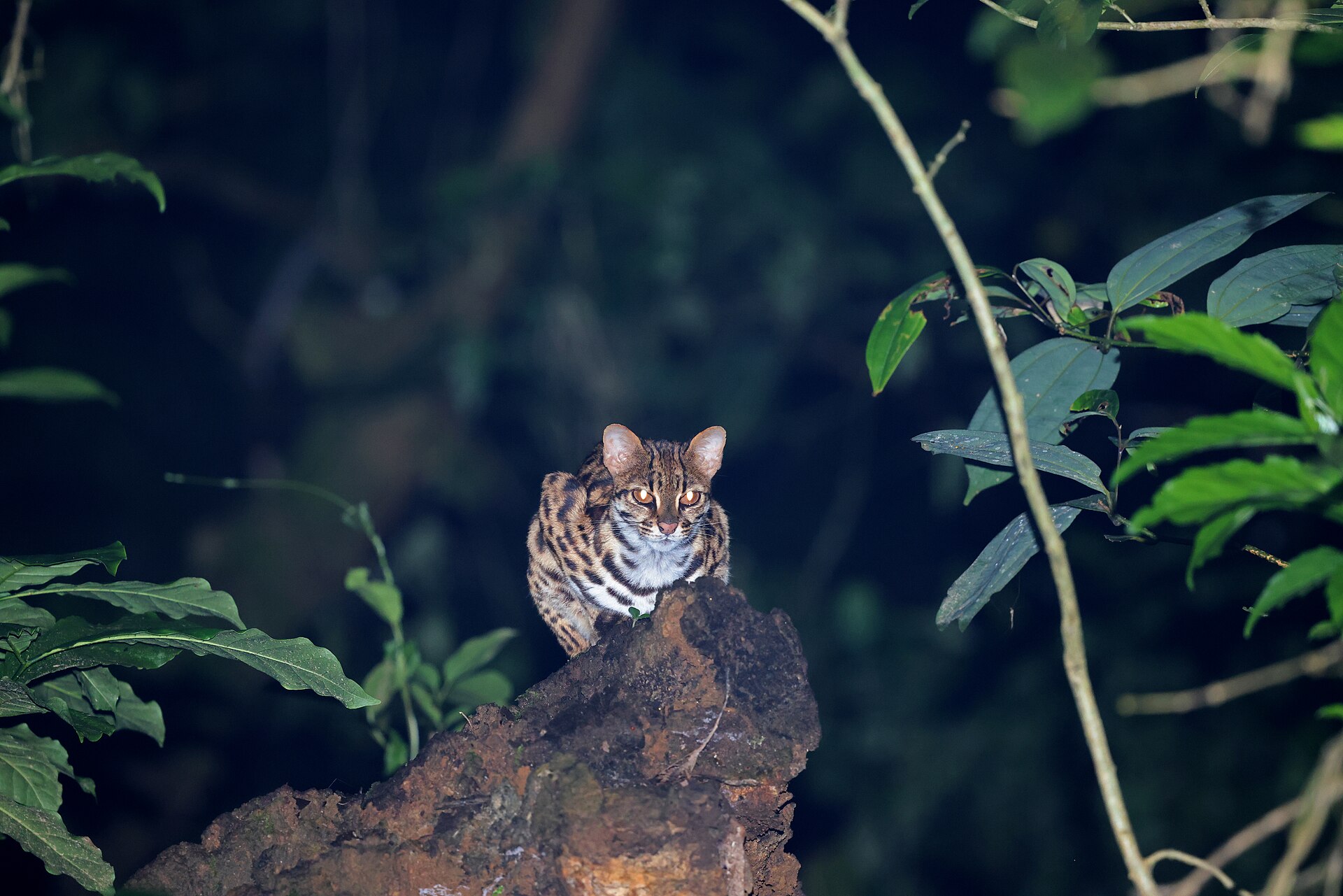
Leopard Cat
Prionailurus bengalensis
Characteristics
Temperament
Nocturnal, solitary, territorial and shy, hard to observe despite its wide distribution. Agile both on the ground and in trees and, unusual for a cat, a good swimmer. Highly adaptable: it lives from tropical forests to the cold northern countryside, up to the edges of farmland. It is the wild ancestor of the Bengal cat, but remains a true wild cat, not a pet, and handling or keeping it is strongly discouraged (and legally regulated).
Diet
A small carnivorous predator with a varied diet. The absolute staple: small mammals (rodents and shrews). It also eats birds and eggs, reptiles and amphibians, fish (caught thanks to its ease with water) and insects. It hunts mainly by night, by ambush, moving nimbly both on the ground and among branches and entering water when needed. In farmland it controls rodents, a useful role that exposes it to poisons and dangers. Its flexible diet is the key to its success in very different habitats.
The Leopard Cat (Prionailurus bengalensis) is Asia's most widespread small wild cat, looking like a house cat dressed as a little leopard. Famous for:
- The spotted coat: a ground colour from fulvous to grey, covered in black spots and rosettes, giving it a "miniature leopard" look
- The Bengal cat's ancestor: it is the wild species from which, crossed with the domestic cat, the famous Bengal breed was created
- Wide distribution: the small wild cat with the largest range in Asia, from India to the Russian Far East
- A love of water: unlike many cats, it is a good swimmer
- Climbing ability: agile in trees, where it hunts and shelters
- An ancient history with people: in China it lived alongside farmers thousands of years ago
IUCN status: Least Concern (LC) overall, thanks to its wide distribution, though some isolated (island) populations are gravely threatened. With it, this portal sets beside the Serval → Savannah cross another famous link between a wild cat and the house cat: that between the leopard cat and the Bengal.
Classification and category
Order Carnivora, family Felidae, genus Prionailurus — that of the small spotted Asian cats, the same as the fishing cat (Prionailurus viverrinus), already in this portal. Not to be confused with: the Bengal cat (a DOMESTIC breed derived from the leopard cat crossed with the house cat, not a wild animal); the leopard (Panthera pardus) and the clouded leopard (big cats, distant relatives, sharing only the spotted pattern); and other small spotted New World cats (such as the Ocelot and Margay), of a different genus. There are several subspecies over a huge range; some scholars now split the mainland leopard cat (Prionailurus bengalensis) from the Sunda one (Prionailurus javanensis). Among the best-known and most threatened populations are the Iriomote cat and the Tsushima leopard cat, in Japan. Etymology: "Prionailurus" is from Greek, rendered roughly as "saw cat" (perhaps for dental features); "bengalensis" denotes Bengal, for India, part of its range. Parameters: Body 38-66 cm. Tail 17-31 cm. Weight 0.6-7 kg (highly variable: northern individuals are much larger than tropical ones). Longevity about 10-15 years (up to ~20 in captivity). Reproduction: the female usually bears 2-3 young, raised in a hidden den; in cold regions breeding is seasonal, in tropical ones it can occur year-round.
Habitat and distribution
The Leopard Cat has the largest range of any small Asian cat: much of Asia — from the Indian subcontinent and Southeast Asia, through China and the Korean Peninsula, to the Russian Far East; also present on many islands (the Philippines, Java, Borneo, Sumatra, Japan). Preferred habitats — very varied, often near water: tropical, subtropical and temperate forests (its prime habitat); scrub, bushland and forest edges; farmland and plantations (such as oil palm), where it can hunt rodents; and the vicinity of rivers and wetlands (it likes being near water). Its extraordinary adaptability — to hot and cold climates, to natural and modified environments — explains the enormous range. It is nocturnal and solitary, territorial, and moves nimbly both on the ground and in trees. In northern regions it grows a thicker coat and a larger size to cope with the cold. IUCN: Least Concern at species level. However, some isolated populations are endangered (for example the Iriomote cat and the Tsushima leopard cat in Japan), threatened by habitat loss, road mortality and hybridization with domestic cats.
Diet
The Leopard Cat is a small carnivorous predator with a varied diet. It eats: small mammals (rodents and shrews, the absolute staple); birds and their eggs; reptiles and amphibians; fish (caught by exploiting its ease with water); and insects and other invertebrates. Hunting strategies: nocturnal ambush (it hunts mainly by night, using excellent sight and hearing to surprise prey); three-dimensional hunting (it moves nimbly both on the ground and among branches, and when needed enters water to catch fish and amphibians); and rodent control (in farmland it usefully checks mice, though this exposes it to poisons and conflict). Crucially, it is precisely the flexible diet — based on rodents but able to exploit fish, birds and invertebrates — that lets the leopard cat thrive in environments as different as tropical forests and the cold northern countryside.
Physical features
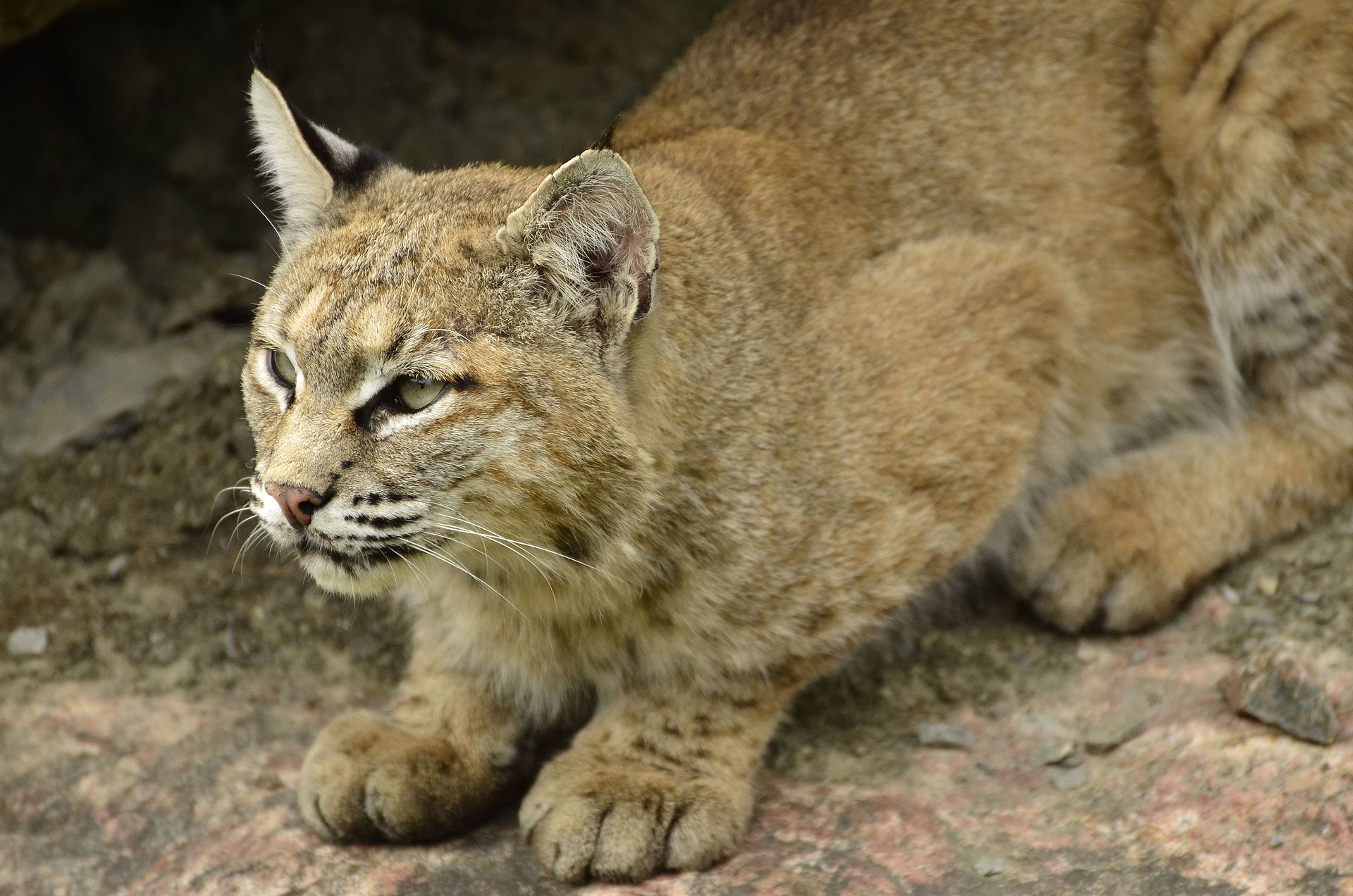
The Leopard Cat resembles a slim house cat with a "wild" coat. Coat: a variable ground colour — fulvous-yellowish in southern populations, greyer in northern ones; covered in black spots and rosettes, with a spotted white belly; two dark stripes running from the eyes and a white muzzle; rounded ears with a pale spot on the back. The body: a slender, lithe build, with relatively long legs; a small head with large eyes, suited to night vision; a medium-length tail, dark-ringed; and, in northern populations, a thicker coat and larger size. Performance: agile climbing (excellent in trees, where it hunts and shelters); swimming (unusual for a cat, it readily enters water); acute senses (a nocturnal hunter's sight and hearing); and a quick dash and jump (agile and fast over short distances).
Behaviour and curiosities
The Leopard Cat is a nocturnal, solitary, territorial animal, shy and hard to observe despite its wide distribution. Each individual defends a territory, and encounters are limited to the breeding season. Its adaptability leads it to live even at the edges of farmland, where, however, it comes into contact with humans, their cats and their dangers.
The Bengal's ancestor: the leopard cat is the "wild grandfather" of one of the most beloved and spectacular domestic breeds, the Bengal cat — by crossing the leopard cat with domestic cats, breeders created a breed with a conspicuously spotted coat recalling its wild ancestor's, but with a character suited to home life; it is a link parallel to that between the Serval and the Savannah cat: two wild cats that, through crossing, became the founders of exotic domestic breeds. The cat that swims: contrary to the cliché that cats are enemies of water, the leopard cat is a good swimmer and is not afraid to dive in; often living near rivers and wetlands, it uses this ability to catch fish and amphibians and to move about — a trait it shares with its more "aquatic" relative, the fishing cat. Asia's most widespread "little leopard": though roughly the size of a house cat, the leopard cat is the small wild cat with the widest distribution of the entire Asian continent, living from the scorching tropical forests of Southeast Asia to the snows of the Russian Far East — a versatility few cats can boast, reflected also in the marked differences in size and colour between populations. The Chinese near-domestication: a fascinating archaeological discovery concerns the leopard cat (or a very close relative) — at some Neolithic sites in China, dating to about 5,000 years ago, remains of small cats living alongside farmers, drawn by granary rodents, have been found; they were leopard cats, a sign of an ancient attempt at human-feline coexistence, independent of the domestication of the common cat (which descends instead from the African wildcat) and which, however, did not last. Endangered islands: while the species as a whole is common, some of its isolated populations are among the rarest, most threatened cats in the world — such as the Iriomote cat and the Tsushima leopard cat in Japan: small populations confined to single islands, reduced to a few hundred individuals and at high risk of extinction from habitat loss, road traffic and domestic-cat diseases; their protection is a priority of Japanese conservation. Double the size: few cat species show size variability like the leopard cat — individuals from the southern tropics may weigh little more than half a kilo or a kilo, while those of the cold north, larger and thick-coated, can exceed 6-7 kg; an example of the "rule" that, in many species, animals of cold climates tend to be larger, to conserve heat better.
Pros
- Piccolo felino selvatico più diffuso d'Asia, molto adattabile
- Antenato del gatto Bengala: legame educativo con la razza domestica
- Utile predatore di roditori; insolito tra i gatti, sa nuotare
- IUCN Least Concern come specie
Cons
- Non è un animale da compagnia (felino selvatico; detenzione regolata)
- Alcune popolazioni insulari (Iriomote, Tsushima) sono in pericolo
- Minacciato da perdita di habitat, investimenti e ibridazione coi gatti domestici
- Spesso confuso con il gatto Bengala domestico