Photo: Wikimedia Commons · CC BY-SA 3.0
Blackthorn
Prunus spinosa
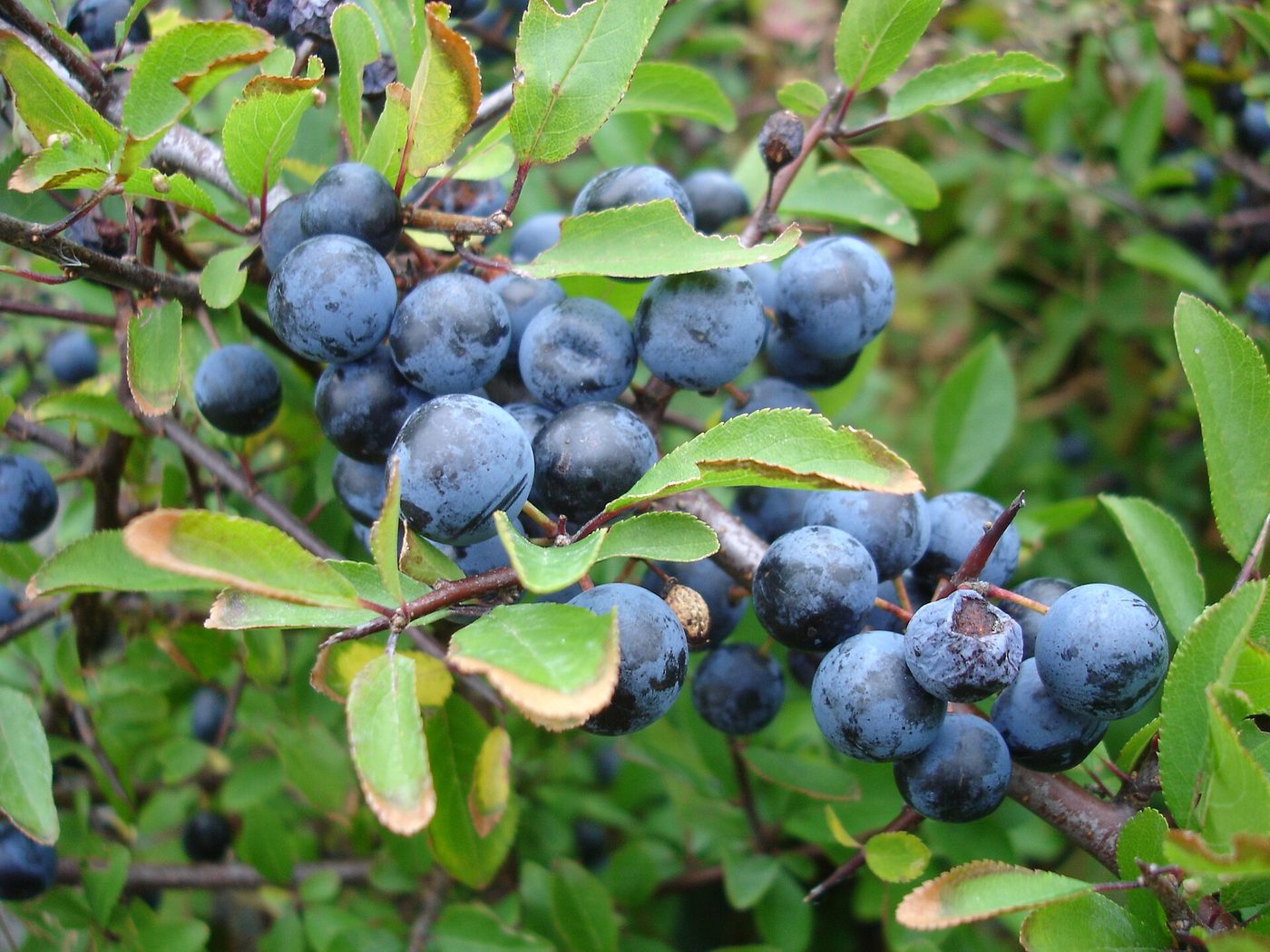
Blackthorn is a thorny shrub that covers itself in a cloud of white flowers in spring and produces small blue-black drupes, sloes, in autumn.
Characteristics
Description
Blackthorn is a wild shrub of the rose family, usually 1 to 4 metres tall. It is much branched and covered with stout thorns, with dark, almost black bark on the older stems, hence its name. In spring, before the leaves appear, it covers itself in a cloud of small white flowers. In autumn it produces small spherical drupes, blue-black and bloomed with a waxy coating, called sloes.
Habitat and distribution
It is native to Europe and western Asia, where it grows at woodland edges, in hedgerows, on waste ground and on sunny slopes. It is a pioneer species, quickly colonising abandoned land thanks to its many root suckers.
Cultivation and uses
It is a hardy, frugal shrub, much used to create defensive hedges: its dense thorns make it almost impenetrable. It wants full sun and adapts to almost any soil. The sloes, very sour and astringent when picked raw, become milder after the first frosts and are traditionally used to make liqueurs, syrups and preserves.
- Plant as a hedge for natural barriers and windbreaks
- Harvest the sloes after the first frosts
- Control the suckers to stop it spreading too far
Value for wildlife
Blackthorn is invaluable for biodiversity: the early flowers feed bees and insects in late winter, the dense thorns offer safe refuge to nesting birds, and the fruits are food for many animals. It is also a food plant for the caterpillars of several butterflies and moths.
Flowering season
Practical tips
Water needs: Low once established — always check soil moisture before watering.
Prefers Full sun: provide the right light and rotate the plant for even growth.
Recommended soil: Adaptable, including chalky and clay. Refresh the substrate every 1-2 years.
Dust the leaves with a damp cloth to support photosynthesis.
Feed during the growing season (spring-summer) and stop in winter.
Pros
- Early white flowering, valuable for pollinators
- Excellent for impenetrable defensive hedges
- Fruit useful for liqueurs and preserves
Cons
- Stout thorns, to be handled with care
- Strongly suckering, can become invasive
- Raw fruit sour and astringent