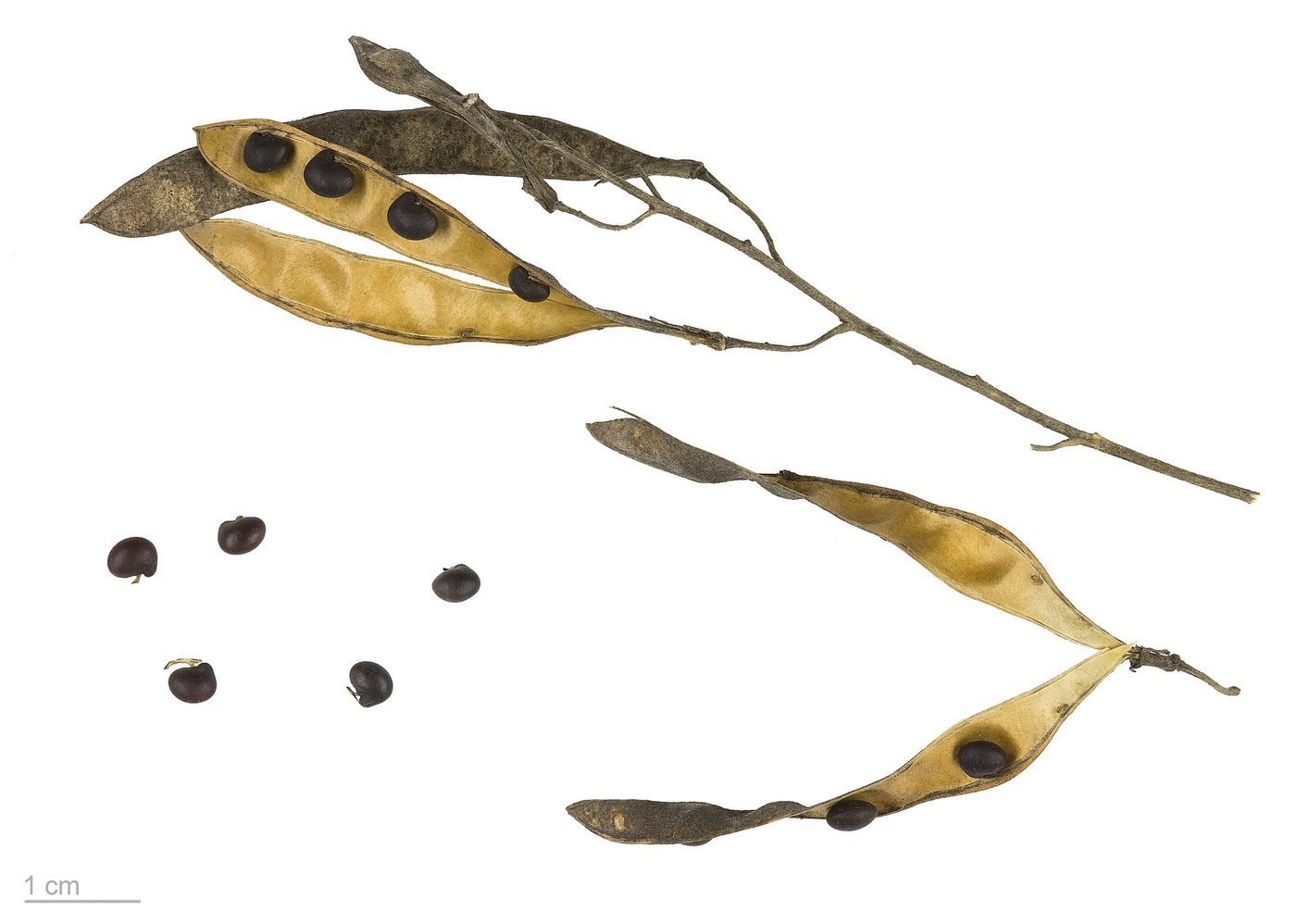
Photo: Roger Culos · CC BY-SA 3.0
Common laburnum
Laburnum anagyroides
The common laburnum is a small ornamental tree that in May is covered with spectacular hanging clusters of yellow flowers, but is highly poisonous.
Characteristics
Description
The common laburnum is a small deciduous tree or shrub of the legume family, growing up to 7 metres tall. It owes its common name "golden chain" to the long hanging clusters of golden-yellow flowers that dangle from the branches in May like golden cascades. The leaves are made up of three leaflets, typical of the legumes. After flowering it produces pods containing dark seeds.
Habitat and distribution
It is native to central and southern Europe, where it grows wild in open woodland and on hill and mountain slopes, often on limestone soils. It is also widely planted as an ornamental in gardens and avenues.
Cultivation
It is a hardy, easy-to-grow tree, ideal for small gardens. It prefers full sun or part shade and a well-drained soil, even poor and calcareous. It tolerates cold well. When young it should be watered regularly, while as an adult it tolerates drought.
Warning: a highly toxic plant
All parts of the laburnum, and especially the seeds, contain cytisine, a highly toxic alkaloid. Ingestion, particularly of the seeds in the pods, can cause serious poisoning. It should be grown with great care where there are children and pets.
Did you know?
Its hard, dark wood was once used as a substitute for ebony, hence folk names like "false ebony". The flowers are much visited by bees. It is often used to create spectacular flowering arches.
Flowering season
Practical tips
Water needs: Moderate — always check soil moisture before watering.
Prefers Full sun or part shade: provide the right light and rotate the plant for even growth.
Recommended soil: Well-drained, even calcareous and poor. Refresh the substrate every 1-2 years.
Dust the leaves with a damp cloth to support photosynthesis.
Feed during the growing season (spring-summer) and stop in winter.
Pros
- Spectacular hanging yellow flower clusters
- Hardy and easy, suited to small gardens
- Flowers much loved by bees
Cons
- All parts highly toxic, seeds included
- Not advisable where there are children and pets
- Short flowering, concentrated in May–June