Photo: ZSM · CC BY-SA 4.0
Desert rose
Adenium obesum
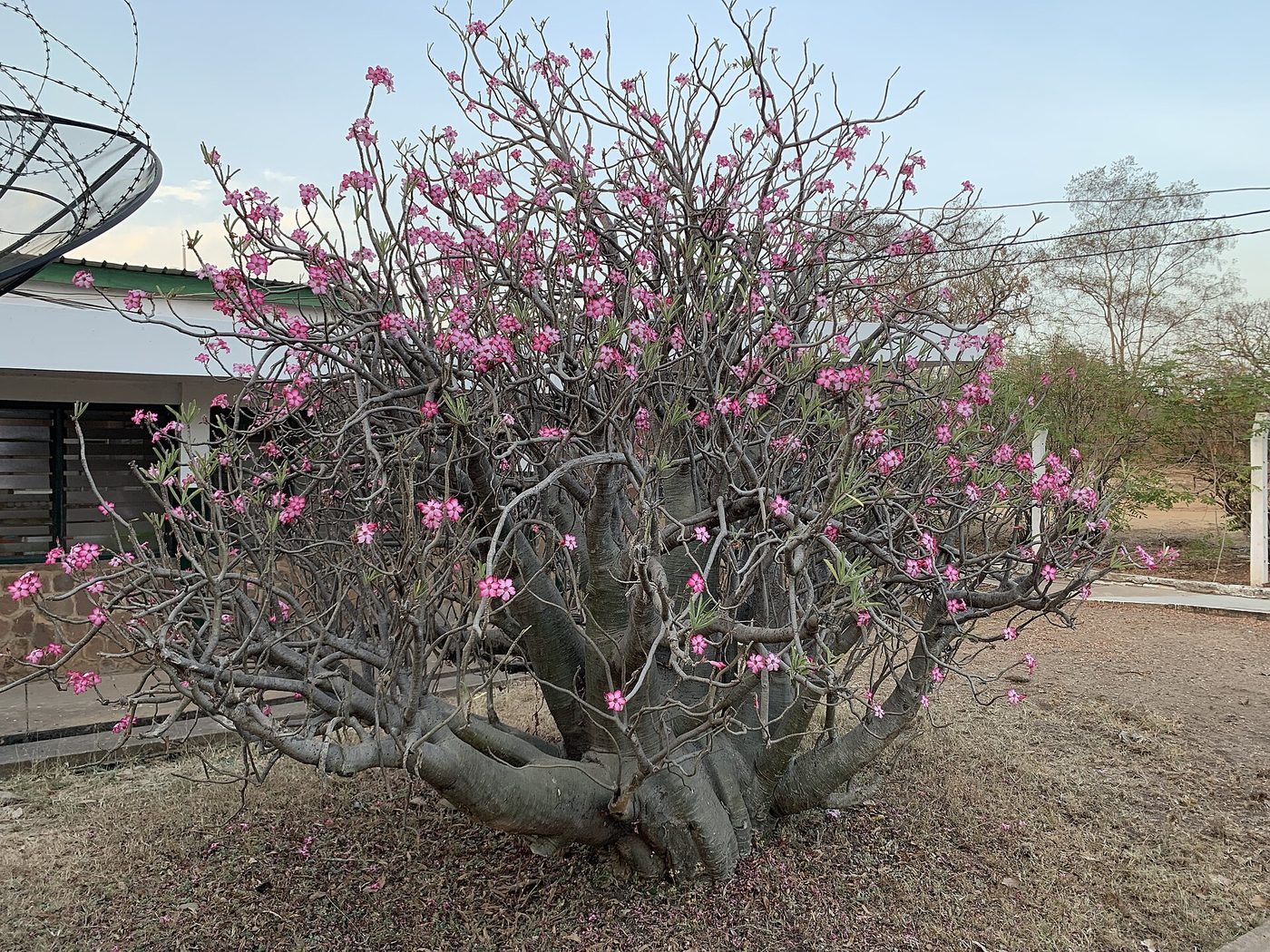
The desert rose is a succulent with a swollen bottle-like trunk and showy flowers, hugely popular as a houseplant and for bonsai.
Characteristics
The succulent with a bottle trunk
The desert rose is a caudiciform plant with a distinctive swollen base — the caudex — that stores water and gives it a sculptural, almost natural-bonsai look. From the fleshy branches sprout glossy leaves and, above all, large funnel-shaped flowers in shades of pink, red and white that earned it its name. It belongs to the Apocynaceae, the same family as the oleander.
Habitat and range
It is native to the arid Sahel regions south of the Sahara, to tropical and subtropical eastern and southern Africa, and to the Arabian Peninsula. It grows wild in stony, sun-baked ground, adapted to long droughts thanks to the water reserves in its caudex.
Cultivation
It loves full sun and dreads cold and waterlogging. Grow it in a very free-draining succulent mix, water it sparingly while letting the soil dry out well, and keep it away from temperatures below 10–12 °C. In winter it goes dormant and should be kept almost dry. It is often trained as a bonsai to show off the shape of the caudex.
Warning: a toxic plant
All parts of the plant, especially the sap, contain highly poisonous cardiac glycosides. Handle it with gloves and keep it away from children and pets. In Africa the sap has historically been used to poison the tips of hunting arrows.
Care
With plenty of light, little water and a well-drained pot, the desert rose is long-lived and generous in bloom, mainly from spring to autumn. A light prune after flowering encourages a more compact crown.
Flowering season
Practical tips
Water needs: Low, soil well dried out between waterings — always check soil moisture before watering.
Prefers Full sun, many hours of direct light: provide the right light and rotate the plant for even growth.
Recommended soil: Very free-draining, mineral cactus/succulent mix. Refresh the substrate every 1-2 years.
Dust the leaves with a damp cloth to support photosynthesis.
Feed during the growing season (spring-summer) and stop in winter.
Pros
- Sculptural caudex, perfect for bonsai
- Abundant, colourful flowering
- Very drought-resistant
Cons
- All parts are poisonous
- Does not tolerate cold or waterlogging