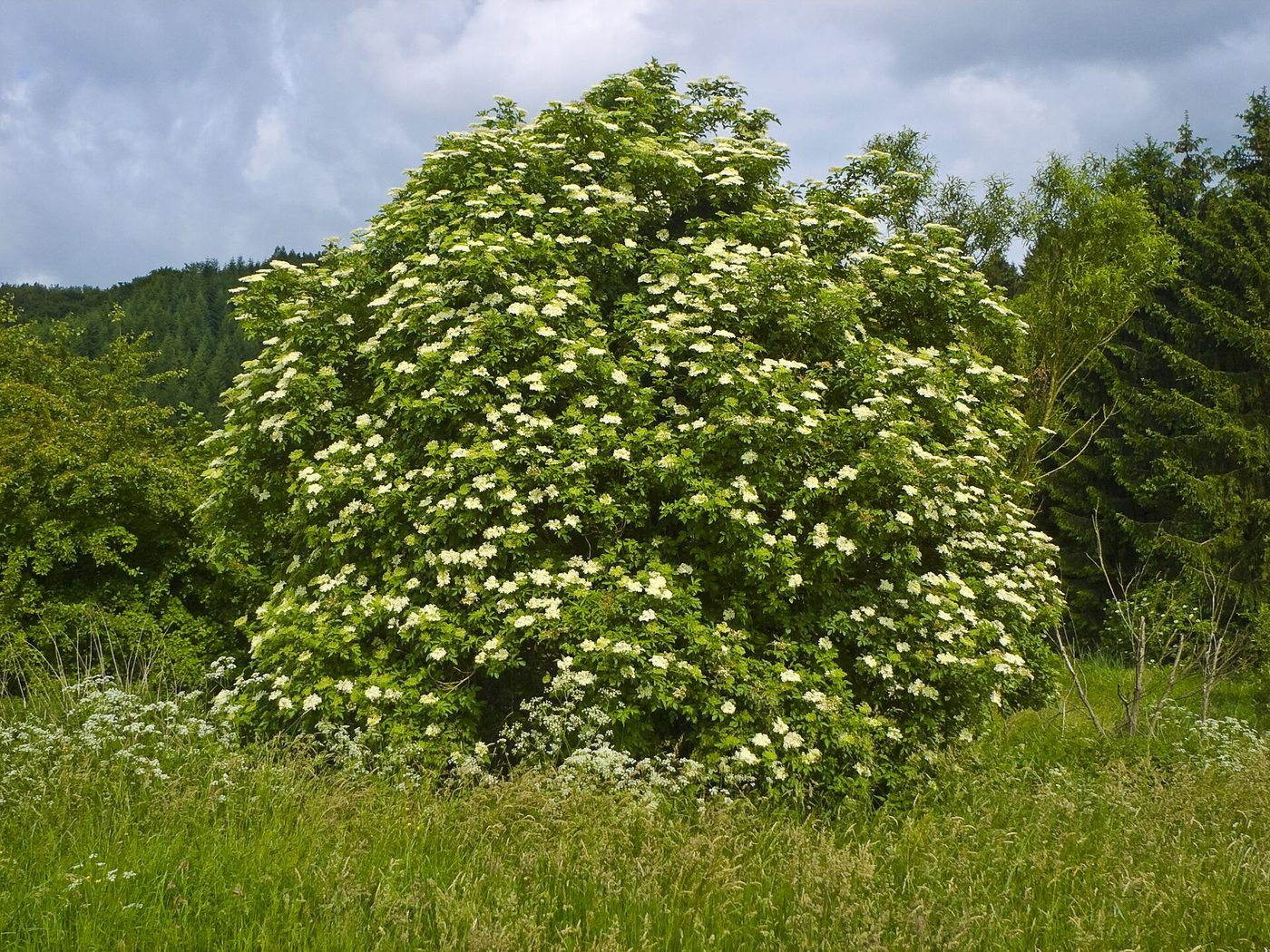
Elder
Sambucus nigra
Elder is a shrub or small tree with large umbels of fragrant white flowers and black berries, used in cooking and folk tradition.
Characteristics
Description
Elder is a fast-growing deciduous shrub or small tree, up to 7 metres tall or more. It has stems with a spongy pith, compound leaves and, between May and June, large flat umbels of tiny cream-white, very fragrant flowers. In late summer it produces hanging clusters of small, glossy blackish-purple berries.
Habitat and distribution
It is widespread in Europe, western Asia and North Africa. It grows wild at woodland edges, in hedgerows, on waste ground and near settlements, favouring fertile, nitrogen-rich soils. It is a pioneer plant, very common near dwellings.
Uses in cooking and tradition
It has been a valued culinary plant for centuries: the flowers are used to make cordials, refreshing drinks and fritters, while the berries, cooked, go into cakes, jellies, juices and jams. Importantly, flowers and berries should always be eaten cooked or processed. The raw berries and green parts contain substances that can cause nausea and stomach upset, which are destroyed by cooking.
- Gather the flowers in early summer, the berries in late summer
- Eat flowers and berries only after cooking
- Prune in late winter to control its vigorous growth
Value for wildlife
Elder is invaluable for biodiversity: the flowers attract great numbers of pollinating insects, while the ripe berries are an important autumn food for very many birds. In European folk tradition it is surrounded by numerous legends and medicinal uses.
Flowering season
Practical tips
Water needs: Moderate — always check soil moisture before watering.
Prefers Full sun or part shade: provide the right light and rotate the plant for even growth.
Recommended soil: Fertile, cool, nitrogen-rich. Refresh the substrate every 1-2 years.
Dust the leaves with a damp cloth to support photosynthesis.
Feed during the growing season (spring-summer) and stop in winter.
Pros
- Flowers and berries used in cooking and tradition
- Invaluable for bees, insects and birds
- Hardy and fast-growing, easy to grow
Cons
- Raw berries and green parts toxic
- Vigorous growth, needs pruning
- Can become weedy on rich soils