Photo: Mx. Granger · CC0
Yellow pitcher plant
Sarracenia flava
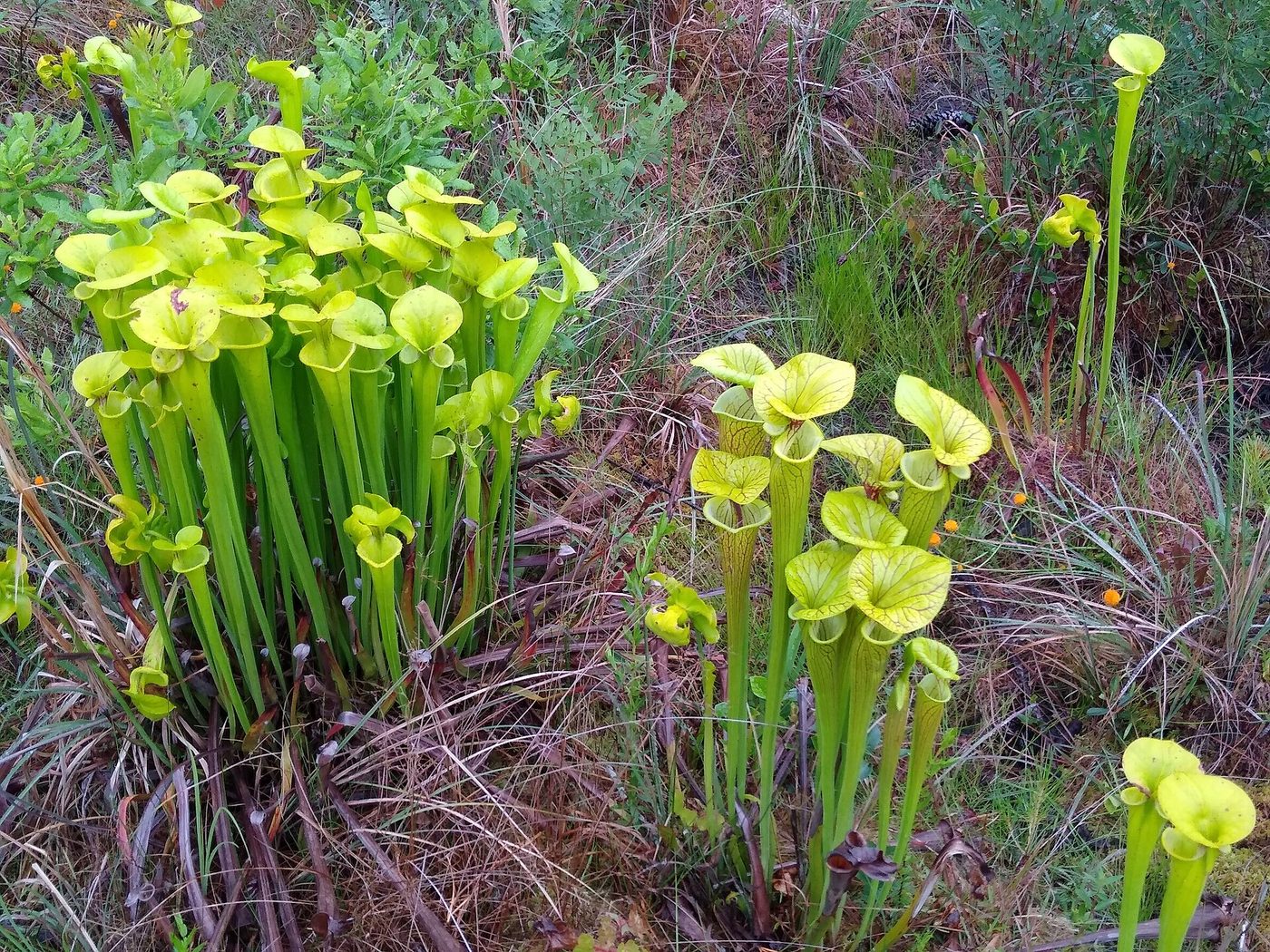
A carnivorous plant of the south-eastern United States, the yellow pitcher plant forms tall upright yellow-green trumpets that lure and trap insects with nectar.
Characteristics
A carnivore shaped like a trumpet
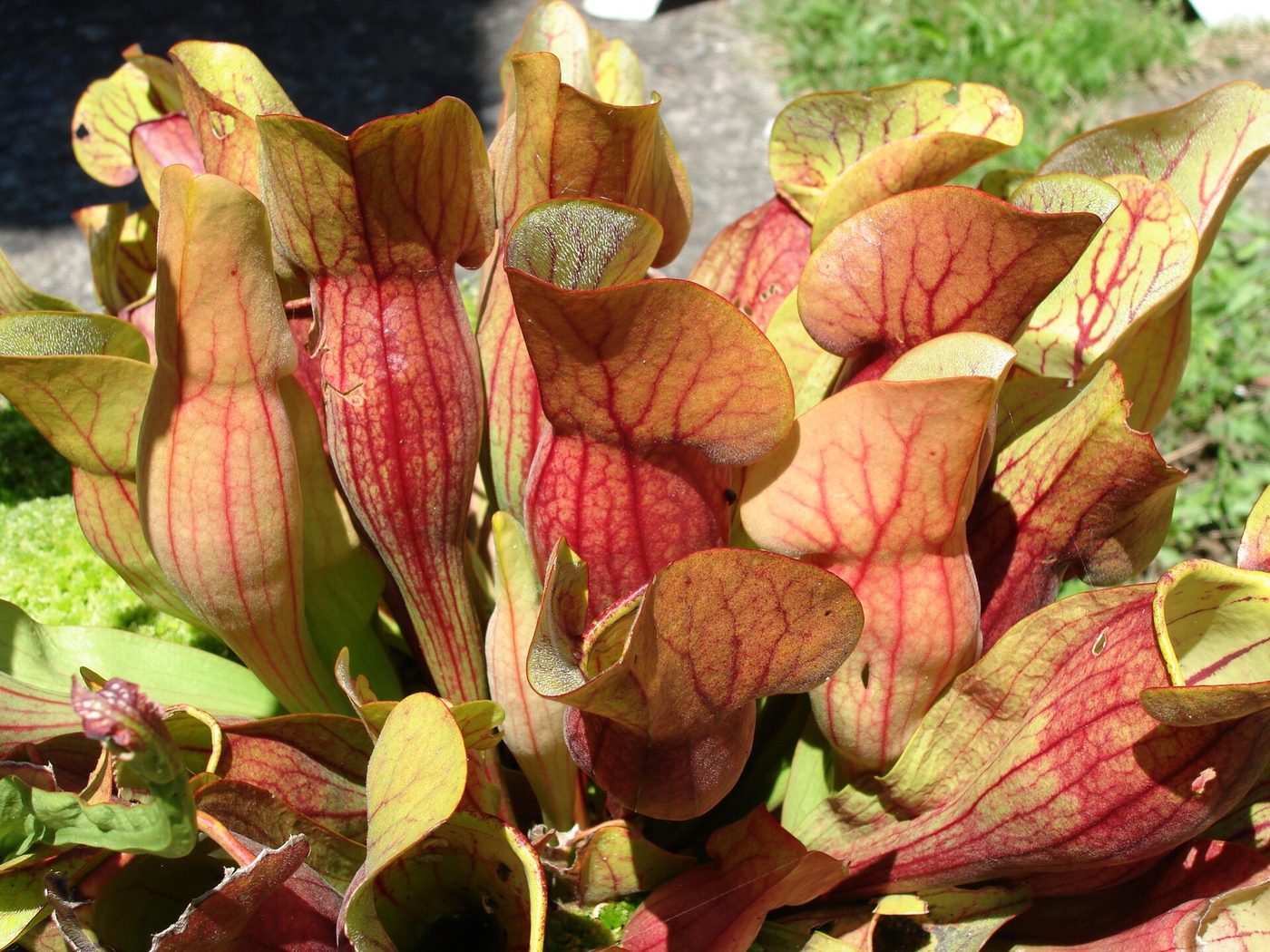
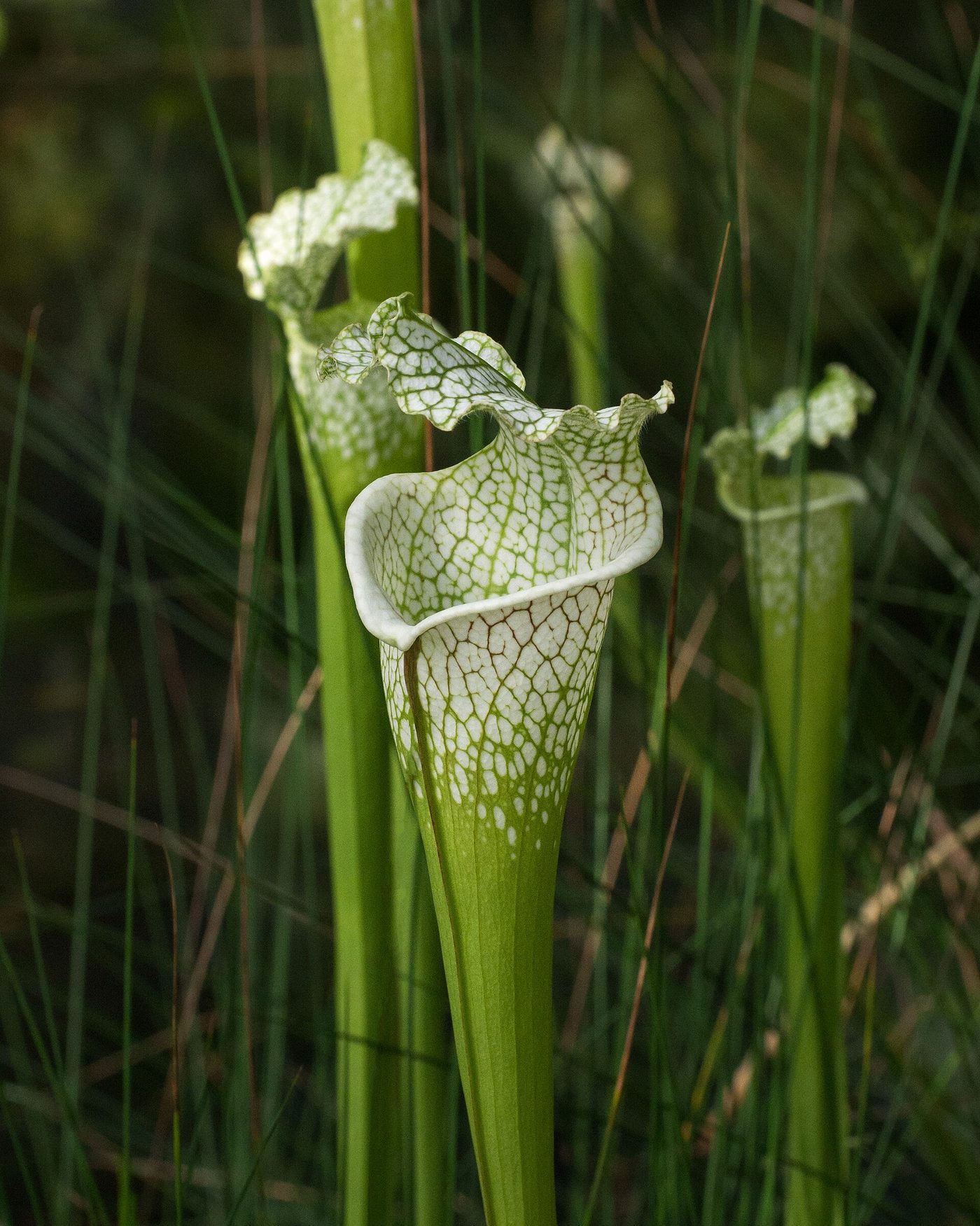
The yellow pitcher plant is one of the most imposing carnivorous plants of North America. Its modified leaves form upright, slender pitchers up to a metre tall, like long trumpets or ewers of a bright yellow-green, often veined with red. At the top, a rounded hood shelters the opening from rain. It should not be confused with the Asian Nepenthes: the sarracenias are the 'pitcher plants' of the New World, with traps that rise straight from the ground.
Habitat and distribution
It grows wild in the bogs and wet coastal plains of the south-eastern United States, from Alabama to Florida, Georgia and up to the Carolinas and Virginia. It lives on acidic, nutrient-poor soils, where catching insects makes up for the lack of nitrogen.
How the trap works
The rim of the pitcher produces a sugary nectar that attracts insects; the nectar, however, also contains narcotic substances that stupefy the prey. Once at the opening, the insect slips inside along waxy walls and is blocked by downward-pointing hairs that stop it climbing back out. At the bottom, enzymes and bacteria digest the prey.
Cultivation
It is much prized by carnivorous-plant growers for its sculptural beauty. It needs full sun, an acidic peat substrate kept always moist, mineral-free water (tray method) and a cold winter rest, during which the aerial part dies back and the plant rests in its rhizome. In spring, before the new pitchers, it produces large nodding yellow flowers.
Conservation
The IUCN lists the species as Least Concern, but many native bogs have been destroyed or drained. Plants for sale come from cultivation; protecting wetland habitats remains important.
Flowering season
Practical tips
Water needs: High: bog kept always moist — always check soil moisture before watering.
Prefers Full sun: provide the right light and rotate the plant for even growth.
Recommended soil: Peaty, acidic and poor, moist. Refresh the substrate every 1-2 years.
Dust the leaves with a damp cloth to support photosynthesis.
Feed during the growing season (spring-summer) and stop in winter.
Pros
- Tall, sculptural yellow trumpets
- Fascinating pitcher trap
- Cold-hardy, with fine spring flower
Cons
- Needs full sun and an always-moist acidic substrate
- Requires a cold winter rest
- Depends on bogs, a declining habitat