Photo: Pouzin Olivier · CC BY 3.0
Purple pitcher plant
Sarracenia purpurea
The purple pitcher plant is a carnivorous plant whose rainwater-filled pitcher leaves trap and digest insects. Hardy and frost-resistant.
Characteristics
The pitcher-shaped carnivorous plant
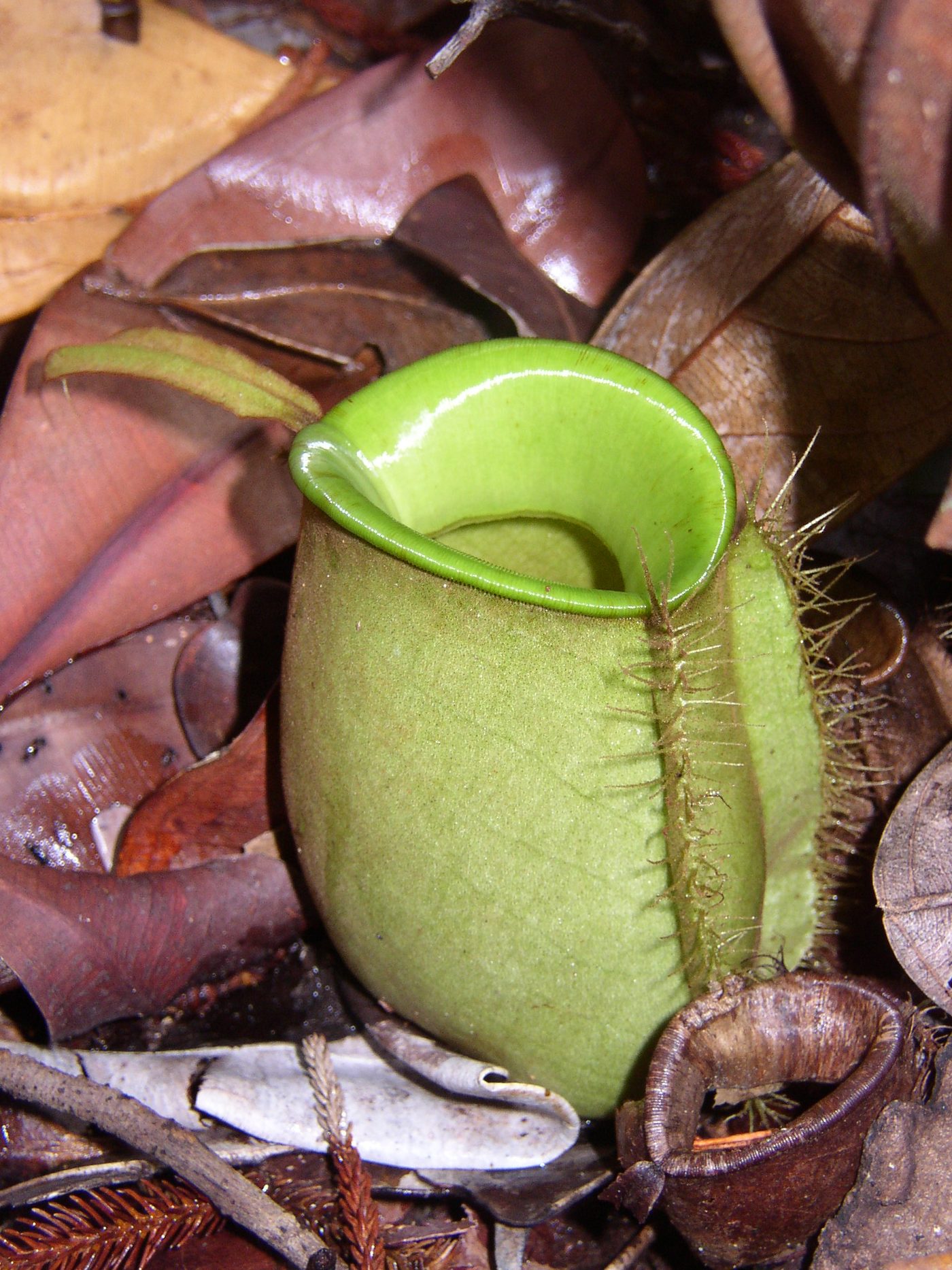
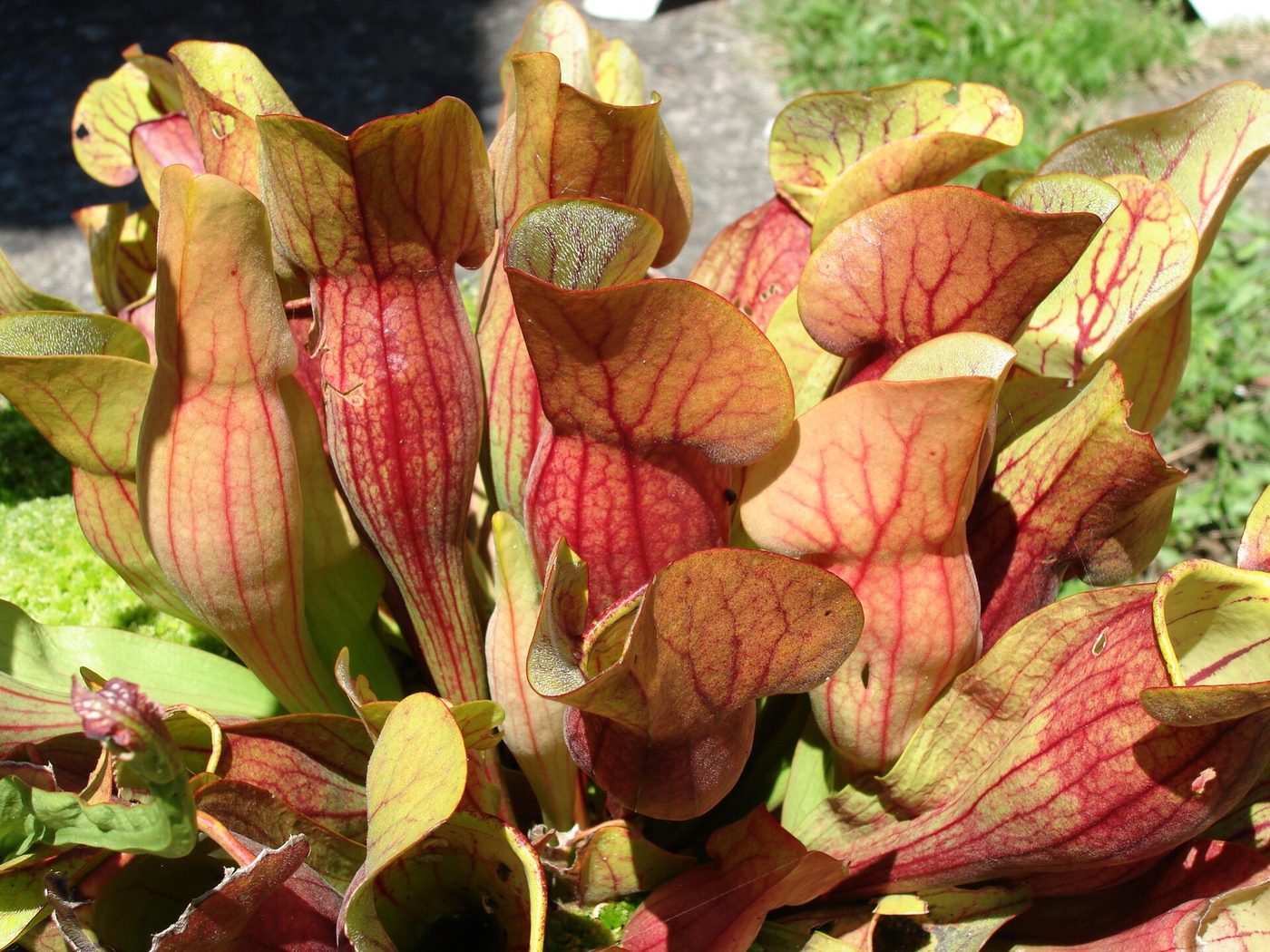
The purple pitcher plant (Sarracenia purpurea) is a carnivorous plant of the family Sarraceniaceae, famous for its leaves modified into distinctive squat "pitchers" that open skyward and are often filled with rainwater. Its colour ranges from green to deep wine-red when grown in full sun, with striking veining. In spring, unusual nodding, umbrella-shaped flowers rise from the centre of the rosette.
Origin and habitat
It is widespread across much of North America, from Canada to Florida, typical of bogs, marshes and acidic, nutrient-poor wetlands. It is the most cold-tolerant Sarracenia and grows even in cold regions.
How it catches prey
Unlike other carnivorous plants, its pitchers hold rainwater and work as drowning traps: insects and small arthropods, attracted by the colours and nectar, slip inside along walls lined with downward-pointing hairs and cannot climb back out. They fall into the liquid, where they are broken down — helped by bacteria and small organisms — and the nutrients are absorbed by the plant, making up for what the poor soil cannot provide.
Cultivation and care
It wants full sun, an acidic peat-and-sand substrate low in salts, and plenty of moisture: keep its saucer always filled with rainwater or distilled water (never tap water). In winter it goes dormant and should be kept cool: this rest makes it one of the easiest carnivorous plants to grow outdoors in temperate climates.
Conservation
It is still widespread across its range, but the bogs it lives in are fragile habitats threatened by drainage and pollution. In cultivation it propagates easily, easing pressure on wild populations.
Flowering season
Practical tips
Water needs: Plentiful, only rainwater or distilled water — always check soil moisture before watering.
Prefers Full sun: provide the right light and rotate the plant for even growth.
Recommended soil: Acidic peat and sand, low in nutrients. Refresh the substrate every 1-2 years.
Dust the leaves with a damp cloth to support photosynthesis.
Feed during the growing season (spring-summer) and stop in winter.
Pros
- A fascinating, educational carnivorous plant
- Hardy: withstands frost well
- Easy to grow outdoors in temperate climates
Cons
- Needs rainwater, never tap water
- Requires cool winter dormancy
- Depends on an acidic, very moist substrate