Photo: Wildfeuer · CC BY-SA 3.0
Love-in-a-mist
Nigella damascena
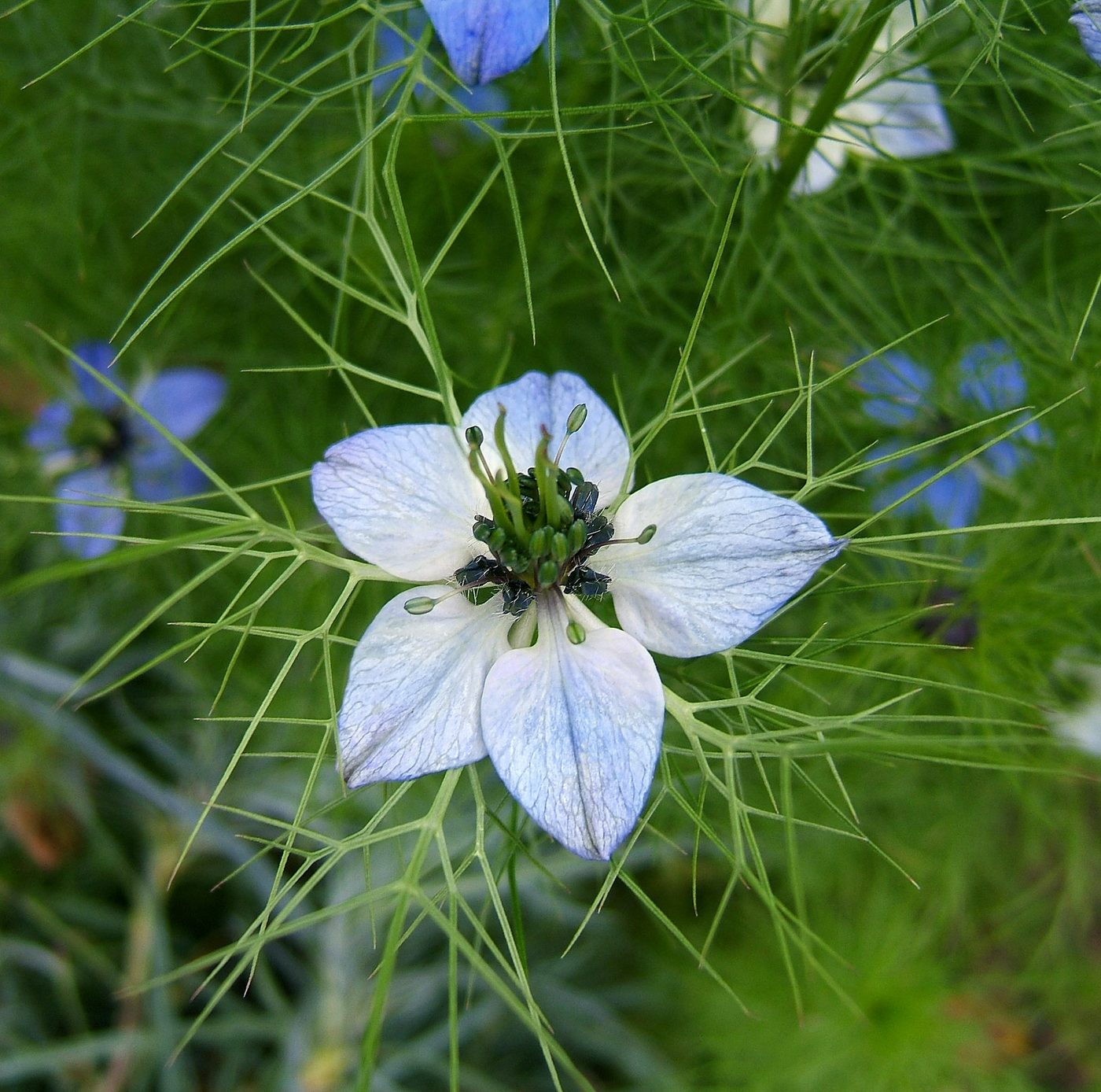
With its delicate blue flowers wrapped in a veil of fine leaflets, love-in-a-mist is a country flower with an ethereal, romantic look.
Characteristics
A flower wrapped in a veil
Love-in-a-mist is an annual herbaceous plant with a delicate and unmistakable look. Its flowers, of a soft sky-blue (but also white or pinkish in the cultivated varieties), seem to float wrapped in a veil of fine, thread-like leaflets, green and light as lace, which surround the flower and give rise to its poetic name. The plant's own leaves are finely divided, almost feathery, and help to give it an ethereal appearance.
Origin and spread
Native to the Mediterranean area and south-western Asia, love-in-a-mist grows wild in fields, along roadsides and in uncultivated ground, and has long been grown in gardens as an easy-to-manage ornamental plant. It loves temperate climates, sunny positions and well-drained soils, and adapts easily, so much so that it can appear spontaneously where it was once sown.
Cultivation
It is a very simple plant to grow, suitable even for beginner gardeners. It is sown directly in sunny, well-drained soil, and grows quickly, flowering between late spring and summer. It needs no particular care and tends to self-seed, reappearing spontaneously in subsequent years. It is ideal for informal borders, natural-looking gardens and flowery meadows.
The curious fruits
After flowering, love-in-a-mist offers a second point of interest: rounded, swollen fruits form, like small balloons with horns, very decorative. These fruits, once dried, are much prized in dried-flower arrangements. Some related species produce aromatic seeds used in cooking, but love-in-a-mist is grown above all for its ornamental value.
In the garden
Thanks to its discreet beauty, its ease of cultivation and its decorative fruits, love-in-a-mist is a beloved presence in romantic and natural gardens. It also attracts pollinating insects and is perfect for those who want an elegant and unpretentious wildflower.
Flowering season
Practical tips
Water needs: Moderate — always check soil moisture before watering.
Prefers Full sun: provide the right light and rotate the plant for even growth.
Recommended soil: Well-drained, even poor. Refresh the substrate every 1-2 years.
Dust the leaves with a damp cloth to support photosynthesis.
Feed during the growing season (spring-summer) and stop in winter.
Pros
- Delicate, romantic flowers wrapped in a veil
- Very easy to grow, self-seeds
- Decorative fruits for dried arrangements
- Attracts pollinators
Cons
- Annual plant, must be resown (but self-seeds)
- Relatively short flowering
- Can spread spontaneously in the garden