Photo: Didier Descouens · CC BY-SA 4.0
Old man cactus
Cephalocereus senilis
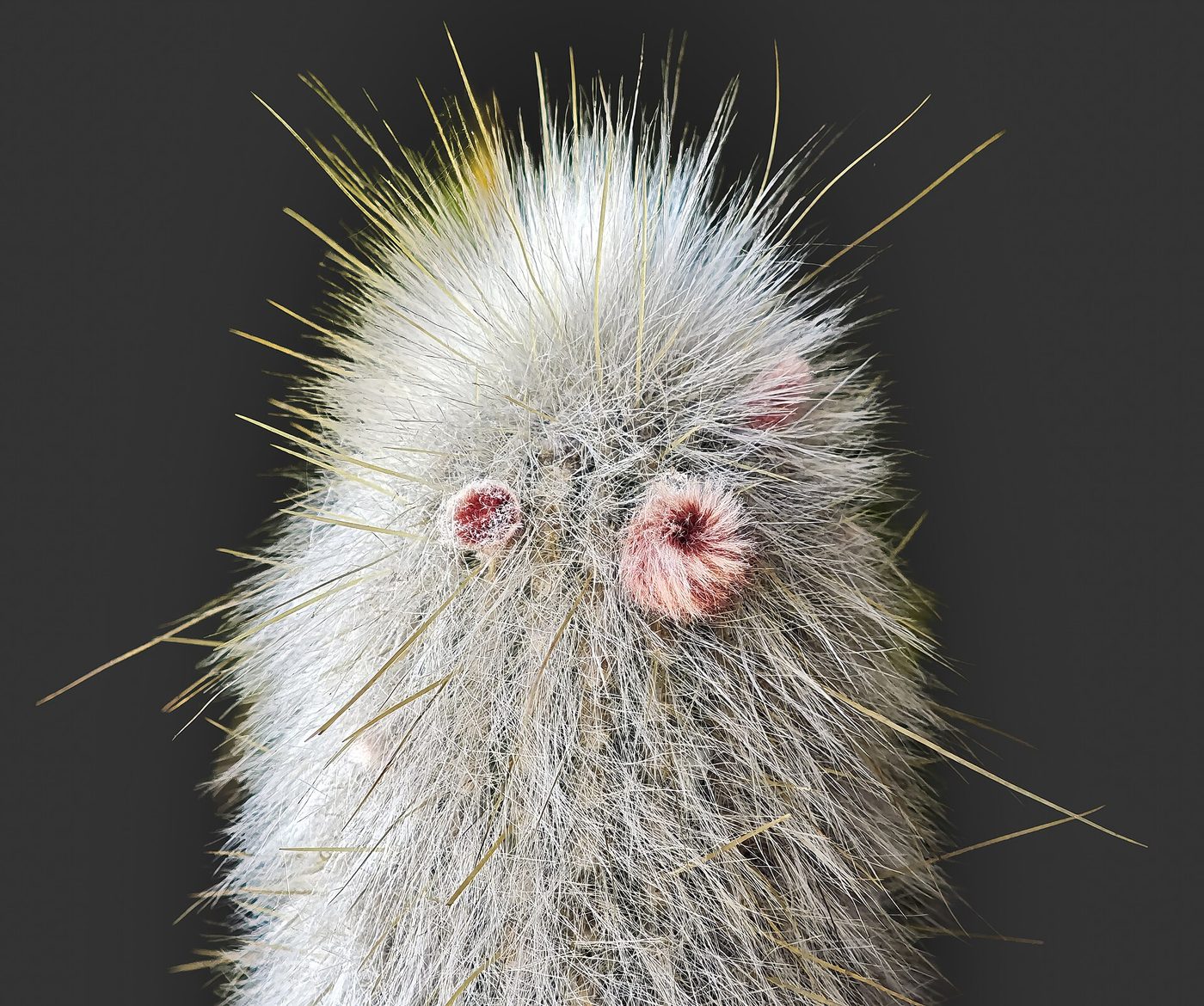
The old man cactus is a Mexican columnar cactus covered in long, woolly white hairs, reminiscent of an old man's hair and beard.
Characteristics
The cactus with white hair
The old man cactus (Cephalocereus senilis) is a columnar cactus of the family Cactaceae, famous for its unmistakable look: the green stem is wrapped in a dense mane of long, woolly white hairs, giving it the air of an old man with snowy hair. Hence its common names — old man cactus, old man's head, old man's beard. The hairs are not merely decorative: they protect the plant from the intense desert sun and temperature swings. Beneath the wool, however, hide sharp spines.
Origin and habitat
It is endemic to central-eastern Mexico, in the states of Hidalgo and Veracruz, where it grows on rocky, arid slopes. In the wild it can become an imposing column several metres tall, while in a pot it stays much smaller and grows slowly.
Cultivation and care
It is one of the most beloved cacti as an ornamental plant. It wants full sun or bright light, a very free-draining mineral substrate and very little water: water sparingly in summer and almost stop in winter, when it dislikes cold and frost. Waterlogging is the most common cause of rot. To keep the hairs white, it is best to avoid wetting them from above.
Did you know?
It flowers only when mature, usually after many years, with nocturnal flowers emerging among the wool. Its wide popularity in cultivation has eased the pressure on wild populations.
Conservation
The IUCN lists it as Endangered in the wild, because of its restricted range and collection. Its very popularity as a collector's plant, however, has encouraged its propagation in cultivation.
Practical tips
Water needs: Sparse, typical of cacti — always check soil moisture before watering.
Prefers Full sun or very bright light: provide the right light and rotate the plant for even growth.
Recommended soil: Very free-draining, mineral cactus mix. Refresh the substrate every 1-2 years.
Dust the leaves with a damp cloth to support photosynthesis.
Feed during the growing season (spring-summer) and stop in winter.
Pros
- Unique look with woolly white hair
- Very drought-resistant
- Widely grown, easing wild collection
Cons
- Endangered in the wild
- Rots with too much water
- Spines hidden under the hairs: handle with care