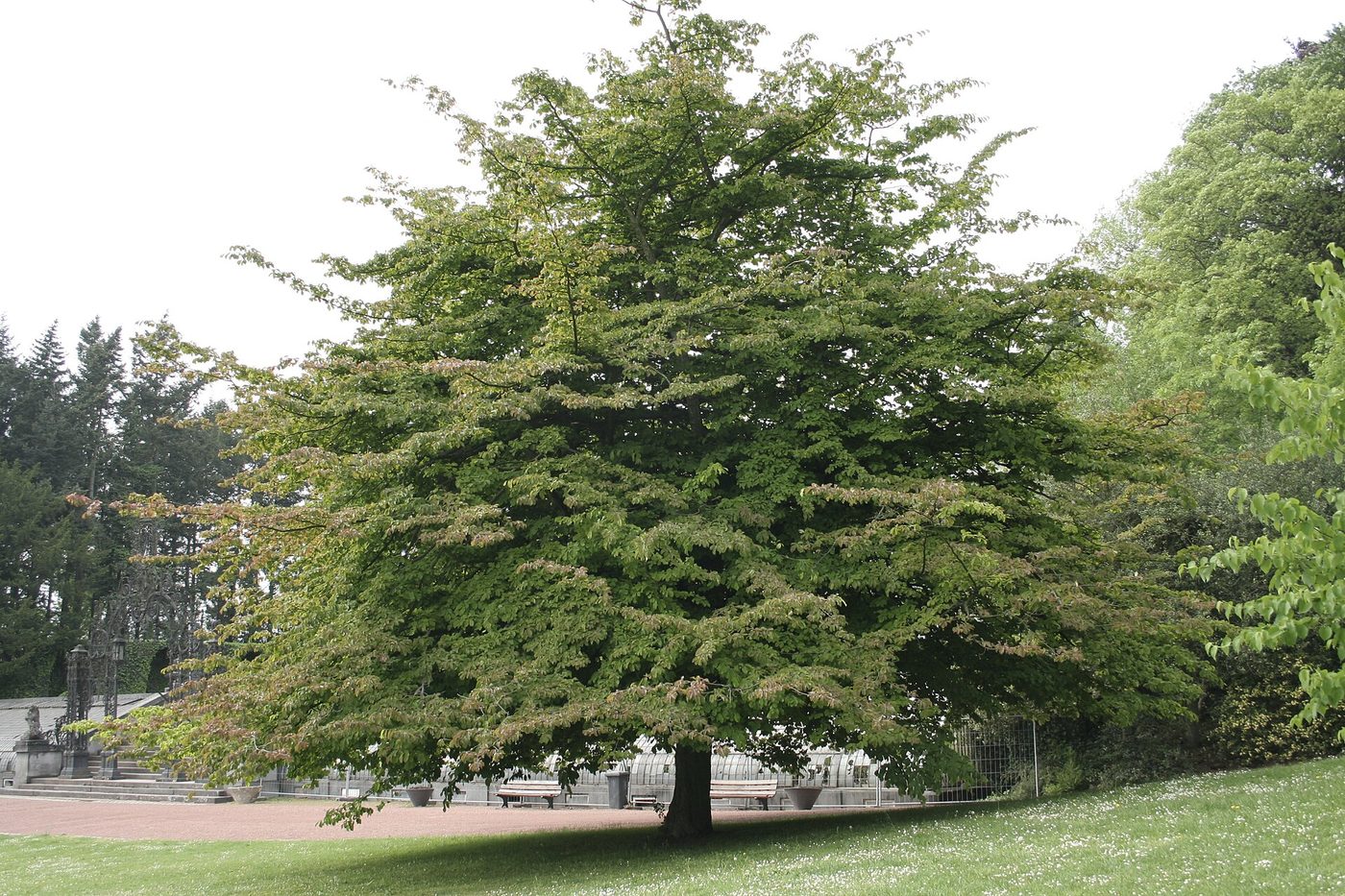
Photo: Jean-Pol GRANDMONT · CC BY 2.5
Persian ironwood
Parrotia persica
The Persian ironwood is an elegant tree with extremely hard wood, famed for its spectacular autumn colours and bark that flakes in patches.
Characteristics
Iron wood and autumn fire
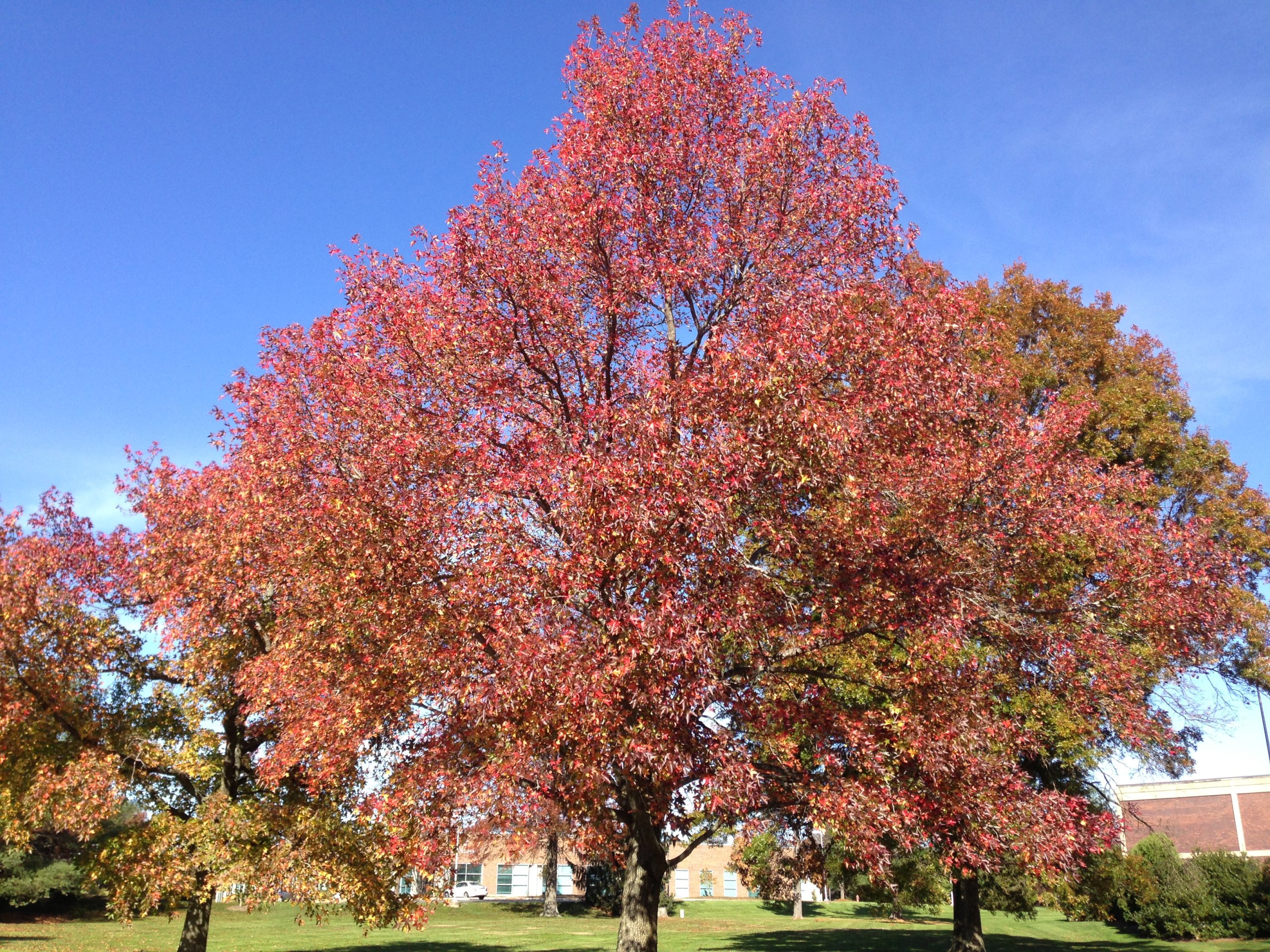
The Persian ironwood, or parrotia, is a medium-sized deciduous tree of the witch-hazel family, Hamamelidaceae. Its common name comes from the extraordinary hardness and weight of its wood. It has a broad habit, often multi-stemmed, with oval leaves resembling those of a beech. Its most famous feature is the autumn colouring: the leaves turn into a blaze of yellow, orange, red and purple. The bark is ornamental too, flaking in patches to reveal grey, green and pinkish tones, like that of a plane tree.
Origin and habitat
It is endemic to the Alborz mountains, between northern Iran and south-eastern Azerbaijan, in the Caspian region, where it grows in moist forests, particularly in Golestan National Park.
Cultivation
It is a hardy, long-lived tree, prized in gardens for its ornamental value in every season. It wants full sun or part shade and a fertile, well-drained soil, preferably acidic or neutral, cool but not waterlogged. It withstands cold winters well. Its growth is slow, which makes it suitable even for smaller gardens.
Facts and flowering
In late winter, before the leaves, it produces small petal-less flowers with conspicuous tufts of red stamens, like those of its relative the witch-hazel. The wood, so hard it earns the name ironwood, is heavy enough to sink in water.
Care
It needs little pruning. When young it should be watered regularly; once established it is resilient. It is often grown as a single specimen to show off its shape and autumn colours.
Flowering season
Practical tips
Water needs: Moderate, likes cool soils — always check soil moisture before watering.
Prefers Full sun or part shade: provide the right light and rotate the plant for even growth.
Recommended soil: Fertile, well-drained, acidic or neutral. Refresh the substrate every 1-2 years.
Dust the leaves with a damp cloth to support photosynthesis.
Feed during the growing season (spring-summer) and stop in winter.
Pros
- Spectacular, multicoloured autumn colours
- Decorative bark that flakes in patches
- Hardy, long-lived and suited to small gardens
Cons
- Slow-growing
- Prefers cool, acidic-to-neutral soils