Photo: Diego Delso · CC BY-SA 3.0
Purple coneflower
Echinacea purpurea
The purple coneflower is a North American perennial with large pink-purple daisy flowers, beloved in gardens and known for its herbal uses.
Characteristics
A pink-purple cone in the garden
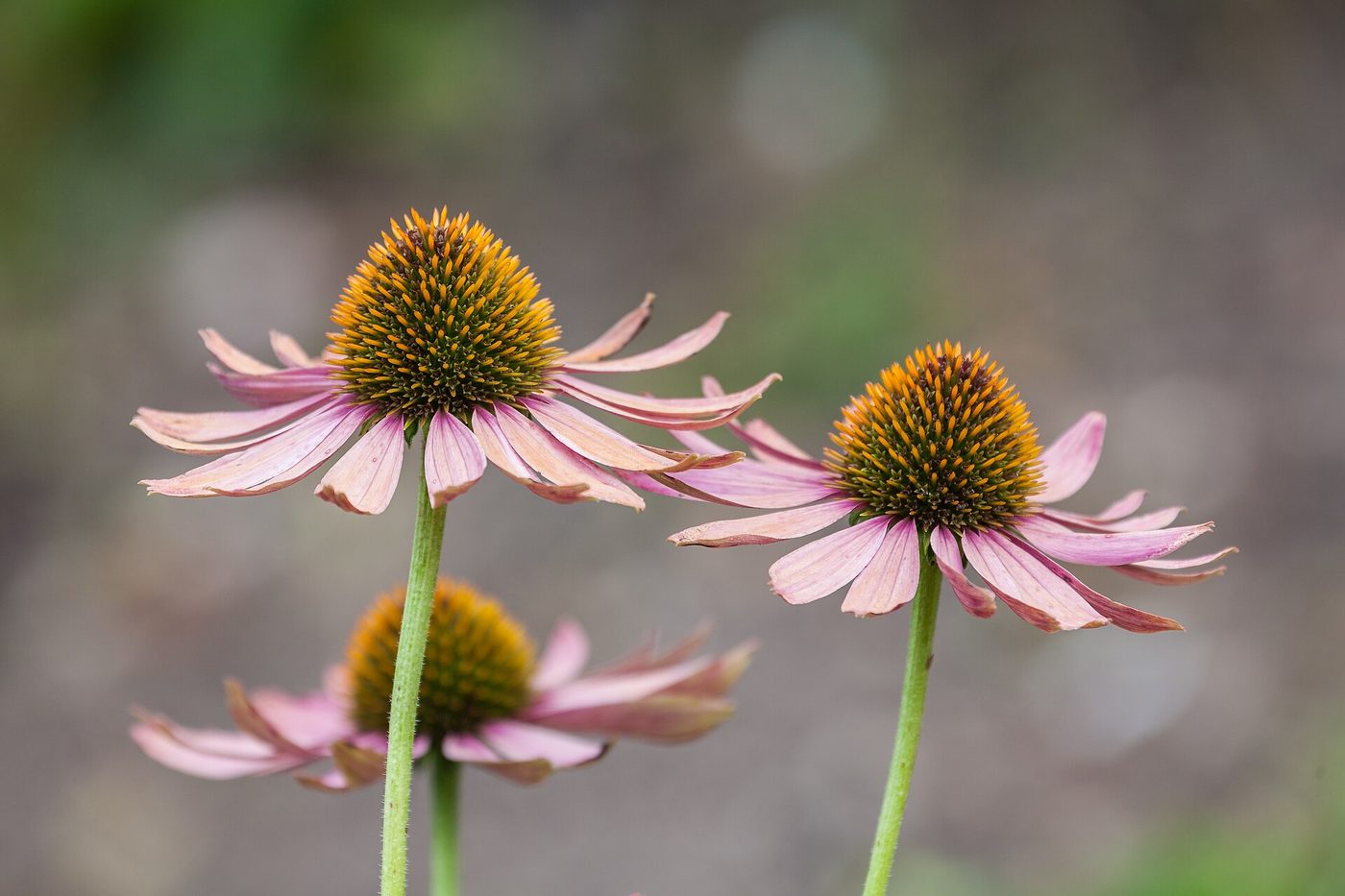
The purple coneflower is a herbaceous perennial in the family Asteraceae, the same as daisies and sunflowers. Its flowers are unmistakable: large heads with pink-purple ray petals drooping around a prominent, spiny, orange-brown central cone, which earns it the name hedgehog coneflower. The stems are upright and sturdy, growing to over a metre tall.
Origin and habitat
It is native to eastern North America, where it grows wild in dry open woods, prairies and barrens, especially in the Ozarks and the Mississippi and Ohio valleys. It is a hardy plant, adapted to hot, dry summer conditions.
Cultivation
It is among the easiest and most rewarding perennials to grow. It prefers full sun and well-drained soil but also copes with poor, stony ground. Once established it tolerates drought well and survives very cold winters. It blooms for a long season, from summer into early autumn, and is valuable for attracting bees, butterflies and other pollinators. Leaving the dry seed heads over winter provides food for finches.
Uses and herbalism
The roots and aerial parts of echinacea have long been used in herbal tradition, particularly as an immune-system supplement. The plant is also prized as a cut flower for its long vase life.
Care
It needs little attention: regular watering only in the first year, then occasional. The clump can be divided in spring every three or four years to rejuvenate it. Removing faded flowers prolongs the bloom.
Flowering season
Practical tips
Water needs: Moderate, drought-tolerant when mature — always check soil moisture before watering.
Prefers Full sun or bright part shade: provide the right light and rotate the plant for even growth.
Recommended soil: Fertile, well-drained, even poor soil. Refresh the substrate every 1-2 years.
Dust the leaves with a damp cloth to support photosynthesis.
Feed during the growing season (spring-summer) and stop in winter.
Pros
- Long, showy flowering
- Strongly attractive to bees and butterflies
- Hardy and drought-resistant
Cons
- Crown may rot in overly wet soil
- Clump needs dividing every few years to stay vigorous