Photo: Ivar Leidus · CC BY-SA 4.0
Common butterwort
Pinguicula vulgaris
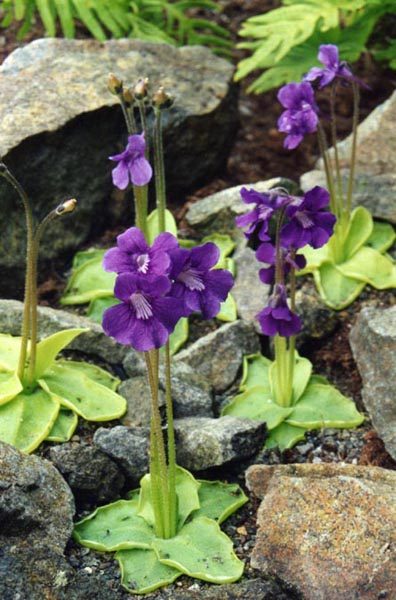
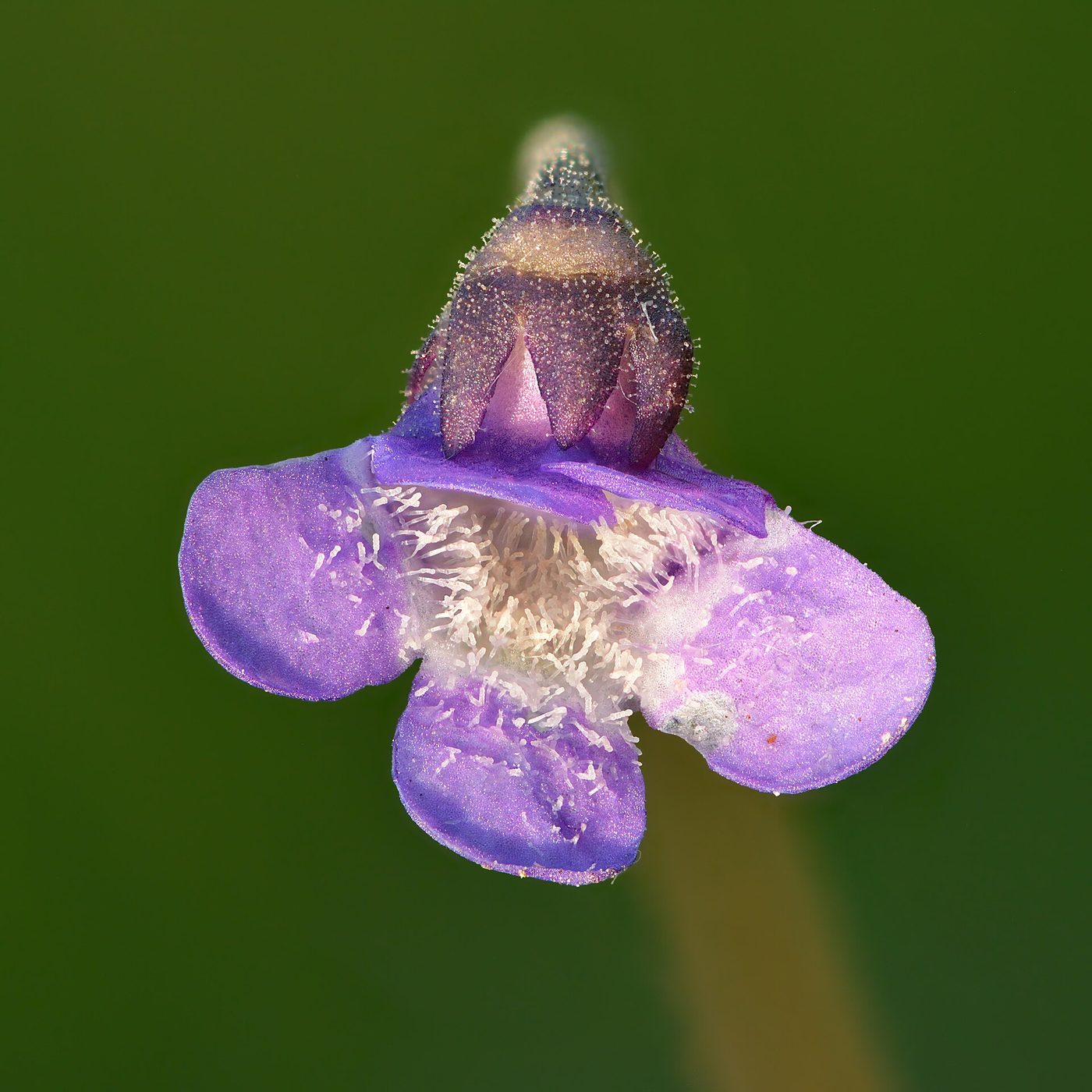
The common butterwort is a small carnivorous plant with glossy, sticky leaves that trap insects, crowned by delicate violet flowers.
Characteristics
Buttery leaves that catch insects
The common butterwort is a small perennial carnivorous plant of the family Lentibulariaceae. It forms a flat rosette of yellow-green leaves, glossy and slightly greasy to the touch, hence its name (from the Latin pinguis, "fat"). The leaf surface is covered in tiny glandular hairs that secrete a viscous fluid: when a small insect lands on it, it becomes trapped and is digested. In summer the plant produces elegant solitary violet-blue flowers on a slender stalk.
Habitat and range
It is widespread across much of the northern hemisphere, in Europe, Asia and North America. It grows in damp, nutrient-poor places: bogs, wet meadows, banks and dripping rocks, often in the mountains. It is precisely the poverty of the soil that has driven it to supplement its diet by catching insects.
How it catches prey
The leaves act as a sticky trap: insects that land on them are held by the mucilage, and the plant curls its leaf edges slightly to increase contact and aid digestion. The enzymes it secretes dissolve the prey's tissues, from which it absorbs nitrogen and other nutrients scarce in the soil.
Cultivation
It can be grown by enthusiasts but needs specific care: a poor, acidic, lime-free mix kept always moist, and watering with rainwater or deionised water only, preferably from below. It loves bright light. In winter many temperate forms go dormant, shrinking to a compact winter bud called a hibernaculum.
Conservation
The species is listed as Least Concern but, like many bog plants, it suffers from the drainage and reclamation of wetlands. It should never be collected from the wild.
Flowering season
Practical tips
Water needs: Very high, substrate always moist — always check soil moisture before watering.
Prefers Full sun or bright light: provide the right light and rotate the plant for even growth.
Recommended soil: Poor, acidic, peaty and lime-free. Refresh the substrate every 1-2 years.
Dust the leaves with a damp cloth to support photosynthesis.
Feed during the growing season (spring-summer) and stop in winter.
Pros
- Naturally catches gnats and small insects
- Elegant violet flowers
- Perennial and hardy in temperate climates
Cons
- Demanding: pure water and lime-free mix
- Will not tolerate rich or fertilised soils