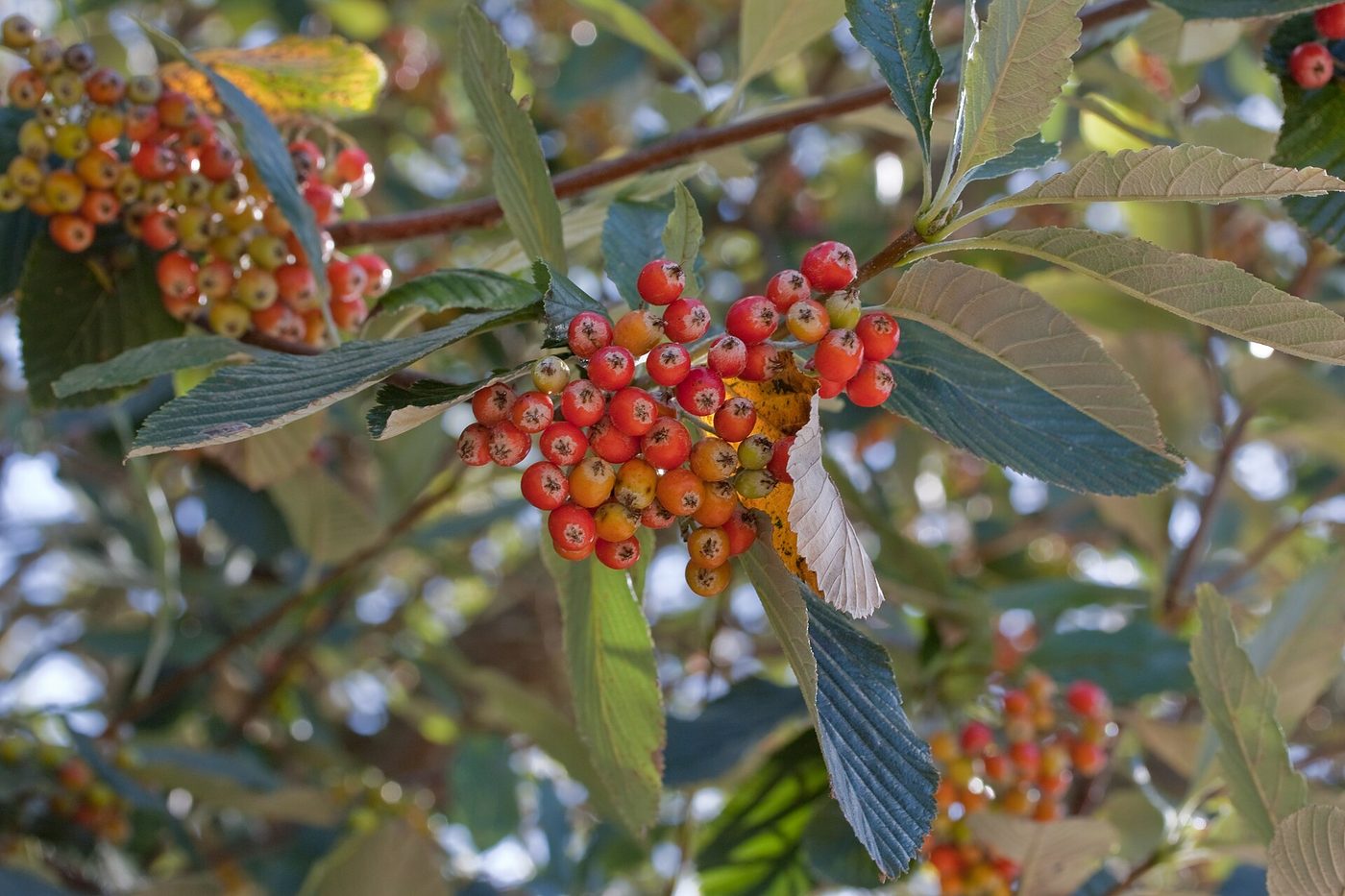
Photo: Julie Anne Workman · CC BY-SA 3.0
Whitebeam
Aria edulis
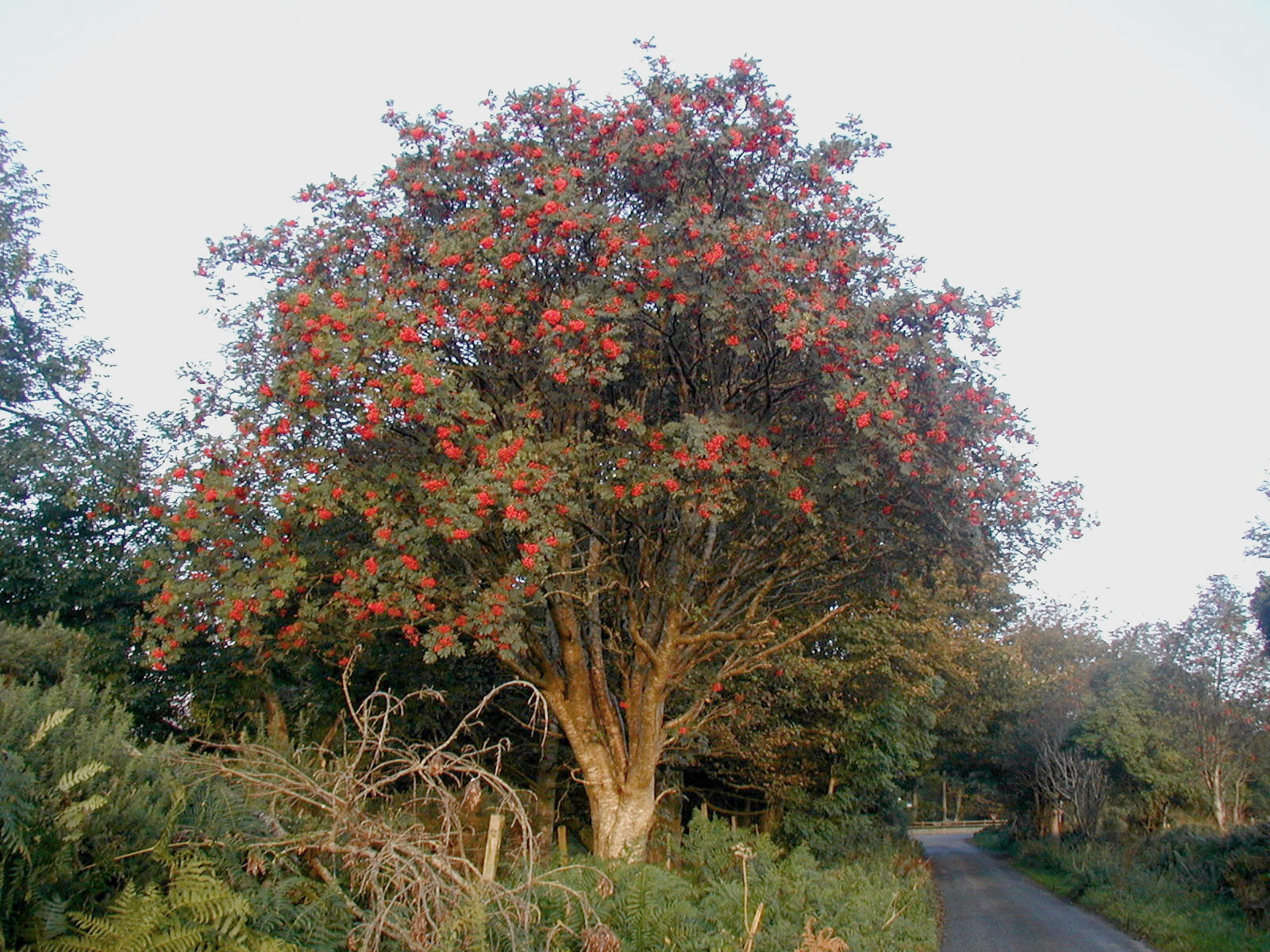
The whitebeam is a small tree in the rose family, with leaves white-woolly beneath, white spring flowers and clusters of red berries in autumn.
Characteristics
Description
The whitebeam is a small deciduous tree in the family Rosaceae, usually 6 to 15 metres tall. Its most recognisable feature is its foliage: oval, toothed leaves, dull green above and covered beneath with a dense silvery-white down, so that the whole crown seems to shimmer in the wind. In spring it bears flat clusters of small white flowers; in autumn rounded berries ripen in bunches, from red to orange.
Habitat and distribution
It is widespread across much of Europe, especially on hills and in the mountains. It favours limestone, well-drained, sunny soils, and grows in open woodland, along the edges of clearings and on rocky slopes, often alongside beech and oak. It is a tough, undemanding species.
Cultivation
It is a valued ornamental for its silvery foliage and autumn fruit, suited even to small gardens thanks to its slow growth and modest size. It wants full sun or part shade and copes well with drought, poor and chalky soils, urban pollution and cold. Once established it needs very little care.
Fruit and uses
The berries are edible: sharp and astringent when just ripe, they turn sweet and mealy after the first frosts or once bletted, and were once used for jams and spirits. They are much liked by birds, which spread the seeds.
Did you know?
Both the English name 'whitebeam' (white tree) and the Italian 'farinaccio' (mealy) refer to the white, floury underside of the leaves. Long classified as Sorbus aria, the species is today placed by many botanists in the genus Aria.
Flowering season
Practical tips
Water needs: Low, drought-tolerant — always check soil moisture before watering.
Prefers Full sun or part shade: provide the right light and rotate the plant for even growth.
Recommended soil: Chalky, well-drained, even poor. Refresh the substrate every 1-2 years.
Dust the leaves with a damp cloth to support photosynthesis.
Feed during the growing season (spring-summer) and stop in winter.
Pros
- Very decorative silvery foliage
- Undemanding: tolerates drought, chalk and cold
- Bird-friendly fruit, compact size
Cons
- Slow-growing
- Fruit sharp until bletted
- Dislikes heavy, waterlogged soils