Photo: Ian Poellet · CC BY-SA 4.0
Cobra lily
Darlingtonia californica
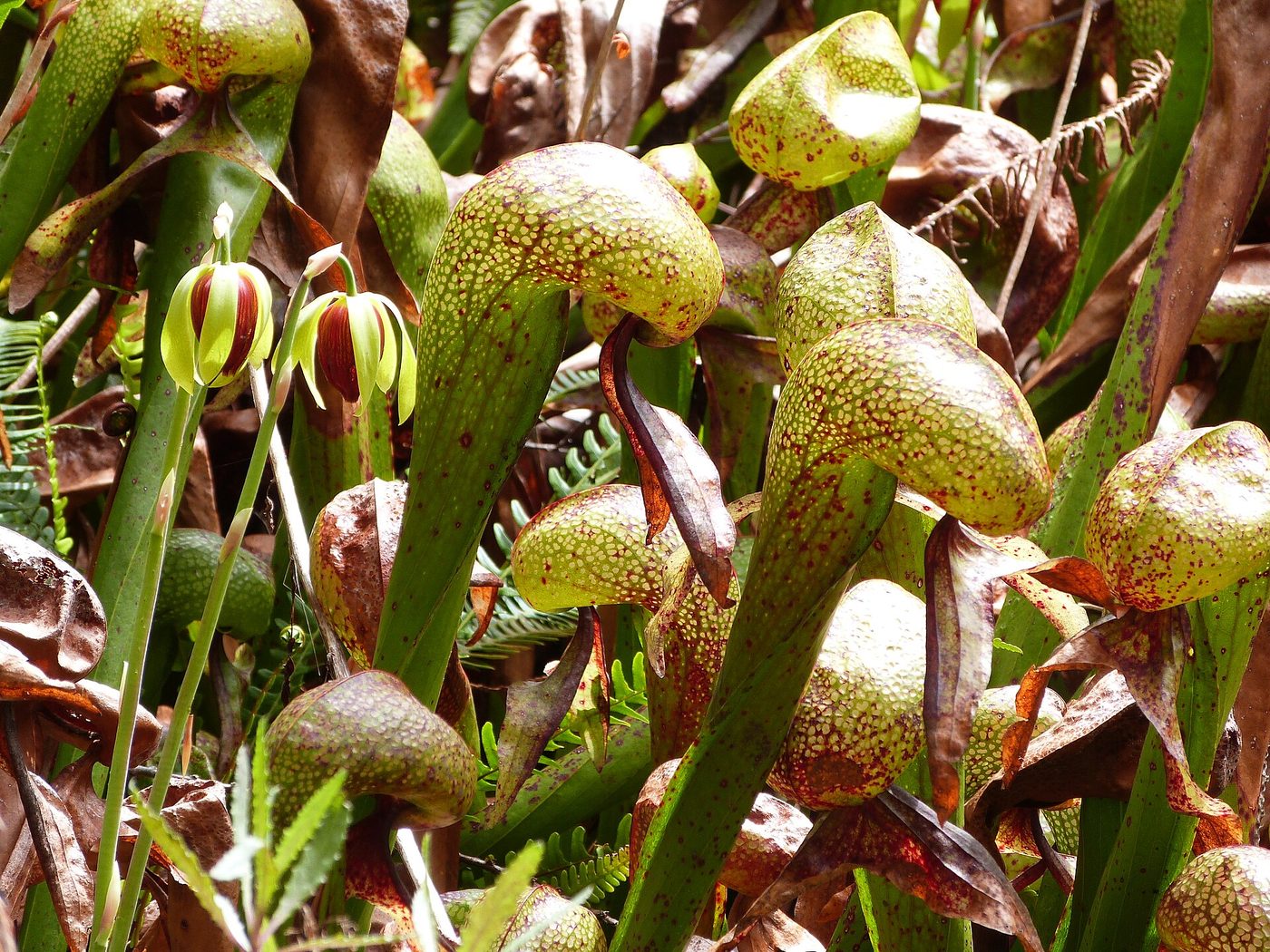
A carnivorous plant of California and Oregon, the cobra lily is named for its curved pitchers that resemble a rearing cobra, complete with a forked 'tongue'.
Characteristics
A carnivore shaped like a snake
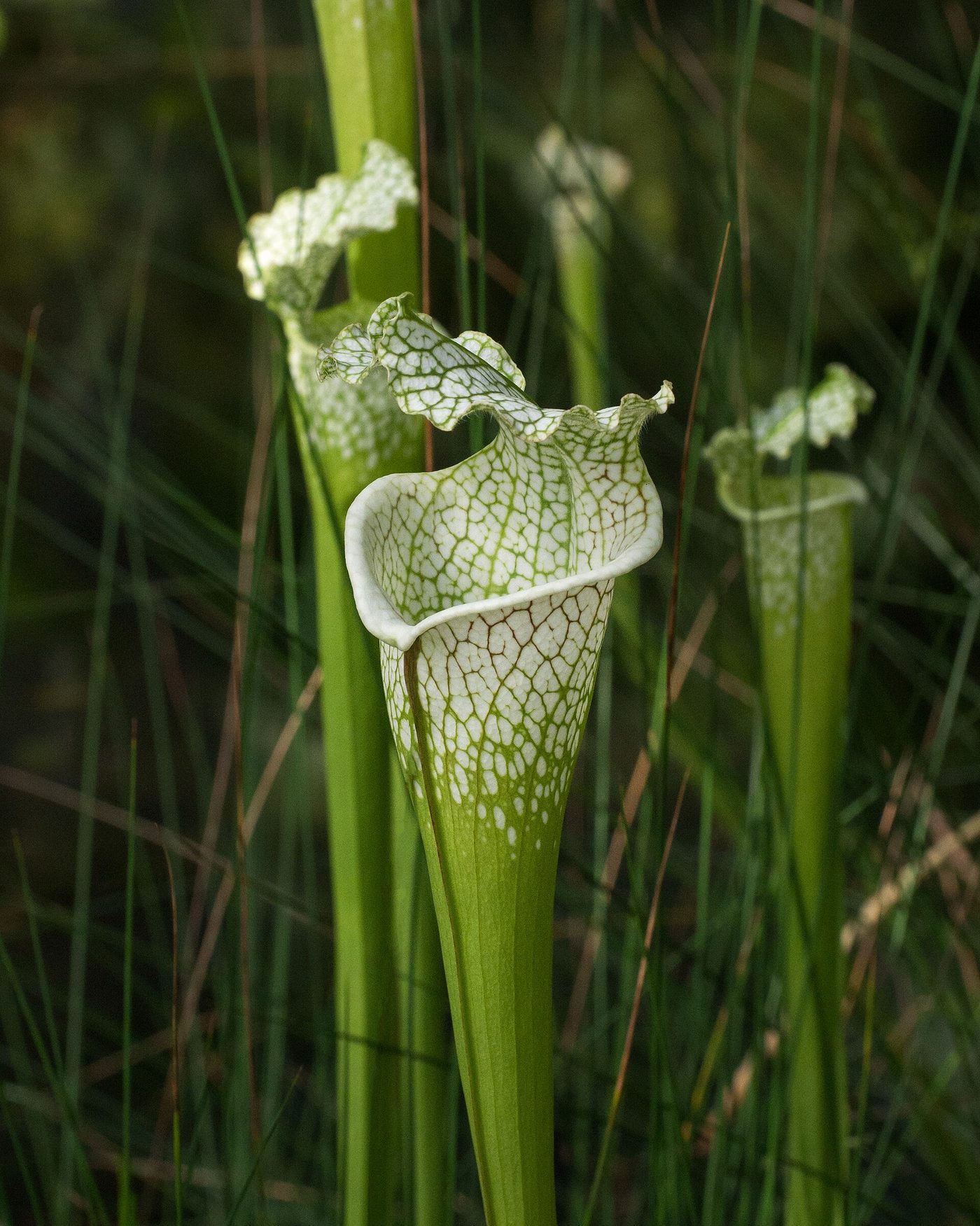
The cobra lily is a carnivorous plant of unmistakable form: its modified leaves develop into tubular pitchers that curve upward into a swollen hood, beneath which hangs a two-lobed appendage like a snake's forked tongue. The whole thing resembles a cobra rearing up to strike, hence the name. It is the only species in the genus Darlingtonia and is related to the American pitcher plants (Sarracenia).
A maze trap
Unlike many pitcher plants, it does not collect rainwater: the closed hood keeps rain out. Instead the trap works by optical deception: the hood is dotted with translucent "windows" that let light through. Insects lured by nectar, once inside, try to fly towards the bright areas mistaking them for exits, exhaust themselves and eventually slip into the tube, where downward-pointing hairs prevent them from climbing back out.
Habitat and distribution
It is endemic to the mountains and cold bogs of northern California and Oregon, where it grows on poor serpentine soils, often along cold streams and springs. It is adapted to cool summers and a constant supply of water to the roots.
Cultivation
It is considered difficult: its main requirement is cool roots. In the wild, spring water keeps the root system at a low temperature even when the air is warm; in cultivation this must be reproduced with mineral-free water and a substrate kept cool and moist. It loves full sun and cold nights.
Conservation
The species is listed as Least Concern, but its sites are localised and sensitive. Destruction of bogs and illegal collection are local threats; plants on sale should come only from cultivation.
Practical tips
Water needs: High: roots always cool and moist — always check soil moisture before watering.
Prefers Full sun or very bright light: provide the right light and rotate the plant for even growth.
Recommended soil: Serpentine/peaty, poor, acidic and free-draining. Refresh the substrate every 1-2 years.
Dust the leaves with a damp cloth to support photosynthesis.
Feed during the growing season (spring-summer) and stop in winter.
Pros
- Spectacular cobra shape with forked tongue
- Maze trap with translucent 'windows'
- Iconic plant for collectors
Cons
- Difficult: needs cool roots and cold nights
- Sensitive to warm, mineral-rich water
- Slow growth