Photo: Ibex73 · CC BY-SA 4.0
Alpine ibex
Capra ibex
Lord of the peaks, the ibex climbs near-vertical rock faces with astonishing balance: a symbol of the Alps saved from extinction at the last moment.
Characteristics
Temperament
Diurnal and relatively confident compared with other mountain animals, as long as it is not disturbed. It lives in sex-segregated groups; males clash horns in the mating season.
Diet
High-altitude herbivore: grasses, mosses, lichens, shoots and shrubs of Alpine pastures and scree.
A high-altitude climber
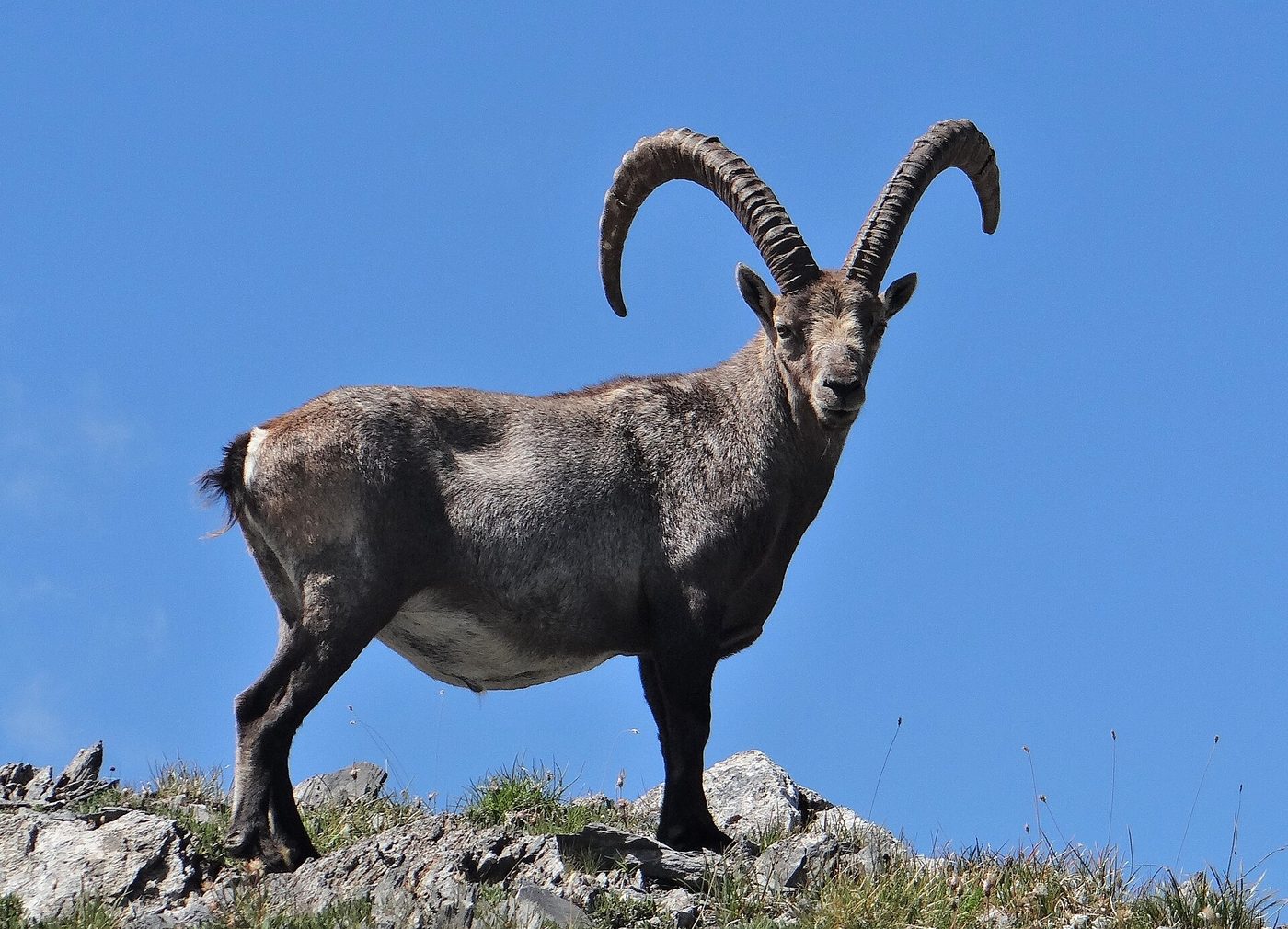
The Alpine ibex is a wild goat of massive build, perfectly made for life on the rocks. Its most spectacular feature is the male's horns: long, curved backwards and ridged with transverse knobs, they can far exceed eighty centimetres. Females carry much shorter, slimmer ones. The hooves, with hard rims and a soft, gripping sole, work like climbing shoes and let the animal move confidently across near-vertical faces.
The coat is brown, paler in summer and thicker and darker in winter, when the animal must face the cold of the high mountains.
Where it lives
The ibex inhabits the rocky zones of the Alps, usually above the tree line, among high pastures, scree and steep faces. In summer it climbs to high elevations to make the most of fresh grazing, while in winter it descends a little in search of sunny, snow-free slopes where it can find something to browse.
What it eats and how it lives
It is a herbivore feeding on grasses, mosses, lichens, shoots and high-altitude shrubs. Males and females live apart for much of the year: females with the young, males in bachelor groups. They come together in the mating season, at the start of winter, when the males clash in spectacular fights, rearing up on their hind legs before crashing their horns together with a sound that echoes through the valleys.
A story of rescue
The ibex's tale is one of conservation's most famous successes. Hunted relentlessly for its meat and the supposed healing virtues of its every part, by the early nineteenth century it had been reduced to a few dozen individuals, surviving only in the Gran Paradiso massif thanks to royal protection. From that small nucleus, through decades of protection and reintroductions, the species has repopulated much of the Alpine arc.
Conservation
Today the ibex is listed as least concern and its populations are stable or growing. Yet the memory of how close it came to vanishing remains a warning: all present-day ibex descend from a small group of founders, and this low genetic diversity calls for careful management.