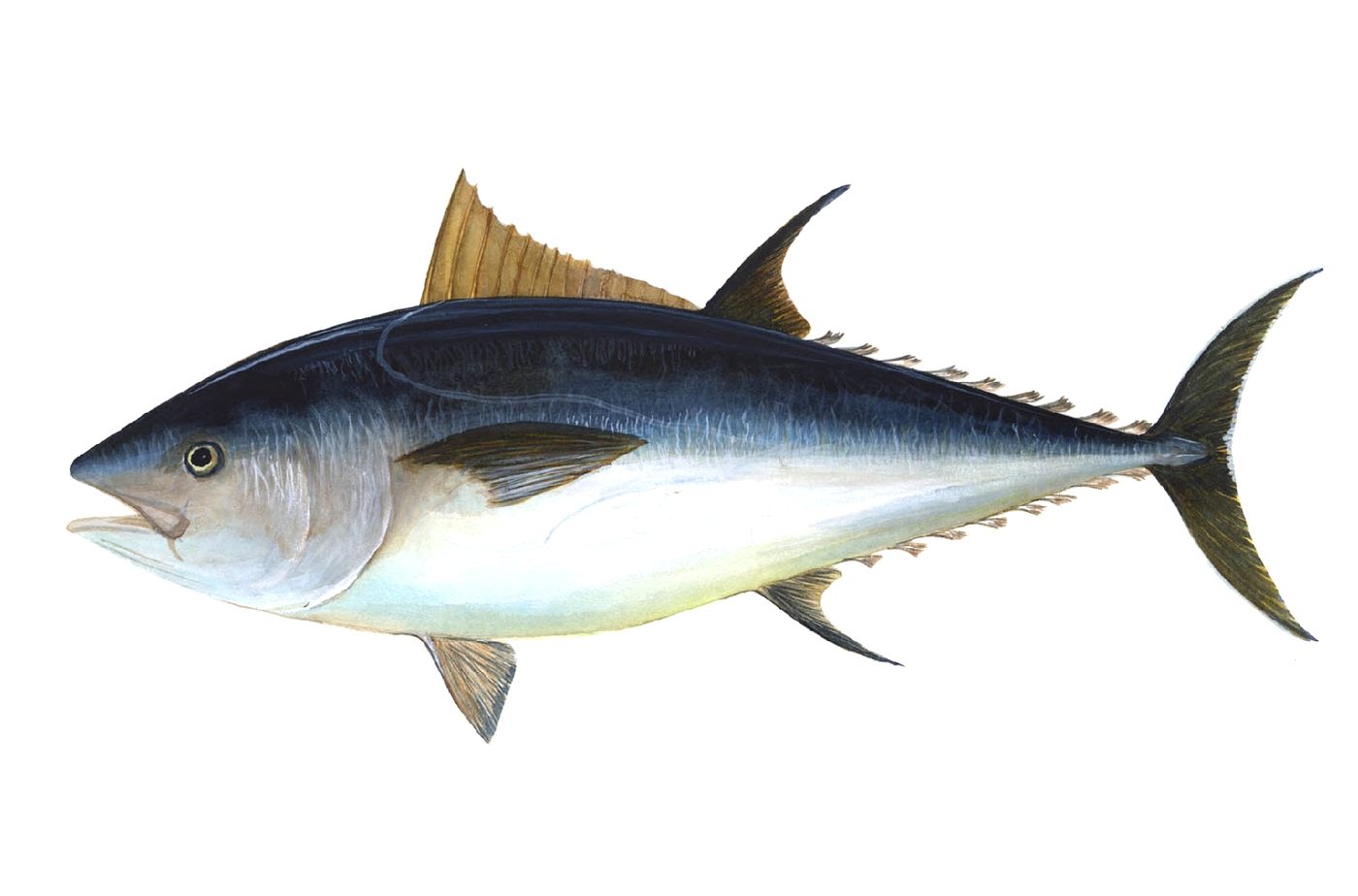
Photo: Unknown authorUnknown author · Public domain
Atlantic bluefin tuna
Thunnus thynnus
A steel arrow of the seas, the bluefin tuna is among the fastest and most powerful fish in the ocean, a warm-blooded athlete that crosses the Atlantic in immense migrations.
Characteristics
Temperament
A predator at the top of the food chain, very fast and tireless. It swims in schools with coordinated manoeuvres; a great migrant that crosses the oceans.
Diet
Carnivore: smaller fish, squid and crustaceans, often hunted in groups with coordinated manoeuvres.
An athlete of the oceans
The bluefin tuna is one of the largest, fastest and most powerful fish in the sea. Its body, tapered and sturdy as a torpedo, is built for speed: the pointed head, the fins that retract into special slots to reduce drag, and a stiff, immensely powerful crescent-shaped tail that drives it like an engine. An adult can exceed two metres in length and weigh hundreds of kilograms. Its back is a metallic dark blue, its flanks silvery.
A warm-blooded fish
An extraordinary feature sets the bluefin tuna apart from most fish: the ability to keep its body temperature higher than that of the surrounding water. Thanks to a special heat-exchange system in the blood, its muscles stay warm and efficient even in cold waters. This lets it swim tirelessly and reach impressive speeds when chasing prey, a rare advantage in the world of fish.
Great migrations
The bluefin tuna is a tireless traveller. It crosses entire oceans in its migrations, moving between feeding areas and breeding grounds. The Mediterranean is one of the key places where this species breeds. It is a predator at the top of the food chain, feeding on smaller fish, squid and crustaceans, often hunting in schools with coordinated manoeuvres.
A precious and contested fish
The bluefin tuna has always been one of the most prized and sought-after fish on the market, which has made it the object of very intense fishing. For decades its populations were overexploited, bringing the species to the brink of collapse.
Conservation
After years of serious decline, the bluefin tuna is today classified as least concern, thanks to strict international fisheries management measures, quotas and controls that have allowed a remarkable recovery. It is a rare and important example of how responsible management can restore a marine species to health. Vigilance, however, remains essential so as not to undo the progress achieved.