Photo: mr_capgras · CC BY 4.0
European eel
Anguilla anguilla
Serpentine and mysterious, the eel makes one of the most incredible journeys in the animal world: thousands of kilometres to the Sargasso Sea to breed and die.
Characteristics
Temperament
Nocturnal, shy and migratory. A solitary predator in inland waters; it makes a single, extraordinary breeding migration to the sea at the end of its life.
Diet
Carnivore: invertebrates, crustaceans, small fish and amphibians, hunted chiefly at night.
A fish with a serpent's body
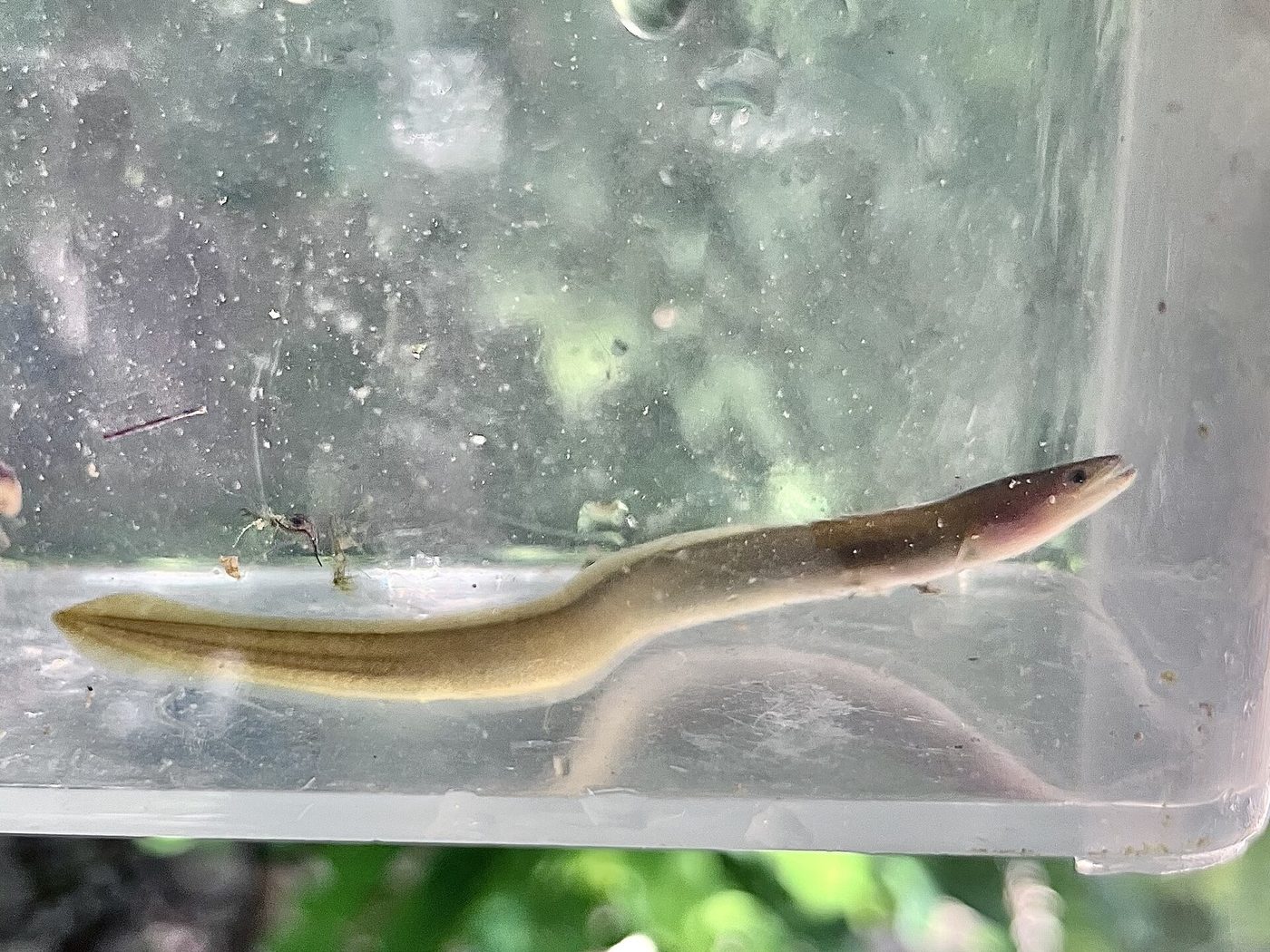
The European eel is a fish with a long, cylindrical, snake-like body, covered in smooth, slimy skin in which the scales are tiny and almost invisible. The dorsal, caudal and anal fins are fused into a single long fin running along the body. Its colour changes with age and life phase: from the green-brown of individuals living in inland waters to the silver of those ready to migrate to the sea.
Its biology remained a mystery for centuries: no one could find its eggs, and only relatively recently was its extraordinary life cycle understood.
An incredible journey
The European eel is a catadromous fish: it lives in fresh water but breeds in the sea. And not just any sea: all European eels migrate for thousands of kilometres across the Atlantic to the Sargasso Sea, an area of the ocean off the Caribbean, where they breed and die. The tiny larvae, transparent and leaf-shaped, make the reverse journey, carried by the currents to European coasts, where they climb rivers and canals to grow.
The stages of life
The eel's cycle passes through forms so different that they were once thought to be separate species. The larvae turn into glass eels, tiny transparent eels that reach inland waters; here they become yellow eels, the long growth phase; finally, after many years, they turn into silver eels, ready for the great return journey to the sea. It is a nocturnal predator feeding on invertebrates, fish and amphibians.
A dramatic decline
What makes the eel today a species of great conservation interest is its collapse. It is classified as critically endangered: populations have fallen dramatically in recent decades. The causes are many and intertwined: barriers that block migration, pollution, overfishing, parasites and changes in ocean currents.
Conservation
Protecting the eel is complex precisely because of its transoceanic life cycle, which requires international cooperation. Measures are under way to reduce fishing, restore river continuity and protect habitats, but the recovery of this fascinating and threatened species remains an open challenge.