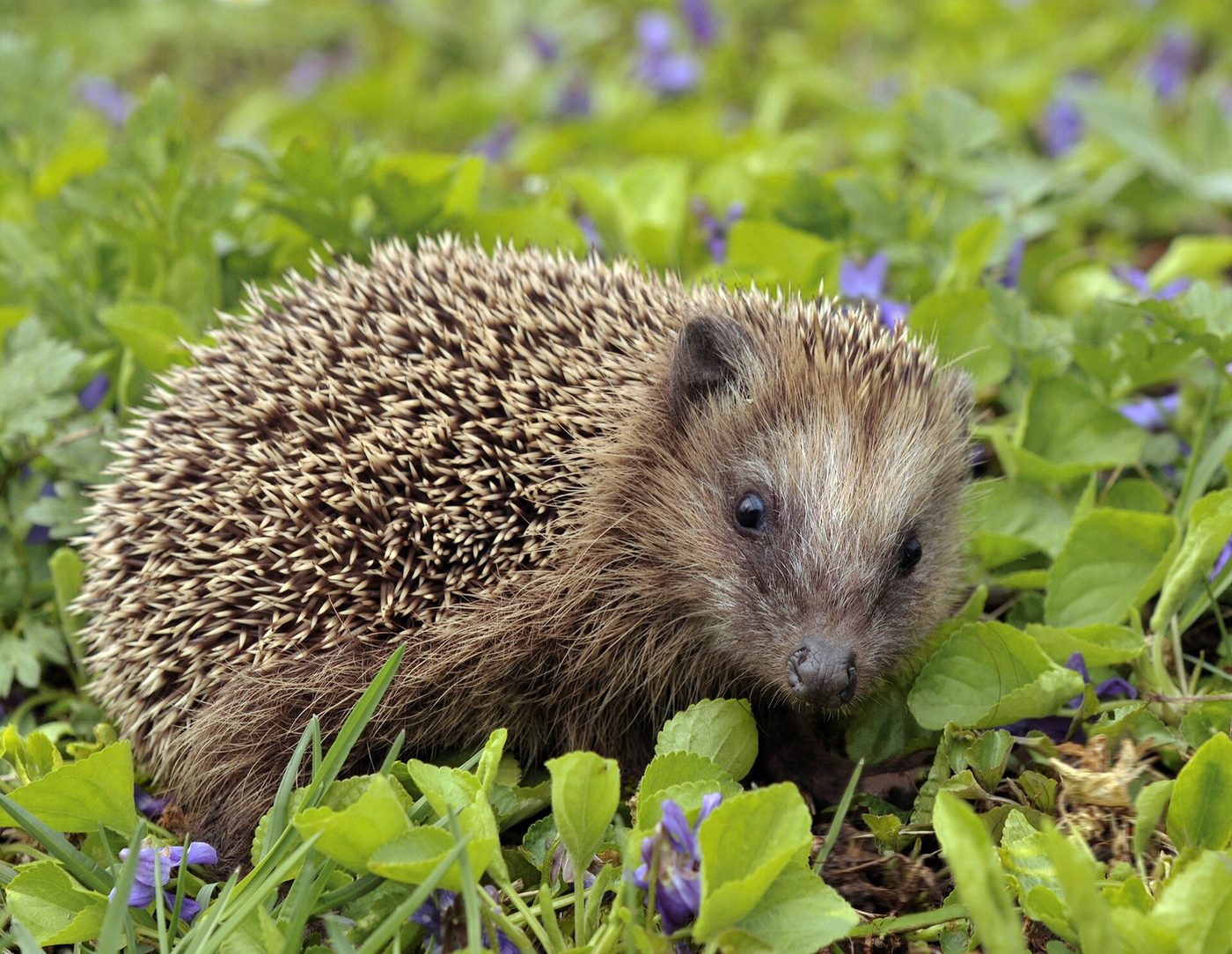
Photo: Michael Gäbler · CC BY-SA 3.0
European hedgehog
Erinaceus europaeus
Small and clad in spines, the hedgehog is a tireless nocturnal hunter of insects and one of the gardener's most valuable allies.
Characteristics
Temperament
Solitary, nocturnal and shy. Not aggressive: facing a threat it neither flees nor attacks, but rolls into a ball protected by its spines.
Diet
Insectivore: beetles, earthworms, snails, slugs and other invertebrates, with occasional eggs, small vertebrates and fruit.
An armoured insectivore
The European hedgehog belongs to the family Erinaceidae and has nothing to do with the porcupine, with which it is often confused: the latter is a far larger rodent with long, detachable quills. The hedgehog's spines, by contrast, are short modified hairs firmly anchored in the skin, covering the back in their thousands. At the base of each lies a muscle that lets the animal, when threatened, roll into a spiny ball that is almost impossible to attack.
The muzzle is pointed, the legs short, the eyesight modest but the sense of smell and hearing excellent, suited to a nocturnal life.
Where it lives
Widespread across much of western and central Europe, the hedgehog favours woodland edges, hedgerows, meadows and — increasingly — gardens and urban parks. It needs dry shelters in which to build a nest of leaves and grass: log piles, dense shrubs and heaps of foliage make ideal refuges. For this reason excessively tidy gardens, stripped of wild corners, put it in difficulty.
What it eats
The hedgehog is a voracious insectivore. Its diet includes beetles, earthworms, snails, slugs and other invertebrates, to which are occasionally added eggs, small vertebrates and fallen fruit. This appetite makes it a valuable natural controller of garden pests, which is why gardeners welcome it gladly.
Hibernation
As the cold arrives the hedgehog enters true hibernation, one of the few European mammals genuinely to do so. Heartbeat and breathing slow drastically and body temperature drops almost to that of the surroundings. To survive this phase the animal must build up sufficient fat reserves in autumn: a hedgehog that is too light will rarely make it through winter.
Conservation
Once extremely common, the hedgehog is now classified as near threatened, and in many regions populations are falling. The main causes are road traffic, the disappearance of hedgerows, the use of pesticides that reduce its prey, and dangerous nets and products in gardens. Leaving gaps between gardens, avoiding poisons and keeping wild corners are simple gestures that help it survive.