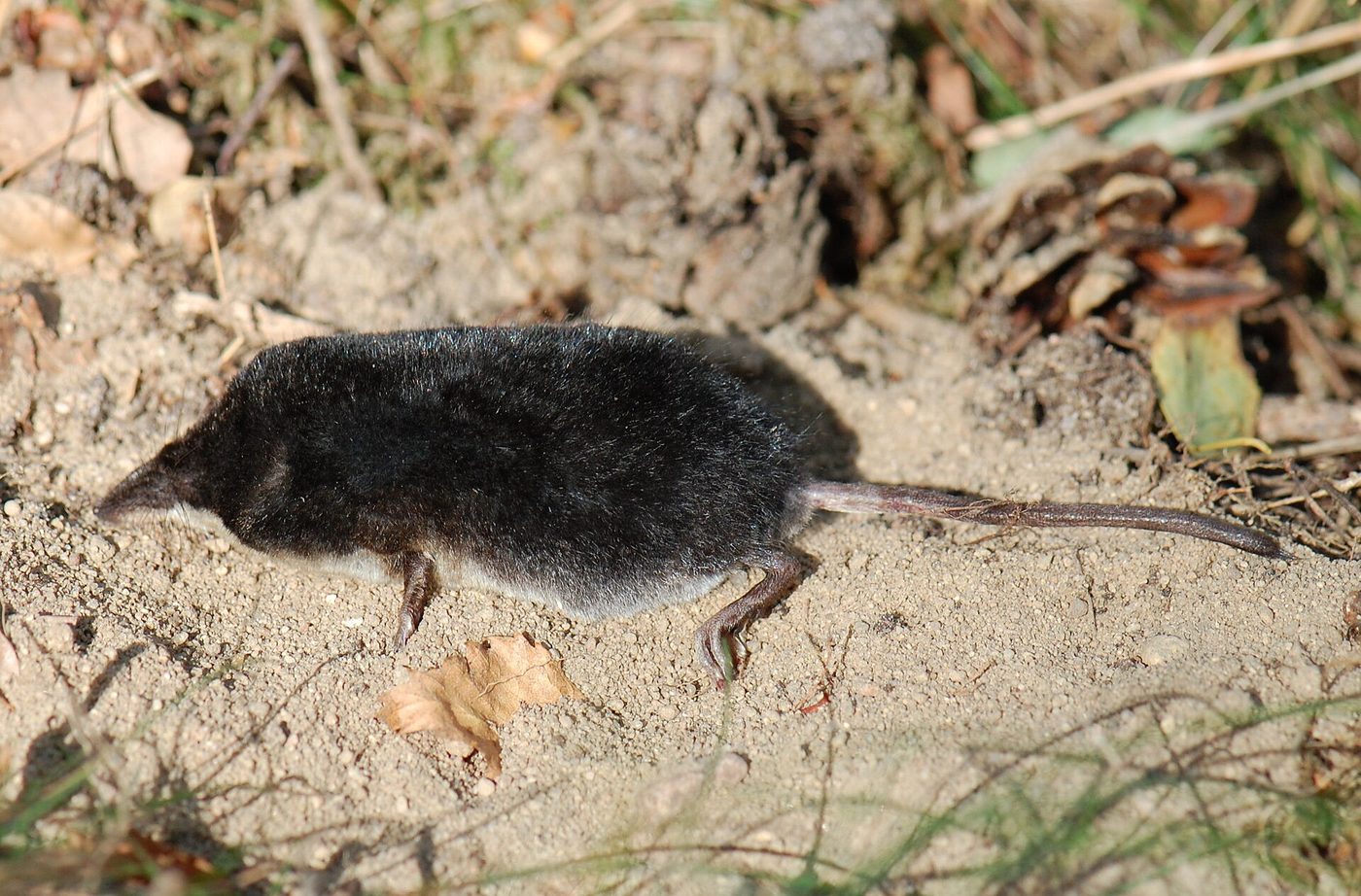
Eurasian water shrew
Neomys fodiens
The Eurasian water shrew is the largest shrew in Europe, a skilful semi-aquatic swimmer with venomous saliva, a rarity among mammals.
Characteristics
Temperament
Semi-aquatic, solitary, hyperactive
Diet
Aquatic invertebrates, larvae, small fish and amphibians
Description
The Eurasian water shrew is the largest and most striking of Europe's shrews. It has dense, velvety fur, greyish-black above and white below, with a sharp contrast. Its muzzle is pointed and mobile, its eyes tiny. Along its feet and tail it carries fringes of stiff hairs that, like oars, improve its thrust in the water. It is a superb swimmer, able to dive and hunt underwater.
Habitat and distribution
It lives across much of Eurasia, always near clean fresh water: brooks, streams, ponds, canals and well-vegetated banks. It digs burrows along the shore and moves nimbly between land and water.
Behaviour
It is a tireless predator with a very high metabolism. It feeds on aquatic invertebrates, larvae, crustaceans, small fish and amphibians, which it hunts by diving. It has a trait rare among mammals: its saliva contains a toxin that paralyses small prey, letting it immobilise them and sometimes store them alive.
Did you know?
When it dives, air trapped among its hairs wraps it in a silvery film of bubbles that insulates it from the cold water. It must eat almost continuously: a few hours of fasting can be fatal.
Conservation
It is classed as least concern, but is protected in many countries. It depends closely on water quality: pollution and the destruction of natural banks are its main threats.
Pros
- Exceptional swimmer among land mammals
- Valuable indicator of clean fresh water
- Rare example of a mammal with venomous saliva
Cons
- Very short life, often little over a year
- Depends on clean water and intact banks
- Extreme metabolism, dies if it fasts too long