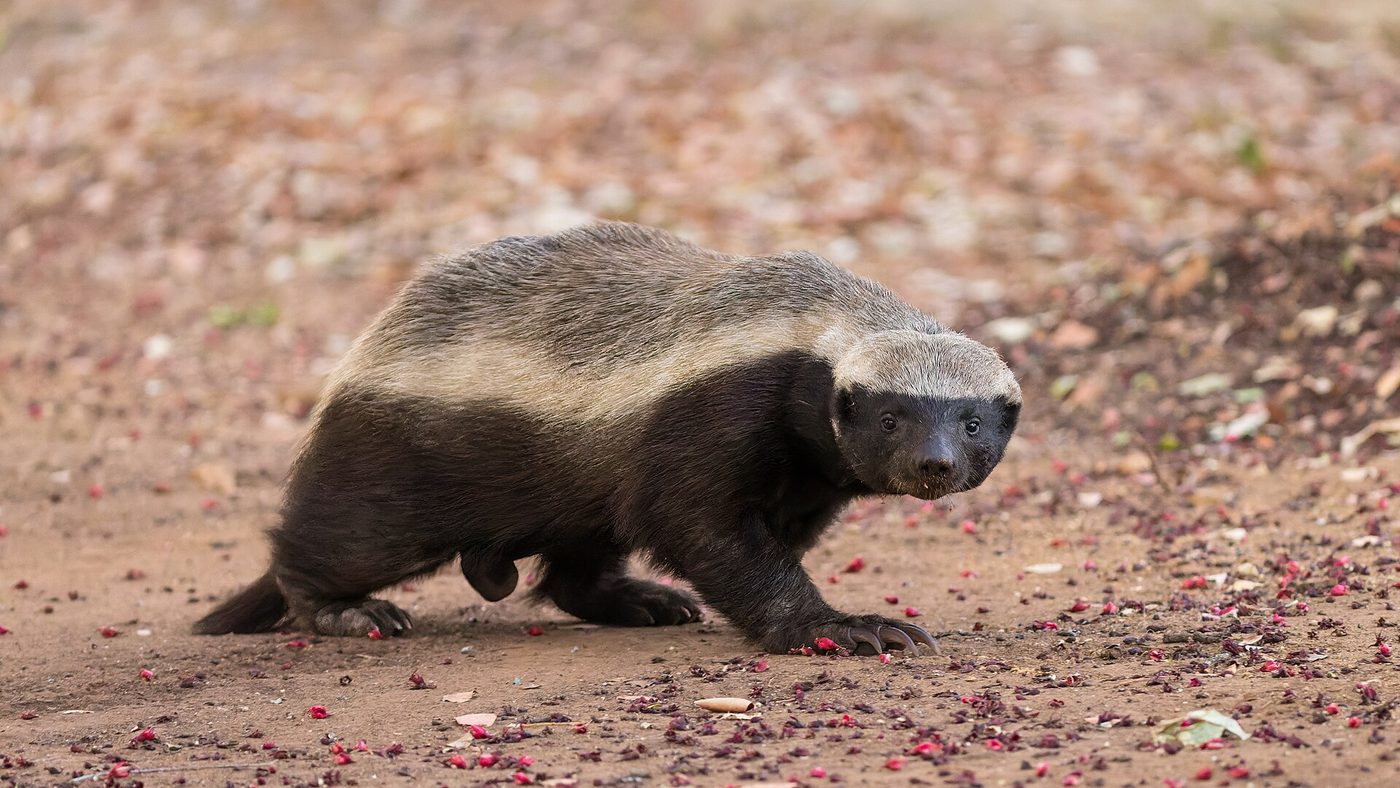
Photo: Sumeet Moghe · CC BY-SA 4.0
Honey badger
Mellivora capensis
Small but legendary for its boldness, the honey badger takes on venomous snakes, bees and predators far larger than itself without ever backing down.
Characteristics
Temperament
Bold, tenacious and aggressive, among the boldest animals in the world. Solitary and nocturnal; it fearlessly faces far larger opponents and would rather fight than flee.
Diet
Omnivore: insects, rodents, reptiles, eggs, roots, fruit and, as its name says, honey and bee larvae.
Small, but fearless
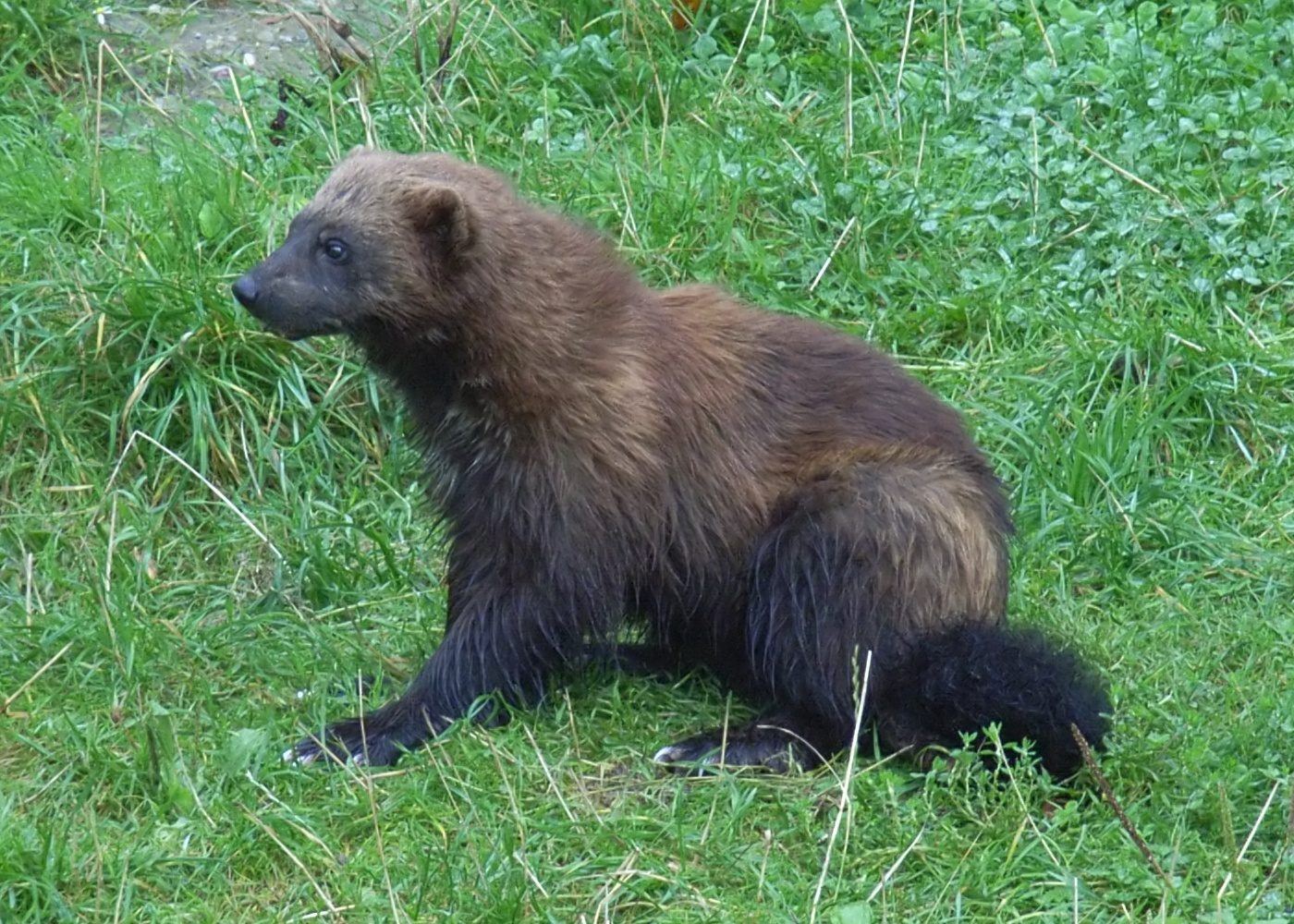
The honey badger, also known as the ratel, is a medium-sized mustelid of stocky, sturdy appearance. Its coat is unmistakable: the back, from head to tail, is covered by a silver-grey or whitish band, while the underside is black. It has short, powerful legs with long claws, and a thick, surprisingly loose skin that lets it twist round and bite even when grabbed. But its real fame is due to its character: it is regarded as one of the boldest and most stubborn animals in the world.
Boldness made animal
The honey badger is famous for its incredible aggressiveness and tenacity. It does not hesitate to take on animals far larger than itself, such as lions or hyenas, and to defend its food or territory against any opponent. This boldness is backed by notable defences: the thick skin resists many bites and stings, and it has glands that emit a strong odour to deter enemies. It is an animal that would rather fight than flee.
A hunter and a lover of honey
The honey badger's diet is extremely varied: insects, rodents, reptiles, eggs, roots, fruit and, as its name says, honey and bee larvae. To reach the hives it fearlessly braves the bees' stings. It is a skilled digger, using its powerful claws to extract prey from the ground. It is also known for its surprising resistance to the venom of some snakes, which it hunts and eats; after a bite it may be stunned, but it often recovers and resumes its meal.
Behaviour and intelligence
The honey badger is mostly solitary and active especially at dusk and by night. It is also surprisingly intelligent: individuals have been observed using objects as tools and solving problems to escape enclosures, which makes it one of the most ingenious mammals.
Conservation
The honey badger is classified as least concern and has a very wide range, covering much of Africa and south-western Asia. It is not a globally threatened species, thanks in part to its extraordinary adaptability and to the character that makes it a survivor par excellence.