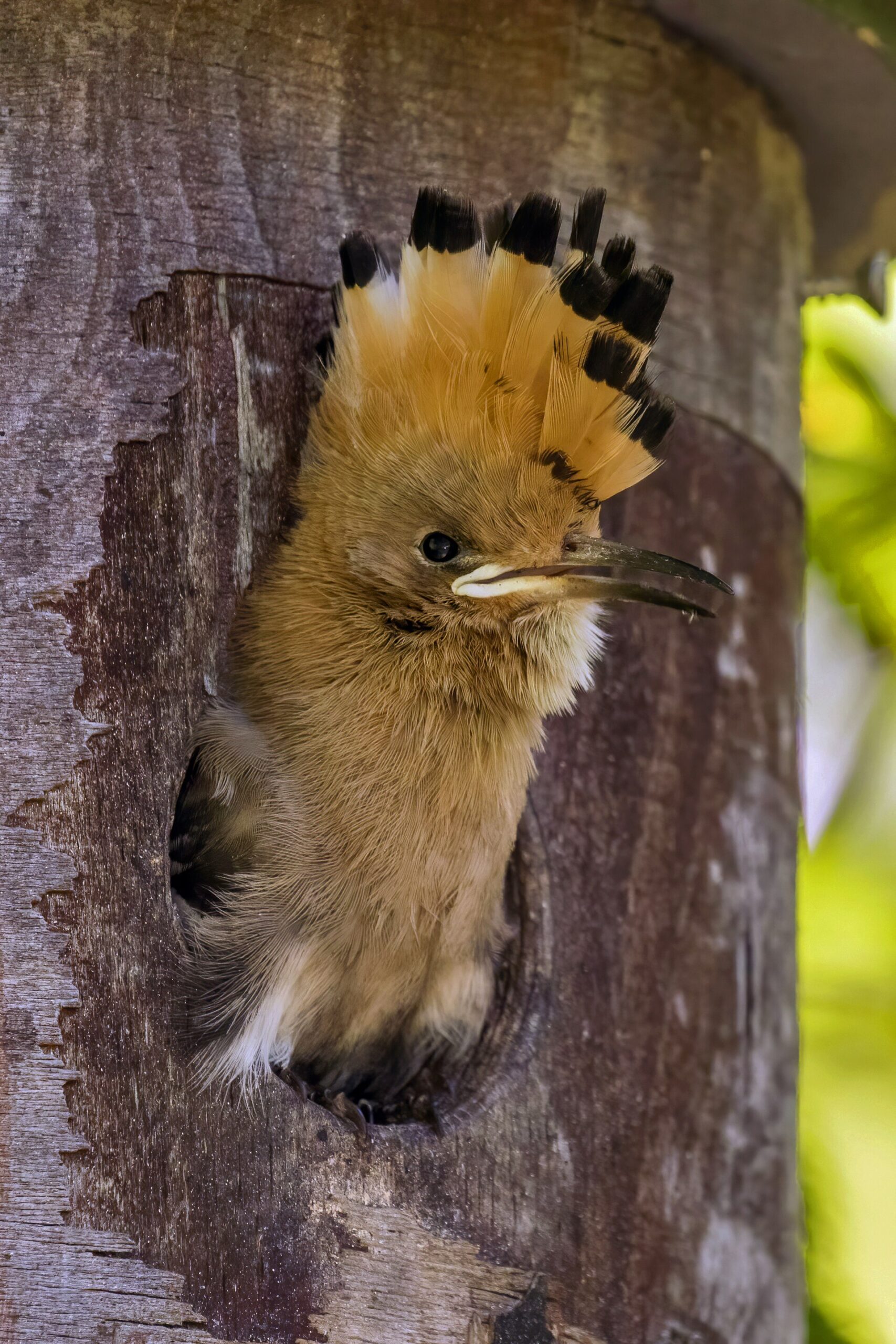
Hoopoe
Upupa epops
Characteristics
Temperament
Diurnal, not very gregarious and tied to open environments. It walks on the ground probing the soil with its long bill and nests in cavities. In spring males sing to attract females; the pair raises the young devotedly. It raises its fan crest when excited or landing. It defends the nest with a foul-smelling secretion. A migrant: an awaited summer presence in Italy. Not a pet: a wild bird useful to agriculture.
Diet
An insectivore that hunts mainly on the ground, probing the soil with its long curved bill. It eats insect larvae (especially beetle grubs), mole crickets pulled from their tunnels, adult insects, spiders, worms and small invertebrates, and occasionally small reptiles and seeds. It walks over open ground repeatedly thrusting its bill into soft soil to sense hidden prey, then pulls them out and "softens" them by beating before swallowing. By hunting harmful larvae it is a valuable ally of agriculture.
The Hoopoe (Upupa epops) is one of Europe's most unmistakable and beloved birds, a symbol of the Mediterranean countryside. Famous for:
- Its fan-shaped crest: a crown of cinnamon feathers tipped with black, raised and spread when it is excited or on landing
- Its unmistakable livery: a pinkish-cinnamon body and boldly black-and-white barred wings and tail, a pattern that makes it unique in flight
- Its long curved bill: thin and down-curved, perfect for probing the ground
- The "oop-oop-oop" song: a soft, repeated call that gives it its name in many languages
- Its "butterfly" flight: undulating and floppy, with broad wingbeats
- The "smelly" nest: one of the most curious defences in the bird world
IUCN status: Least Concern (LC), with a wide population across Europe, Asia and Africa. In Italy it is a common summer migrant: it arrives in spring to breed and leaves in autumn for Africa. It is a valuable ally of farmers and gardeners, feeding on harmful insects hidden in the soil.
Classification and category
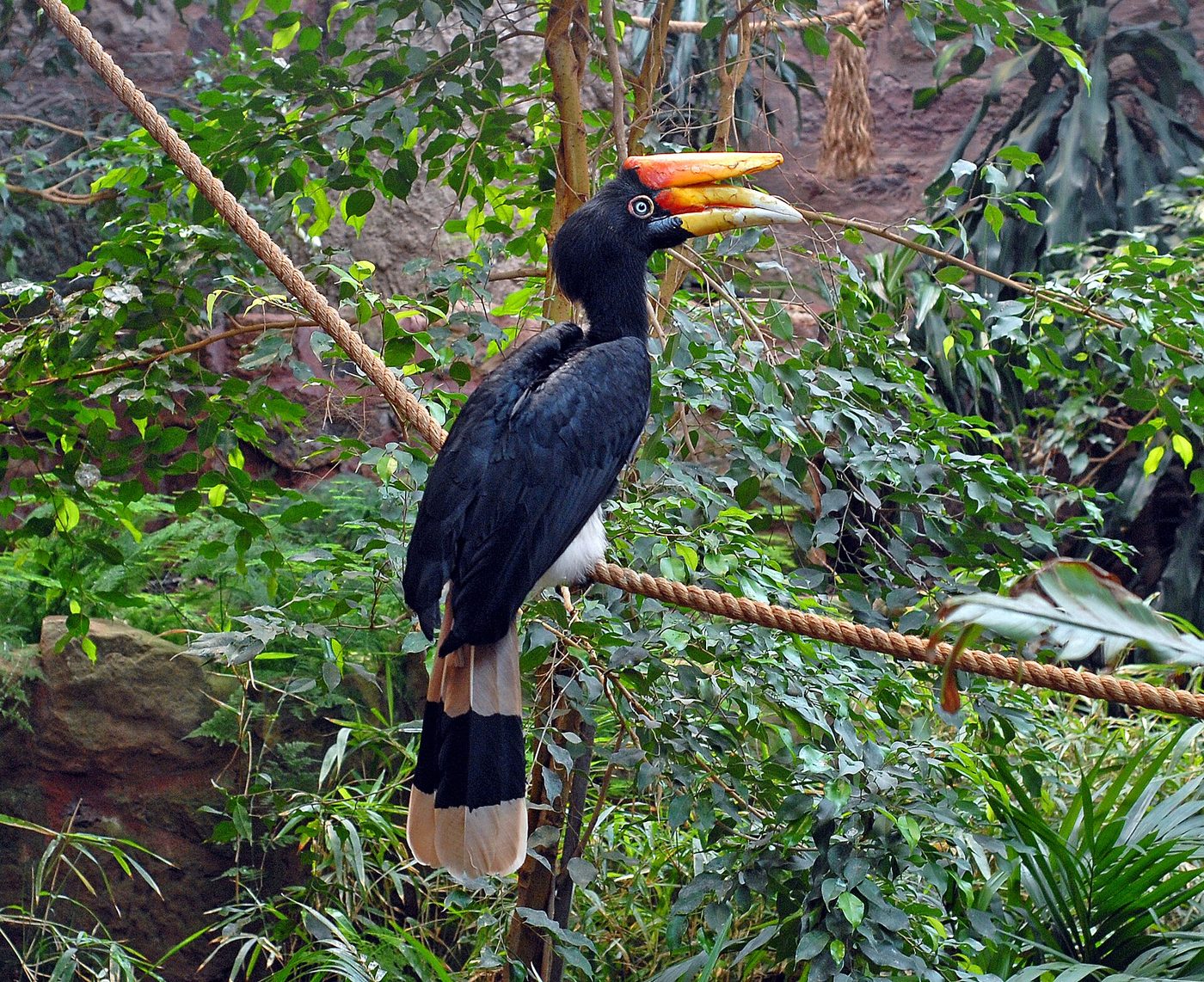
The Hoopoe belongs to the family Upupidae, of which it is the best-known and most widespread species. Its placement among orders has long been debated: traditionally linked to the Coraciiformes (the order of kingfishers, bee-eaters and rollers), it is today often classed in the Bucerotiformes, the order that also includes the hornbills (the large casque-billed birds) and related groups. Its closest relatives are the African wood hoopoes (Phoeniculidae) and the hornbills (Bucerotidae), despite the latter's very different look. Etymology: both the scientific name "Upupa epops" and the common names in many languages (Italian upupa, English hoopoe, Arabic hudhud) are onomatopoeic, imitating the bird's distinctive three-syllable song. Parameters: Length 25-32 cm. Wingspan 44-48 cm. Weight 45-80 g. Longevity usually a few years in the wild, with documented cases up to about 10-11 years. It nests in cavities (tree holes, walls, nest boxes), laying 5-8 eggs incubated by the female while the male brings food; the chicks stay in the nest for some weeks.
Habitat and distribution
The Hoopoe has a vast Old World range: much of Europe (including Italy), Asia and Africa. European populations are migratory, wintering south of the Sahara; more southerly ones may be resident. Preferred habitats — open and semi-open environments with accessible ground: countryside, pastures, vineyards and olive groves (traditional farmland, rich in soil insects); meadows, clearings and open areas with scattered trees (offering both ground to forage and cavities to nest); and woodland edges, orchards and gardens. The Hoopoe needs a precise combination: open, soft ground to probe with its bill for prey, and cavities in which to nest. It therefore favours traditional farmland mosaics and suffers from their degradation (pesticide use, the loss of old trees and walls). It is mainly diurnal and not very gregarious. IUCN: Least Concern. Widespread and adaptable, though in some parts of Europe it has shown local declines linked to intensive agriculture and the loss of nest sites; nest boxes and the conservation of traditional landscapes help it.
Diet
An insectivore that hunts mainly on the ground, "reading" the soil with its probe-like bill: insect larvae (especially beetle grubs and other soil-dwelling larvae); mole crickets (a favourite prey, extracted from underground tunnels); adult insects, spiders, worms and small invertebrates; and occasionally small reptiles or amphibians and a few seeds. Hunting strategies: probing the ground (it walks over open ground and repeatedly thrusts its long bill into soft soil, moss or under leaves, sensing hidden prey); extraction (once it finds a grub or mole cricket it pulls it out and, by beating it, removes the hard parts before swallowing); and pest control (by feeding on harmful larvae it provides a valuable service to agriculture, hence its reputation as the "farmer's friend"). Crucially, the long, thin, curved bill is a precision tool, and the skull's musculature lets the bird open it even when it is buried in the soil, to grasp prey underground.
Physical features
A medium-sized bird of theatrical beauty. Plumage and crest: head, neck and breast a warm pinkish-cinnamon; an erectile crest of cinnamon feathers tipped with black, usually held back in a point but spread into a black-spotted crown when the bird is alarmed, excited or landing; broad, rounded wings and tail strikingly barred in black and white. The body: a long, thin, down-curved bill, that of an insectivore that probes the ground; short legs, suited to walking and foraging on the ground; and a modest size but an unmistakable look. Performance: a "butterfly" flight (undulating and floppy, with the black-and-white wings conspicuous, making it recognizable at a distance); walking and probing (it moves nimbly on the ground exploring the soil); the crest as a signal (its raising communicates the bird's state); and a soft, penetrating voice (the famous "oop-oop-oop" call).
Behaviour and curiosities
A diurnal, not very gregarious bird tied to open environments. In spring males sing to attract females and defend a territory; the pair nests in a cavity and raises the young with great devotion. It is a familiar and awaited presence in the Italian countryside at the arrival of the warm season.
The song that names it: few species have a name so plainly tied to their voice; the soft three-syllable "oop-oop-oop" rings through the countryside in spring, and from it come, by onomatopoeia, the Italian upupa, the English hoopoe, the Arabic hudhud and many more — hearing it sing is often the easiest way to notice its presence. The crown-crest: the crest is the Hoopoe's most spectacular feature; normally folded back into a point, when the bird is excited, alarmed or just landed it snaps it open into a magnificent black-spotted fan, a visual signal of emotion that also makes the bird even more striking. The "smelly" nest: one of the most unusual defences among birds — during nesting the female and chicks produce, from the preen (uropygial) gland, a foul-smelling secretion like rotting meat that soaks the nest, and the chicks can also squirt faeces at an attacker; this malodorous "arsenal" deters many predators and parasites, protecting the brood in exchange for a decidedly unfragrant nest. The farmer's friend: by hunting grubs, mole crickets and other harmful insects hidden in the soil, the Hoopoe performs genuine pest control in gardens, orchards and fields, which is why it has always been seen as a beneficial bird for agriculture, its presence a sign of countryside still rich in soil life. The cultural symbol: the Hoopoe holds a special place in many cultures — it is the national bird of Israel; it appears in the Quran as King Solomon's messenger (the hudhud); it stars, as "king of the birds", in Aristophanes' famous comedy The Birds and in the Persian poem The Conference of the Birds. The unmistakable flight: in flight the Hoopoe looks almost like a large butterfly, thanks to the broad, irregular beat of its wide wings and its conspicuous black-and-white pattern, which make it identifiable at a glance even from afar as it moves between fields.
Pros
- Uccello iconico e inconfondibile delle campagne mediterranee
- IUCN Least Concern: ampia distribuzione in Europa, Asia e Africa
- Utile all'agricoltura: controlla larve, grillotalpe e insetti dannosi
- Ricco di valore culturale e simbolico in molte civiltà
Cons
- Non è un animale da compagnia (uccello selvatico migratore)
- Sensibile all'agricoltura intensiva e ai pesticidi (cali locali)
- Dipende da terreni aperti morbidi e da cavità per nidificare
- Il nido emette un odore sgradevole (difesa naturale)