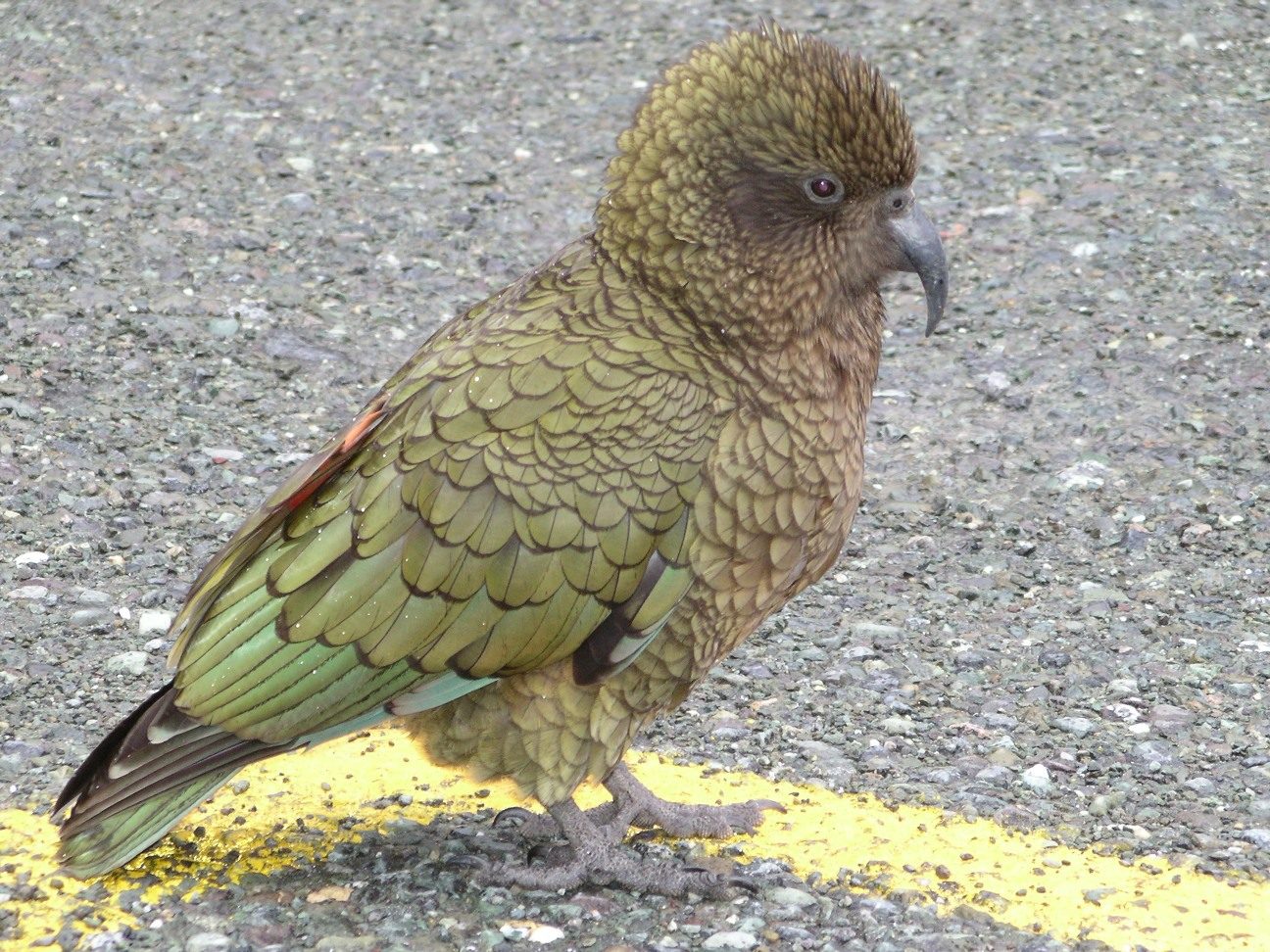
Photo: User:Velela · Public domain
Kea
Nestor notabilis
The only alpine parrot in the world, the kea lives among the snowy mountains of New Zealand and is famous for an intelligence and curiosity almost like a primate's.
Characteristics
Temperament
Extremely intelligent, curious, bold and playful. It explores and manipulates objects; it solves complex problems and cooperates, with cognitive abilities comparable to the great apes.
Diet
Opportunistic omnivore: roots, leaves, shoots, berries, nectar, insects and carrion.
A parrot among the snows
The kea is a unique case in the parrot world: it is the only species that lives permanently in an alpine environment, among the mountains and glaciers of New Zealand's South Island. At first sight its plumage looks a dull olive green, almost camouflaged among the rocks, but when it spreads its wings it reveals a surprising bright orange beneath the feathers. It has a strong, curved bill, suited to digging and manipulating the most varied objects.
An extraordinary intelligence
The kea is regarded as one of the most intelligent birds in the world, comparable in cognitive ability to the great apes. It can solve complex problems, use tools, work in cooperation and remember learned solutions. Its curiosity is legendary: it explores and dismantles with its bill practically everything it finds, from campers' equipment to the rubber seals of cars. This inquisitive behaviour, combined with its boldness, has earned it the reputation of 'the clown of the mountains'.
An opportunistic omnivore
The kea feeds on a great variety of foods: roots, leaves, shoots, berries, nectar, insects and carrion. This flexible diet is essential to survive in a harsh mountain environment, where food can be scarce. Its ability to adapt and exploit new food sources is part of its success, but it also brings it close to human settlements.
A complicated relationship with humans
The kea's great intelligence and curiosity make it fascinating but also a source of conflict. Its habit of damaging objects and, in the past, the false reputation of attacking livestock long led to its persecution. Today it is protected, but it remains vulnerable.
Conservation
The kea is classified as an endangered species. Its populations have declined drastically because of historical hunting, introduced predators that raid its nests, accidents and accidental poisoning. Its conservation requires the protection of mountain habitats and the control of introduced predators, as well as a more thoughtful coexistence with this extraordinary and intelligent bird.