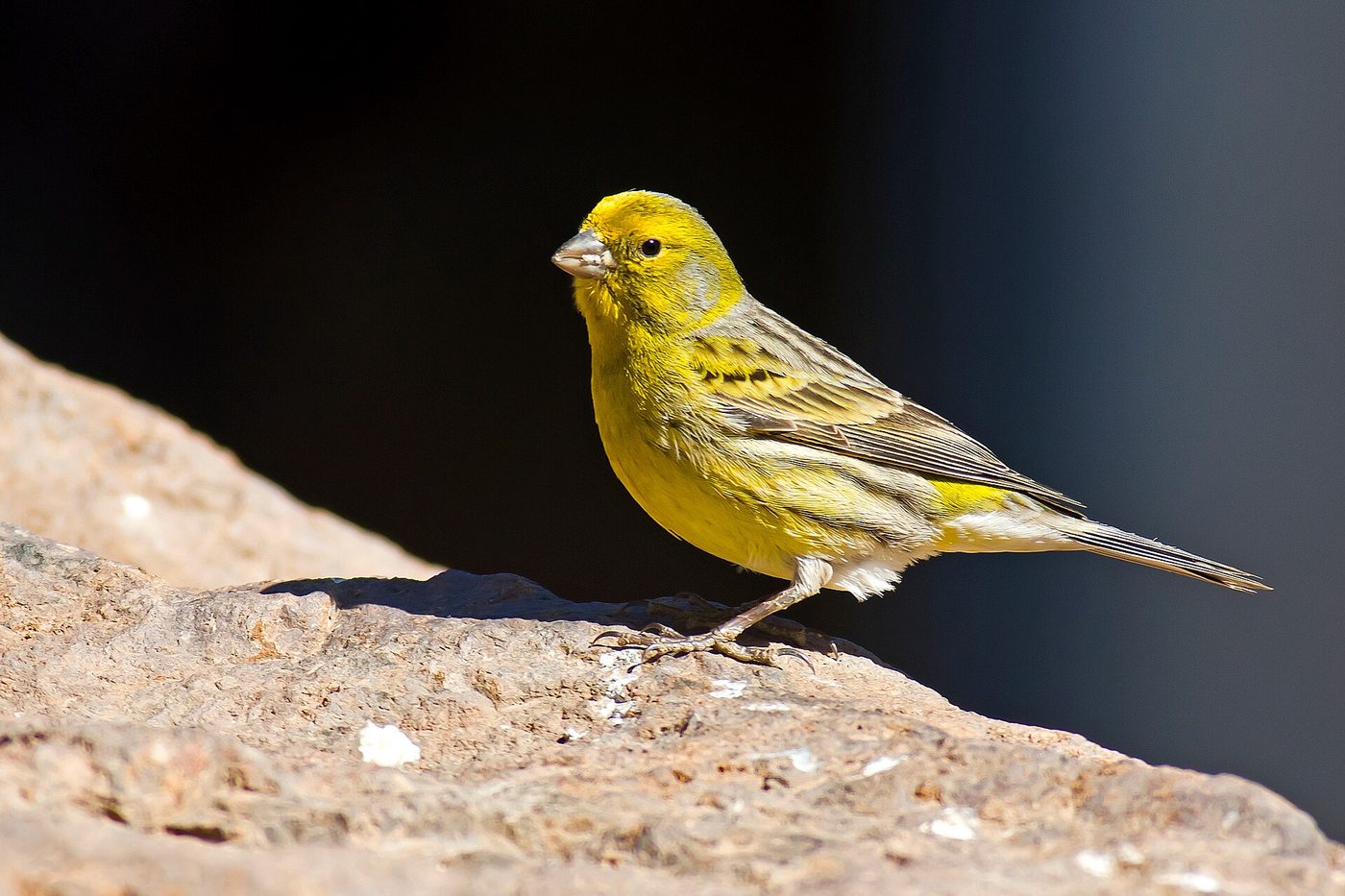
Photo: Juan Emilio · CC BY-SA 2.0
Atlantic canary
Serinus canaria
A small bird with a melodious song, the wild Atlantic canary of the Atlantic islands is the ancestor of the famous domestic canary kept around the world.
Characteristics
Temperament
Lively, sociable and with a melodious song
Diet
Granivore: seeds, small fruit and insects
The little singer of the islands
The wild Atlantic canary is a small songbird, of more sober colours than its domestic descendants. Its plumage is of yellowish-green tones, with grey-brown streaks on the back and lighter tones on the underside: a discreet livery, quite different from the bright yellow we are used to associating with the canary. What makes it special is its voice: its song, lively, melodious and varied, is among the most admired in the bird world.
Habitat and distribution
It lives in the Atlantic islands of Macaronesia: the Canary Islands archipelago, the Azores and Madeira. It frequents varied environments, from woods and pine forests to orchards, gardens and cultivated areas, showing itself adaptable and not overly shy. It is a bird tied to open and semi-wooded landscapes, where it finds seeds and shelter.
Behaviour
The canary feeds mainly on seeds, but also on small fruit, shoots and insects, especially during the period of rearing its young. It often lives in small groups and nests among the vegetation. Its song, particularly intense in males, serves to defend the territory and attract females, and is the reason this bird has become so famous with people.
From wild to domestic
Starting from this modest island bird, centuries of selective breeding have given rise to the domestic canary, one of the most widespread pet birds in the world. The bred forms have developed bright colours, from the classic yellow to many other tones, and particularly elaborate songs. The domestic canary also has a place in history: it was once taken into mines to signal the presence of dangerous gases.
Conservation
The wild Atlantic canary is classified as a species of least concern, with stable populations in its home islands. It is an adaptable bird that coexists well with the human presence. Protecting its island environments nonetheless remains important to maintain its health and abundance.
Pros
- Song among the most beautiful in the bird world
- Adaptable and not overly shy
- Ancestor of the famous domestic canary
- Stable populations
Cons
- Wild colours more sober than the domestic canary
- Natural range limited to the Atlantic islands