Photo: Raimond Spekking · CC BY-SA 4.0
Clownfish
Amphiprion ocellaris
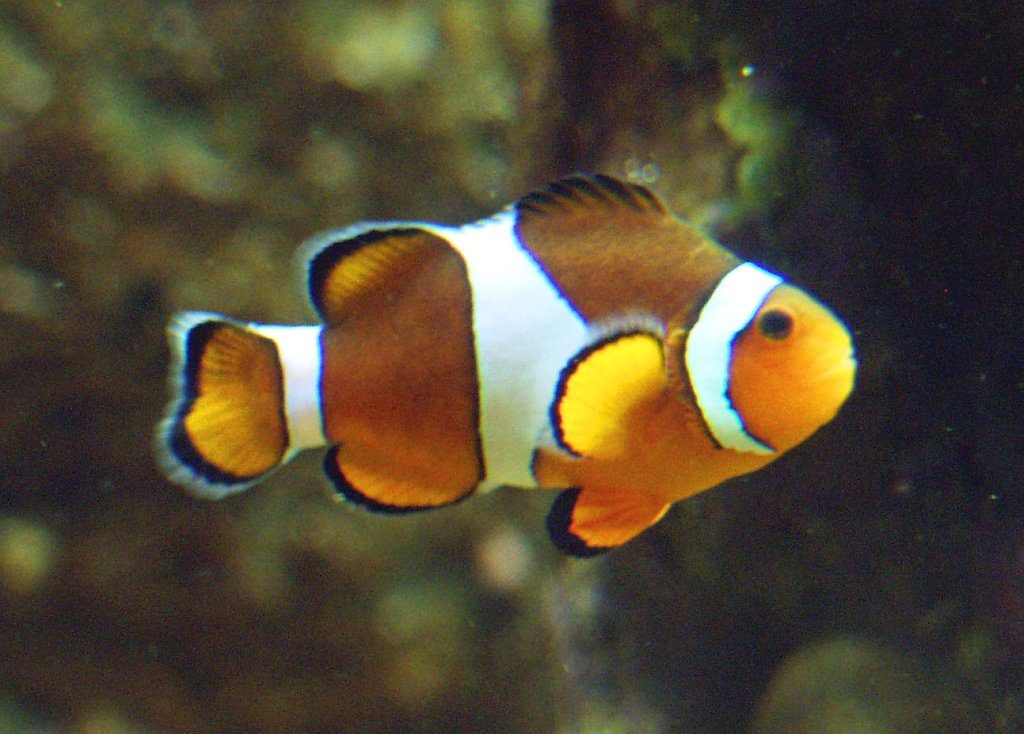
Flaming orange with white bands, the clownfish lives in symbiosis with sea anemones, sheltered among the stinging tentacles that keep other fish away.
Characteristics
Temperament
Sedentary and territorial, tied to its own anemone. It lives in small groups with a strict hierarchy led by a dominant female; it actively defends its refuge.
Diet
Omnivore: small invertebrates, algae and food scraps gathered near the anemone.
An unmistakable little fish
The clownfish is one of the most recognisable fish of the coral reefs, with its bright orange livery crossed by three white, black-edged bands. It is a small fish, living in the warm, clear waters of the Indo-Pacific, among the corals. Its fame with the general public has grown enormously thanks to cinema, but its true story, that of its symbiosis with the sea anemone, is even more fascinating than any film.
Symbiosis with the anemone
The clownfish lives in close association with sea anemones, animals with stinging tentacles that paralyse fish. The clownfish, however, is immune to those stings: a special layer of mucus on its skin protects it, letting it hide among the tentacles without harm. In exchange for protection from predators, the fish defends the anemone from those that would feed on it, cleans it and, with its movements, promotes water circulation. It is a classic example of mutualism, in which both species benefit.
A sedentary life
The clownfish spends most of its life close to its own anemone, from which it strays little. It lives in small groups with a strict social hierarchy, led by a dominant female. It feeds on small invertebrates, algae and food scraps, often gathered in the immediate vicinity.
A surprising curiosity
The clownfish has a peculiar reproductive biology: all individuals are born male. In the group, the largest fish becomes the dominant female; the second largest is the breeding male. If the female dies, the breeding male changes sex and becomes the new female, while another individual takes his place. It is a natural and programmed sex change.
Conservation
The clownfish is classified as least concern. Its populations, however, depend on the health of the coral reefs, threatened by ocean warming and acidification, and on the presence of anemones. Capture for the aquarium trade can also have a local impact. Protecting the coral reefs is the key to the future of this small, famous fish.