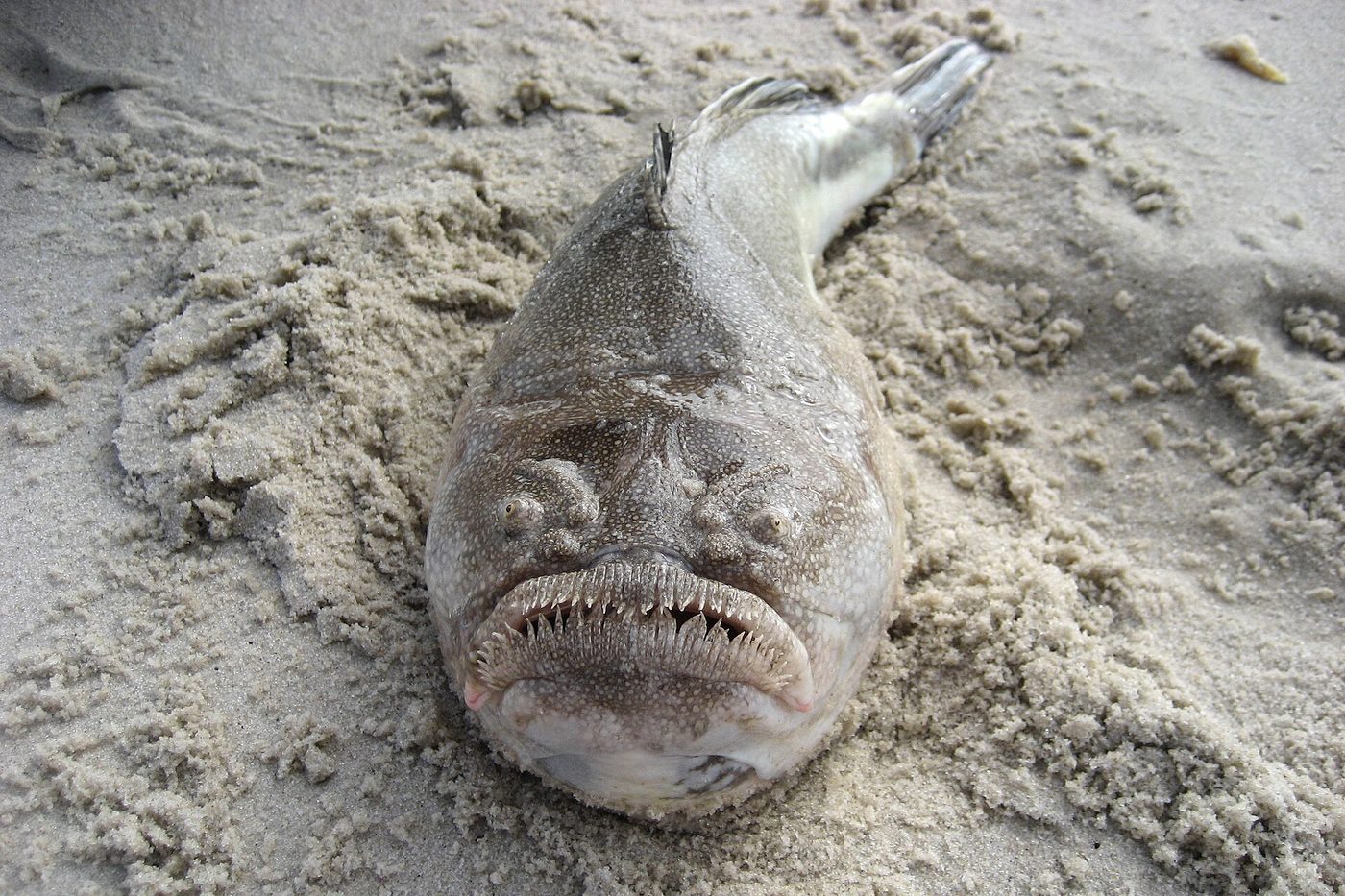
Northern stargazer
Astroscopus guttatus
An ambush predator of the American Atlantic, the northern stargazer lies buried in the sand with its eyes turned skyward and can even generate electric shocks.
Characteristics
Temperament
Sedentary, camouflaged, ambush predator
Diet
Carnivore: fish and crustaceans sucked in from ambush
A fish that watches the stars
The northern stargazer owes its name to the position of its eyes: they sit on top of a large, flat, boxy head and face upward, as if it were gazing at the sky. Its mouth too points upward, often fringed with small skin flaps. The body is stout, elongated and flattened, an anatomical design perfect for a life spent buried in the sandy seabed. It can reach around fifty centimetres in length.
Habitat and distribution
It lives along the Atlantic coasts of the eastern United States, between North Carolina and New York, on sandy bottoms down to about a hundred metres deep. It can be told from its southern sister species by the numerous small, closely spaced white spots dotting its head and back.
Hunting and electric defence
It is an ambush predator: it buries itself leaving only its eyes and mouth exposed, then waits motionless for fish and crustaceans to pass overhead, sucking them in with a sudden gulp. Its most remarkable weapon is electricity: behind its eyes it has electric organs modified from the eye muscles, able to produce shocks used to stun prey and for defence. It is one of the very few marine fish able to generate current.
Curiosities
The combination of camouflage, electric ability and suction mouth makes it a nearly invisible, deadly hunter. It is considered good eating, but is rarely caught precisely because of its hidden life.
Conservation
The IUCN lists the species as Least Concern: it is relatively common within its range and is not considered threatened.
Pros
- Eyes on top of the head, unique
- One of the few marine fish that generate electricity
- Perfect camouflage under the sand
Cons
- Can deliver electric shocks: handle with care
- Hard to observe, almost always buried
- Not a home-aquarium fish