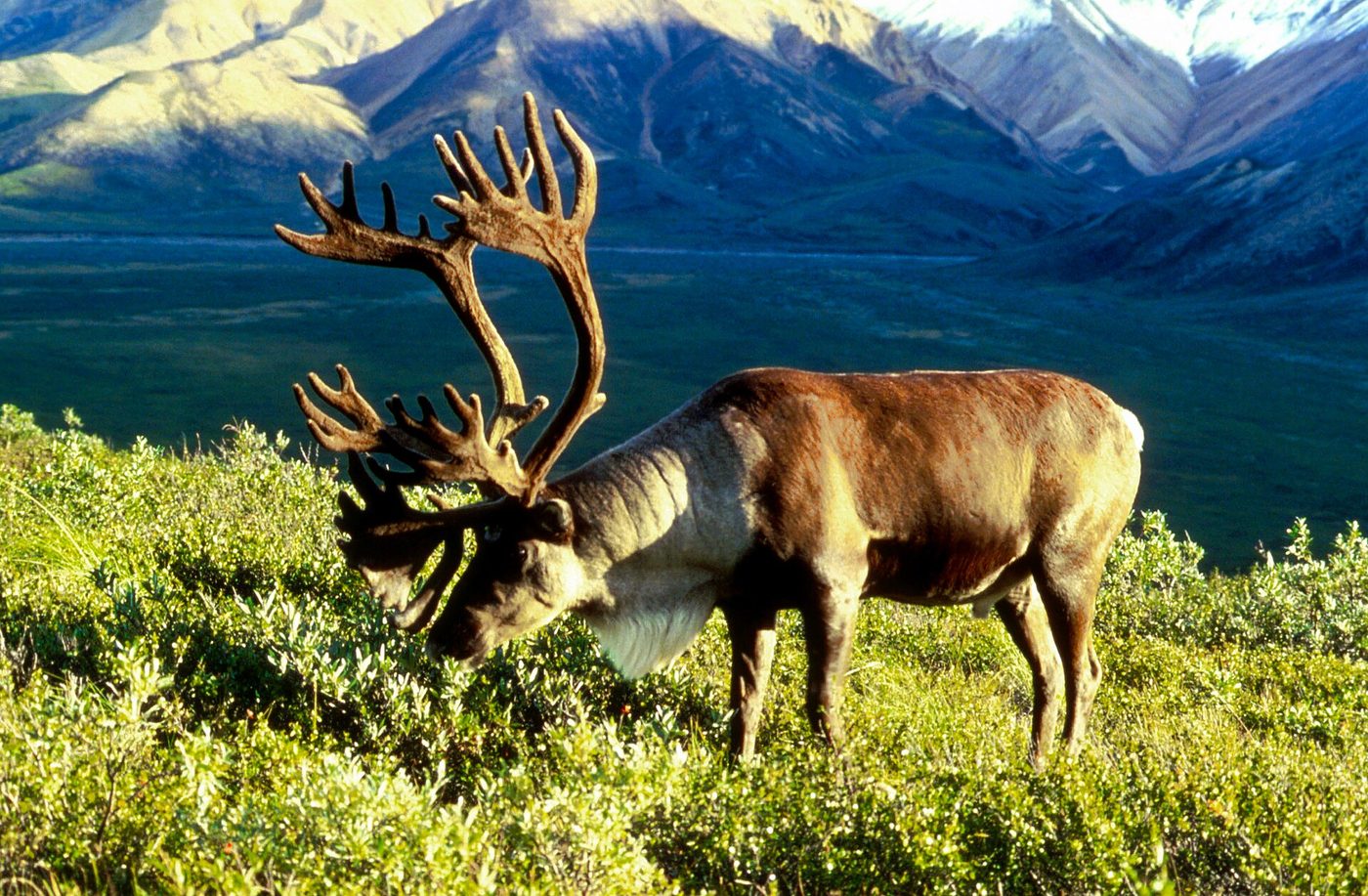
Photo: Dean Biggins (U.S. Fish and Wildlife Service) · Public domain
Reindeer
Rangifer tarandus
A tireless traveller of the Arctic tundra, the reindeer is the only deer in which the females too bear antlers, adapted like no other to the cold of the north.
Characteristics
Temperament
Social and migratory, living in large herds. Hardy and a tireless traveller; adapted to extreme cold, it makes some of the longest land migrations.
Diet
Herbivore: grasses and shrubs in summer, especially lichens in winter, dug out from under the snow.
The deer of the Arctic
The reindeer, called caribou in North America, is a deer perfectly adapted to life in the coldest regions of the planet, between the Arctic tundra and the boreal forests. It has a sturdy build, a thick coat that insulates it from the cold, and broad hooves that act like snowshoes, spreading its weight over snow and soft ground. A unique feature sets it apart from all other deer: the females too bear antlers, not just the males.
Adaptations to the great cold
The reindeer is a champion of survival in the cold. Its fur is made of hollow hairs that trap air, offering exceptional insulation. Even its muzzle is covered in fur, and a special heat-exchange system in the nostrils warms the cold air before it reaches the lungs. Its eyes change colour between summer and winter to adapt to the light of the long Arctic days and nights.
Great migrations
Many reindeer populations make some of the longest land migrations in the world, moving in huge herds between summer and winter pastures across immense expanses. They feed on grasses, shrubs and, in winter, especially on lichens, which they dig out from under the snow with their hooves. The lichen known as 'reindeer moss' is a key part of their winter diet.
An ancient bond with humans
The reindeer has a long history of relationship with humans. In several northern cultures, such as the Sami of Scandinavia, it has been herded and semi-domesticated for centuries, providing meat, milk, hides and transport. It has also entered popular imagination as a legendary companion of the winter festivities.
Conservation
The reindeer is classified as a vulnerable species. Many populations, particularly the wild caribou, are declining because of climate change, which alters the tundra and ice cycles, habitat loss and human disturbance. Its conservation is closely tied to the future of the Arctic environments.