Photo: Mnolf · CC BY-SA 3.0
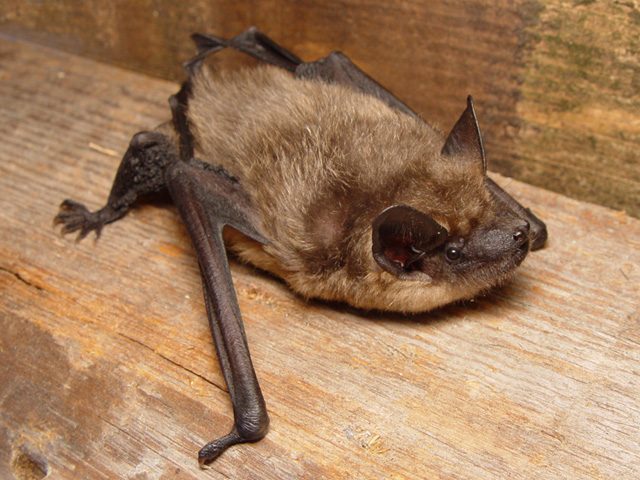
Serotine bat
Eptesicus serotinus
The serotine bat is a medium-large European bat with a slow, powerful flight, hunting insects at dusk around houses and gardens.
Characteristics
Temperament
Nocturnal, crepuscular, gregarious in colonies
Diet
Insectivore: beetles and moths caught in flight
Description
The serotine is one of the largest bats in Europe, with a wingspan approaching 37 centimetres. It has thick, velvety brown fur, paler on the belly, broad wings and triangular ears. Its muzzle is dark and hairless. Its flight is typically slow, broad and powerful, often at medium height, alternating glides with vigorous wingbeats.
Habitat and distribution
It is found across much of Europe, North Africa and western Asia. It is a species closely tied to human landscapes: it favours open countryside, woodland edges, parks and gardens, and roosts chiefly in buildings, settling in attics and roof cavities.
Behaviour
It emerges to hunt at dusk, often among the first bats to appear in the evening sky, as its name suggests. It feeds on flying insects, particularly beetles and moths, caught on the wing around streetlights, hedges and tree canopies. It spends the winter hibernating in sheltered places.
Did you know?
Its name comes from the Latin serotinus, meaning "of the evening", from its habit of flying early as the light fades. Maternity colonies are made up almost entirely of females, which raise their young together in warm, quiet attics.
Conservation
It is classed as least concern, but like all European bats it is protected by law. The main threats are disturbance of roost sites, building renovation and the loss of insects due to pesticides.
Pros
- Valuable natural controller of night-flying insects
- Well adapted to living alongside humans
- Long-lived, can exceed fifteen years
Cons
- Sensitive to disturbance of roosts in buildings
- Threatened by insect decline from pesticides
- Protected species: must not be disturbed or removed