Photo: Rhododendrites · CC BY-SA 4.0
Raccoon
Procyon lotor
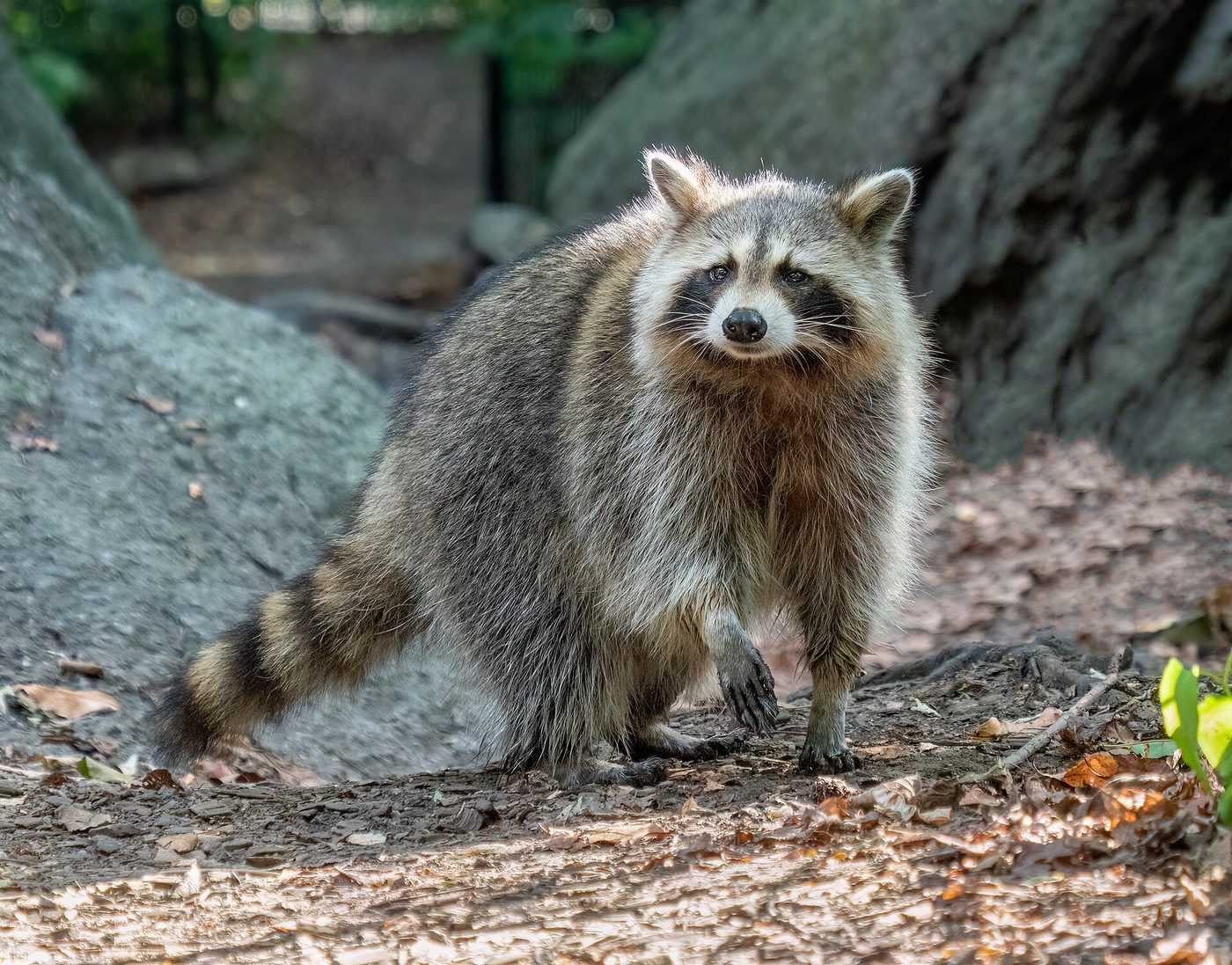
With its black mask and highly skilled paws, the raccoon is a curious, adaptable little mammal, able to thrive in the woods as much as in the cities.
Characteristics
Temperament
Curious, intelligent and adaptable, mostly nocturnal. Solitary but tolerant of its own kind; highly skilled with its paws, it can solve small problems and force latches.
Diet
Opportunistic omnivore: fruit, nuts, insects, eggs, small animals, fish and, in cities, scraps of all kinds.
The masked thief
The raccoon is a medium-sized mammal of unmistakable appearance. Its most characteristic feature is the 'mask' of black fur around the eyes, which stands out on the pale face and gives it the air of a little bandit. Its tail is bushy and ringed with alternating dark and pale bands. The body is stocky, the fur grey-brown, and the forepaws are extraordinarily skilful, with long, sensitive fingers that handle objects almost like hands.
Skilful hands
The dexterity of the forepaws is one of the raccoon's most fascinating features. The fingers are extremely sensitive to touch, especially in water, and the animal uses them to explore, open, rummage and manipulate food. It is precisely this skill, combined with remarkable intelligence and curiosity, that lets it open containers, force latches and solve small problems, making it a highly successful dweller even in urban areas.
Why does it 'wash' its food?
The scientific name and many common names allude to the habit of dipping food in water and rubbing it, a behaviour that resembles washing. In fact it is not about cleaning: by wetting objects, the raccoon increases the tactile sensitivity of its fingers, 'seeing' with its hands what it is handling. It is a way of exploring and recognising food through touch.
An opportunistic omnivore
The raccoon eats practically anything: fruit, nuts, insects, eggs, small animals, fish and, in cities, scraps of every kind. This flexible diet, combined with the ability to adapt to any environment, underlies its success. It is native to North America but has also been introduced to other parts of the world, where in some cases it has become an invasive species.
Conservation
The raccoon is classified as least concern and is anything but threatened: its populations are numerous and expanding, favoured precisely by its proximity to humans. Where it has been introduced outside its natural range it can cause problems for local wildlife, a reminder of how adaptable and competitive this small carnivore is.