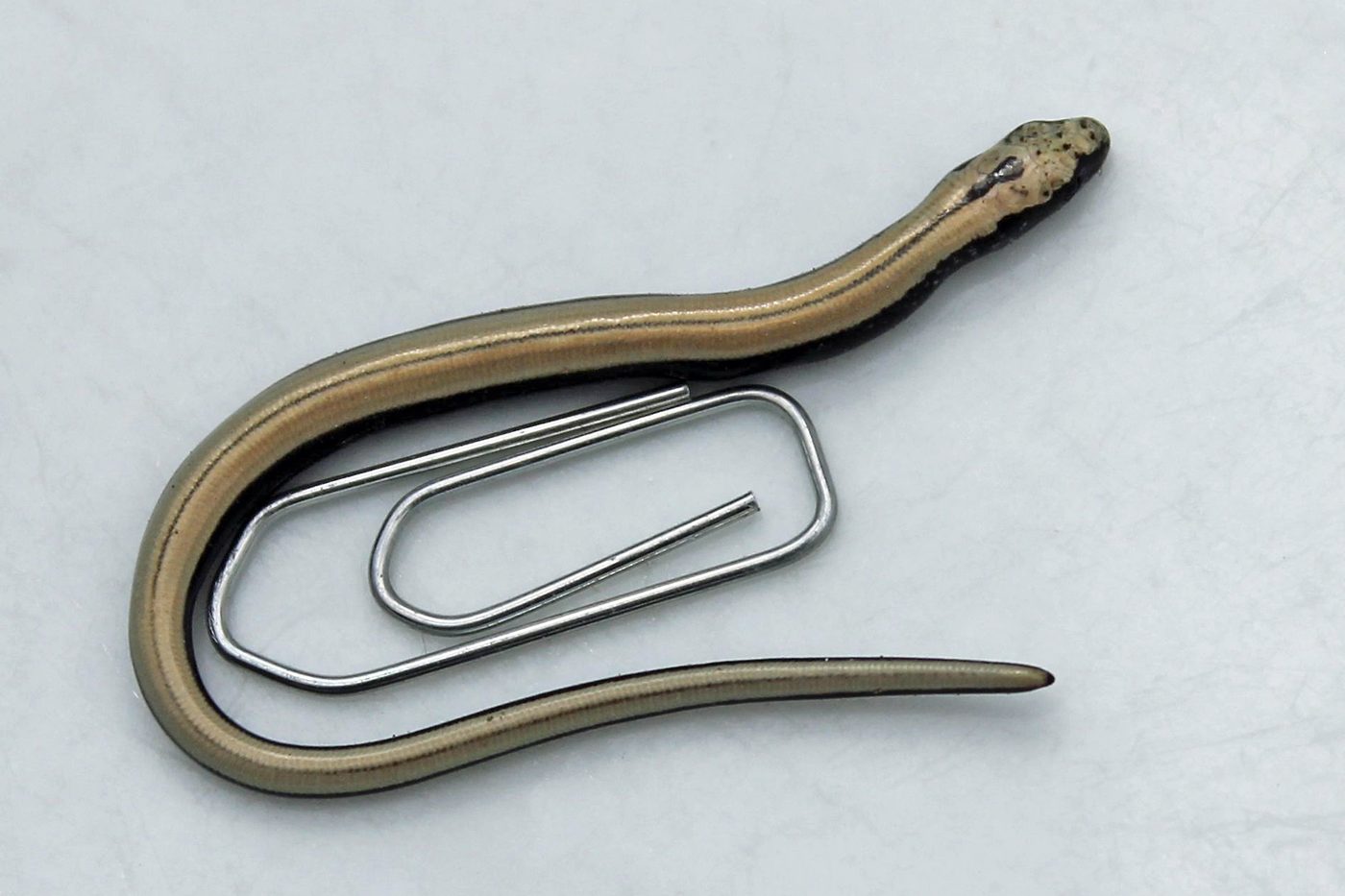
Photo: Grey Geezer · CC BY-SA 3.0
Slow worm
Anguis fragilis
The slow worm is a legless lizard, often mistaken for a snake, but completely harmless and highly useful in the garden.
Characteristics
Temperament
Shy, crepuscular, harmless
Diet
Slugs, earthworms and small invertebrates
Description
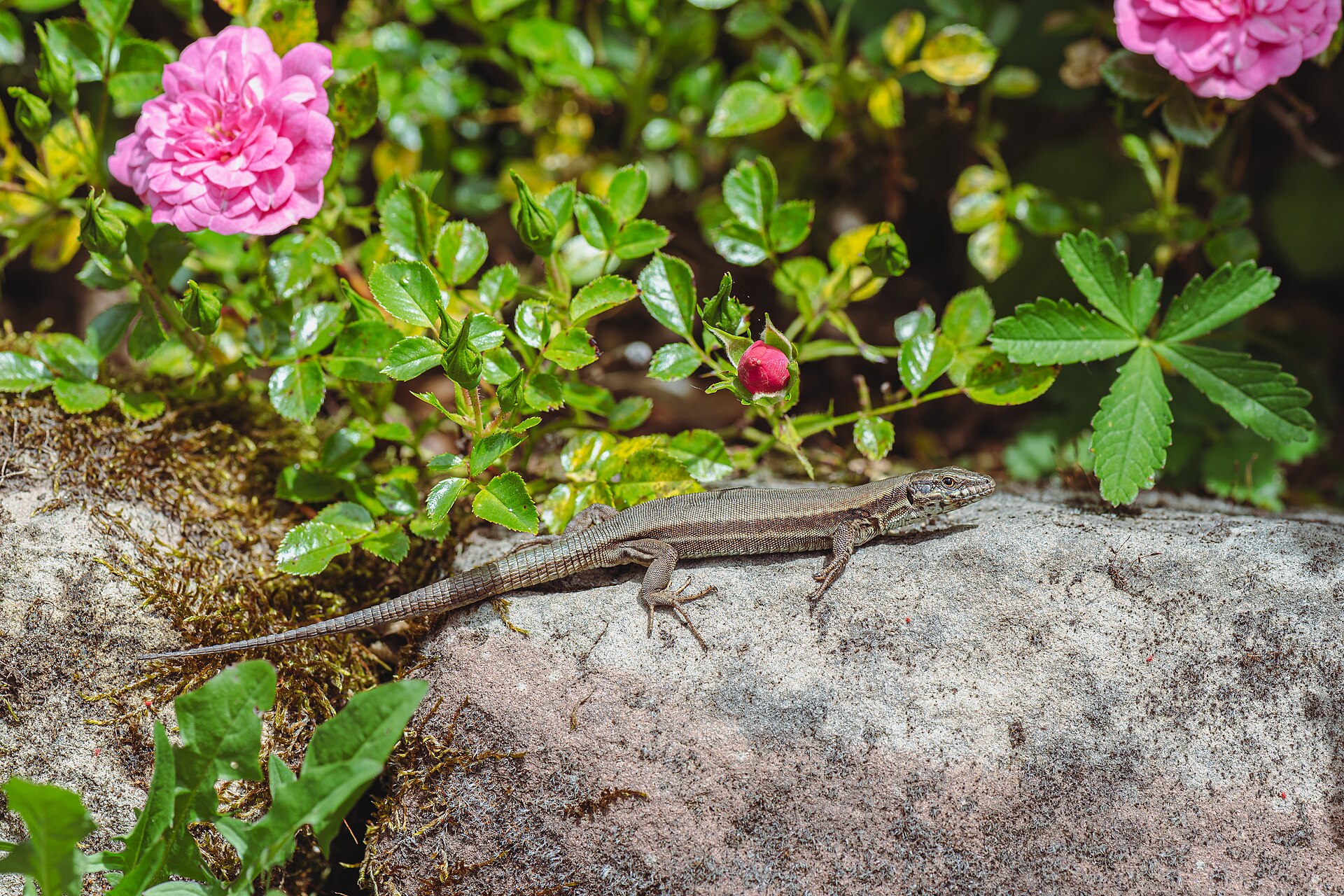
The slow worm is a reptile with a long, legless body that at first glance resembles a small snake. In fact it is a lizard: it is given away by its movable eyelids, which snakes lack, and its fragile tail, able to break off in defence. Its body is smooth and glossy, brown, grey or coppery in colour, often with metallic sheen. It usually reaches 30-50 centimetres.
Habitat and distribution
It is found across much of Europe. It favours damp, well-vegetated habitats: meadows, clearings, hedgerows, woods, gardens and vegetable plots. It likes places with plenty of cover, where it can hide under stones, logs and leaf litter, and it often basks in the sun hidden among the grass.
Behaviour
It is a shy, mainly crepuscular animal that spends much of its time hidden. It feeds chiefly on slugs, earthworms and small soft-bodied invertebrates, making it a valuable ally of gardeners and farmers. It is ovoviviparous: it gives birth to fully formed young.
Did you know?
One of its most surprising traits is its longevity: it can live several decades, and is among the longest-lived reptiles. When seized it can shed its tail, which keeps moving to distract the predator while the animal escapes; the tail regrows, but shorter.
Conservation
It is classed as least concern, but is protected in many countries. The main threats are habitat destruction, pesticide use and killing through mistaken identity with a venomous snake.
Pros
- Completely harmless to humans
- Valuable ally against slugs and pests
- Long-lived, can exceed twenty years
Cons
- Often killed by mistake, taken for a snake
- Sensitive to pesticide use in the garden
- Shy and hard to observe