Snowshoe Hare
Lepus americanus
Characteristics
Temperament
Shy, solitary and perpetually alert: its whole life is organized around not being eaten. Crepuscular and nocturnal, it stays near dense cover, relies on camouflage (motionless and the "right" colour for the season) and, if discovered, explodes into a fast zigzagging flight. It does not dig burrows, sheltering in shallow forms. Herbivorous and very prolific. Not a pet: a wild hare of the boreal forests, a keystone prey of the ecosystem.
Diet
A herbivore with a radically seasonal diet. In summer it eats grasses, clover, leaves, shoots and ferns; in winter it switches to bark, twigs, buds, conifer needles and shrubs, the only food available under the snow. Like other lagomorphs it practises caecotrophy (re-ingesting soft droppings to absorb nutrients fully). It feeds mainly at dusk and night, staying near cover. It is itself essential prey for lynxes, foxes, coyotes, owls and goshawks, transferring the energy of boreal plants to the whole food chain.
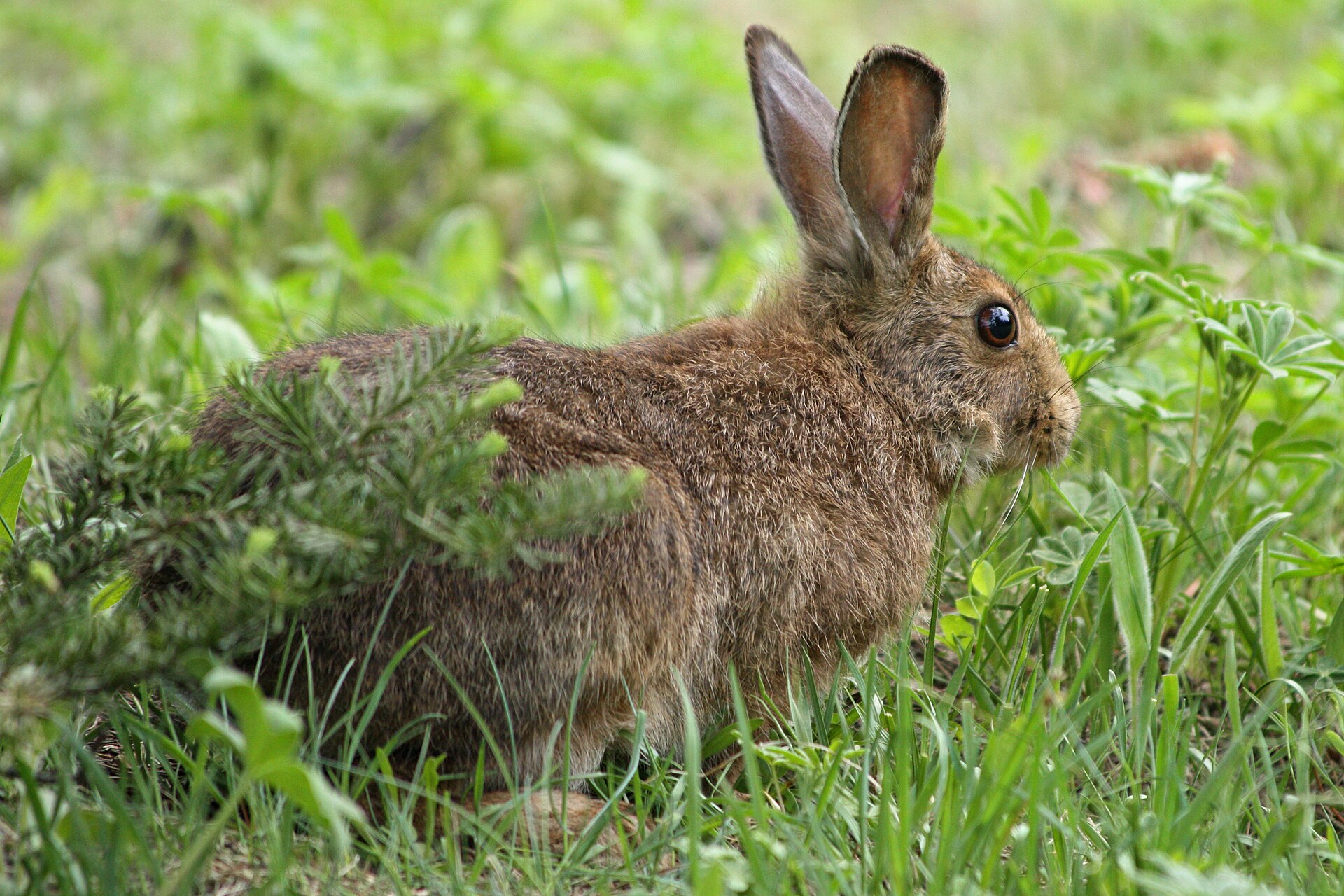
The Snowshoe Hare (Lepus americanus), also called the "varying hare", is the hare of North America's forests and one of the most important prey animals on the entire continent. Famous for:
- Seasonal colour change: a brown coat in summer and a pure white one in winter, to blend first into the undergrowth and then into the snow
- "Snowshoe" feet: huge, furred hind feet that let it run on powdery snow without sinking
- The signature prey of the Canada lynx: few prey are so central to a predator
- The famous ten-year cycle: its populations boom and crash in roughly ten-year cycles, dragging predators' numbers with them
- Speed and unpredictable bursts: its main defence, alongside camouflage
- Its role as a "pillar" of the boreal food chain: it feeds lynxes, foxes, coyotes, owls and goshawks
IUCN status: Least Concern (LC), abundant and widespread, though subject to strong cyclic swings. It is the perfect counterpart to the Canada lynx already in this portal: predator and prey have even evolved the same adaptation, the big "snowshoe" feet, in a true evolutionary race on the snow.
Classification and category
Order Lagomorpha (the lagomorphs: hares, rabbits and pikas), family Leporidae, genus Lepus — that of the true hares, like the European hare. Note: although, like the other lagomorphs, it is placed in this portal's "rodents" category for convenience, lagomorphs are not true rodents: they differ by a second pair of small incisors behind the upper ones and by other anatomical details, and form an order of their own. Not to be confused with other lagomorphs: the European hare and other hares (larger, longer-eared, not changing colour, or not so sharply); rabbits (such as the European rabbit, smaller, with shorter ears and legs, and which dig burrows — hares do not); and the Eurasian mountain hare (Lepus timidus), the Old World "cousin" that, like the snowshoe hare, turns white in winter — another example of parallel adaptation. Etymology: "Lepus" is Latin for "hare"; "americanus" denotes its North American home; the English names describe its two traits: "snowshoe" for the feet, "varying" for the colour. Parameters: Length 36-52 cm. Weight 1.2-1.6 kg. Hind feet very large and densely furred, especially in winter. Ears relatively short for a hare (reducing heat loss in the cold). Longevity short, on average 1-2 years in the wild (up to ~5 in rare lucky individuals), due to very high predation pressure. Reproduction: very prolific — several litters a year of 1-8 leverets each; the young (unlike rabbits) are born already furred, with eyes open and able to move almost at once.
Habitat and distribution
The Snowshoe Hare lives in the northern forests of North America: much of Canada and Alaska, and south into the USA along the mountain ranges (Rocky Mountains, Appalachians) and in the Great Lakes region and New England. Preferred habitats — dense, cold woods: boreal coniferous forest (taiga) and mixed forest (its prime habitat); dense undergrowth, scrub and young plantations (crucial, as thick cover protects it from predators); and areas with abundant, prolonged snow (where its double adaptation of colour and feet gives the most advantage). Its distribution almost perfectly matches that of the taiga and the Canada lynx. It does not dig burrows: it shelters in shallow "forms" (hidden depressions) in thick vegetation, from which it darts away when threatened. It is crepuscular and nocturnal, and depends on dense undergrowth: where the forest is sparse or disturbed, it is much more vulnerable. IUCN: Least Concern. An abundant species, though its populations are famous for huge cyclic swings, and locally it is threatened by climate change (see the curiosity on colour "mismatch").
Diet
A herbivore whose diet changes radically with the seasons: in summer, grasses, clover, leaves, shoots, ferns and other fresh herbaceous plants; in winter, bark, twigs, buds, conifer needles and shrubs — poor but available food under the snow. Feeding strategies: the "seasonal menu" (switching from the green, tender parts in summer to woody, fibrous parts in winter, adapting to what the snowy forest offers); caecotrophy (like rabbits and other lagomorphs, it produces two kinds of droppings and re-ingests the soft ones to extract the most nutrients from a hard-to-digest plant diet); and protected feeding (eating mainly at dusk and night, staying near cover to flee at the first alarm). Crucially, being itself at the centre of the diet of so many carnivores, the snowshoe hare "transfers" the energy of boreal plants to a whole community of predators; its numerical swings ripple through the entire taiga food chain.
Physical features
A medium-sized, compact hare with outsized feet, built for snow. The changing coat (its most famous trait): in summer, greyish-brown or reddish, to blend with undergrowth and ground; in winter, white, except the black ear tips, to vanish into the snow; the change is gradual (a few weeks) and triggered mainly by day length (photoperiod), not by the presence of snow. Adaptations to snow and escape: enormous furred hind feet (the "snowshoes" that name the species, excellent for running on snow and for take-off); relatively short ears (reducing heat loss in the cold, shorter than those of lowland hares); and a compact body with powerful muscles for explosive bursts. Performance: speed and agility (it sprints up to ~45 km/h with long leaps and sudden changes of direction); camouflage (its first line of defence, based on stillness and the right colour); acute senses (excellent hearing and smell, lateral eyes with a very wide field of view); and swimming (it can cross watercourses when needed).
Behaviour and curiosities
A shy, solitary, perpetually alert animal. Its whole existence is organized around not being eaten: it moves at dusk and night, stays near cover, relies on camouflage and, when discovered, explodes into a zigzagging flight. Yet, precisely because it is fundamental prey, it is one of the most ecologically important animals of the boreal forest.
The whitening coat: the seasonal colour change is regulated mainly by day length — as autumn days shorten, the hare begins to replace brown fur with white, and does the reverse in spring; this internal "calendar" is precise and predictable, but rigid, a detail that, as we will see, now causes an unexpected problem. Climate "mismatch": with global warming, in many areas snow comes later and melts earlier, but the hare keeps turning white on its day-length schedule; the result is the so-called mismatch — for days or weeks the hares stay white on brown, snowless ground, becoming extremely visible and thus much more vulnerable to predators; it is one of the most studied, concrete effects of climate change on wildlife. "Snowshoes" shared with the predator: one of the most fascinating points is that the snowshoe hare and its main predator, the Canada lynx, independently evolved the same adaptation — huge furred feet acting as snowshoes; it is an evolutionary "arms race": the prey to flee faster on snow, the predator to chase it, both thriving where small-footed predators sink. The ten-year cycle: the snowshoe hare is famous for its striking population swings, recurring on a roughly ten-year rhythm: phases of huge abundance alternate with drastic crashes; this cycle, driven by the interaction of food availability, predation and other factors, drags predator populations with it, first of all the Canada lynx — the heart of the famous "lynx-hare cycle", one of ecology's best-known examples. Flight and stillness: faced with danger, the snowshoe hare has two strategies — first, stillness (crouched and perfectly camouflaged, counting on not being seen); but if the predator comes too close, the second kicks in: an explosive flight, with rapid leaps and unpredictable changes of direction, sometimes using regular runways trodden in the snow. Precocial leverets: unlike baby rabbits, which are born naked, blind and helpless in a burrow, snowshoe hare leverets are born precocial — already furred, with eyes open and able to move almost at once; they stay hidden in the vegetation and the mother nurses them only a few times a day, a strategy that reduces the time she reveals their location to predators.
Pros
- Doppio adattamento spettacolare alla neve (colore + piedi 'racchetta')
- Preda-cardine: sostiene linci, volpi, rapaci e l'intera catena boreale
- IUCN Least Concern, molto prolifica e diffusa
- Protagonista del classico ciclo ecologico lince-lepre
Cons
- Non è un animale da compagnia (lepre selvatica)
- Vita brevissima: altissima mortalità per predazione
- Popolazioni con oscillazioni cicliche estreme
- Minacciata localmente dal 'disallineamento' col clima (resta bianca senza neve)