Photo: User:benjamint444 · CC BY-SA 3.0
Tawny frogmouth
Podargus strigoides
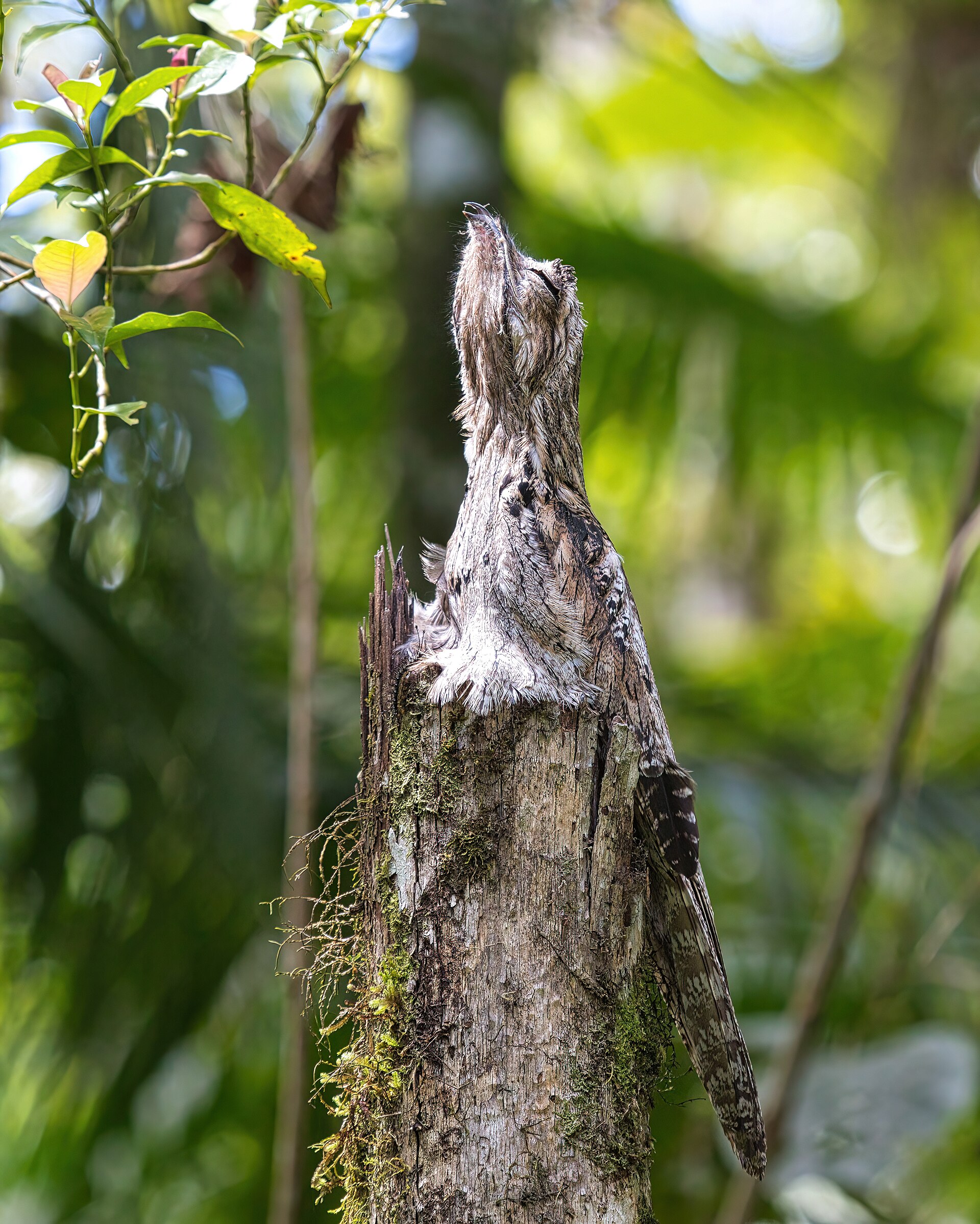
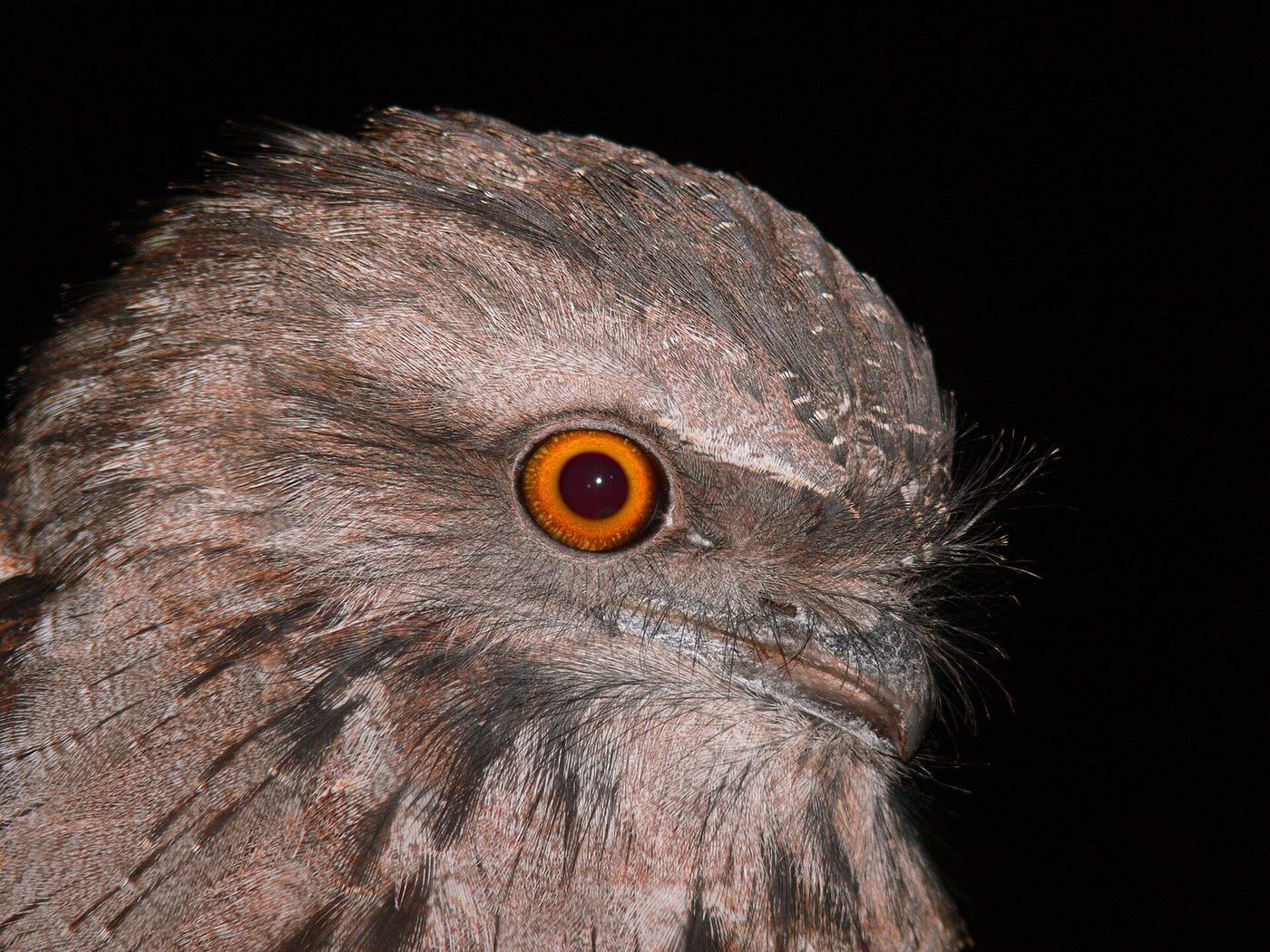
With its wide, frog-like mouth and plumage that turns it into a broken branch, the tawny frogmouth is a master of camouflage of the Australian nights.
Characteristics
Temperament
Nocturnal, motionless, cryptic
Diet
Carnivore: insects, spiders, worms and small vertebrates
A master of camouflage
The tawny frogmouth is a nocturnal bird with a stocky build and a large head, often mistaken for an owl because of its nocturnal habits and similar colouring. In fact it is not a raptor: its most distinctive feature is its wide, flat bill, with a broad gape recalling precisely the mouth of a frog, hence the name. Its plumage, a mottled and streaked grey-brown, is its best weapon: when it perches motionless on a branch, stretching its neck and closing its eyes, it becomes almost indistinguishable from a piece of bark or a broken branch.
Habitat and distribution
It is widespread across the whole of mainland Australia and Tasmania, where it is one of the most common nocturnal birds. It frequents a wide variety of environments, from eucalyptus forests to open woodlands, right up to city parks and gardens, adapting well to the proximity of humans.
Behaviour and feeding
Unlike owls, the tawny frogmouth has weak feet and does not catch its prey with talons, but with its bill. It hunts mainly insects, spiders, worms, snails and small vertebrates, often waiting motionless for prey to pass close by and then seizing it with a snap. It is active at night, while by day it rests, relying on its extraordinary camouflage to go unnoticed. It forms stable pairs that can stay together for many years.
Curiosities and conservation
The tawny frogmouth's defensive strategy is based entirely on stillness and camouflage: if it senses danger, instead of fleeing it stiffens its body upwards, blending in with the branch on which it is perched. It is classified as a species of least concern, with large, stable populations, favoured by its ability to live even in environments altered by humans.
Pros
- Extraordinary master of camouflage
- Adapts even to parks and gardens
- Large, unthreatened populations
- Forms stable, lasting pairs
Cons
- Weak feet, not a raptor
- Vulnerable if discovered while resting
- Sensitive to nocturnal road traffic