Yellow-bellied Marmot
Marmota flaviventris
Characteristics
Temperament
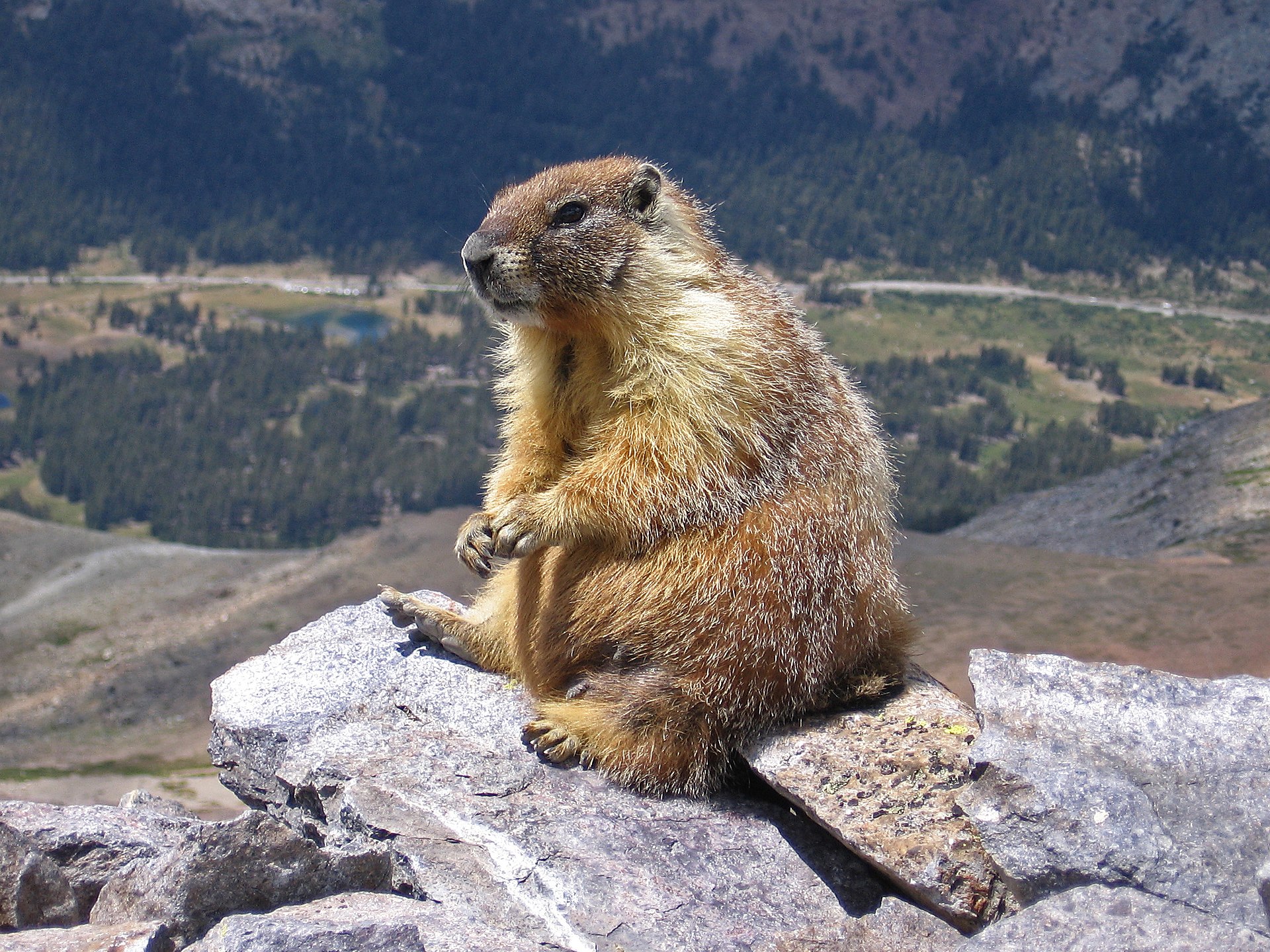
A diurnal, social, colonial wild rodent, strongly tied to rocky mountain environments and the cycle of the seasons. It lives in colonies among the rocks, loves to bask in the sun on the stones and keeps constant watch: at the first danger a sentinel gives a shrill alarm whistle and the whole group takes refuge in the burrows. It spends much of the year in hibernation, after fattening up in summer. It is NOT a pet: it is native wildlife of western North America, to be observed and safeguarded in its mountain environment.
Diet
A herbivore: it feeds mainly on grasses and graminoids, as well as flowers, leaves, shoots and seeds of the mountain meadows. Its feeding follows the rhythm of the seasons: during the short summer it eats intensively to build up large fat reserves, essential to survive the long months of hibernation. It grazes in the meadows near the rocky shelters, always ready to flee at the first alarm. Its whole year revolves around the cycle "fatten up in summer, live off reserves in winter".
The Yellow-bellied Marmot (Marmota flaviventris), the "rockchuck", is the large marmot of the mountains of western North America: a sturdy colonial rodent, tied to rocky slopes and screes, where it basks in the sun and scans the horizon. Famous for:
- The yellowish-buff belly: the warm tone of the underparts, hence the name
- Life among the rocks: the nickname "rockchuck" stresses its bond with screes and outcrops
- Sociability: it lives in colonies, with one male and several females, and communicates with whistles
- The very long hibernation: it can hibernate for about 8 months a year
- The fat reserves: in summer it puts on a lot of weight ahead of winter
- The alarm whistles: shrill calls that warn the colony
IUCN status: Least Concern (LC). It enters the portal among the marmots, alongside the Alpine Marmot (of the European Alps) and the American Marmot (woodchuck), completing a trio that shows how a single group of rodents has adapted to different mountains and environments on the two continents.
Classification and category
Order Rodentia, family Sciuridae (the squirrels and their relatives, among which the marmots are the largest ground-dwelling members), genus Marmota. The species is Marmota flaviventris. In the portal it is placed among the marmots. It is useful to tell it apart from the other marmots, with which it shares shape and habits: the Alpine Marmot (Marmota marmota), in the portal — the marmot of the European Alps, of a more uniform tone and lacking the showy yellow belly; the American Marmot or woodchuck (Marmota monax), in the portal — more tied to woodland and lowland environments of eastern North America, and more solitary; other North American marmots such as the hoary marmot — larger and of silver-grey tones. The combination of yellowish-buff belly + pale patch between the eyes + rocky habitat of western North America is this species' "identity card". Etymology: "Marmota" is the medieval-Latin word for "marmot"; "flaviventris" means literally "yellow-bellied". The nickname "rockchuck" joins "rock" to "chuck", as in woodchuck. Parameters: Total length roughly 47-70 cm, including the tail. Weight roughly 2-5 kg, with strong seasonal variation (much heavier before hibernation). Build stocky and sturdy, typical of marmots. Longevity: it can live long for a rodent, up to about 15 years. Reproduction: tied to colonial life, with a dominant male and a group of females; the young are born in the burrow.
Habitat and distribution
The Yellow-bellied Marmot is a typically montane North American rodent: its range covers western North America — the Rocky Mountains, the Sierra Nevada, the Great Basin and surrounding ranges, from the United States to southwestern Canada. Preferred habitats — open, rocky, high-elevation environments: rocky slopes, screes and outcrops (its favourite "rocks"); montane grasslands and meadows rich in grasses and flowers; and high-elevation areas and alpine valleys of western North America. It is a diurnal, social, colonial animal: it lives in groups that occupy burrow systems dug among the rocks, where they find refuge from predators and the cold. On mild days, the marmots love to bask in the sun on the stones, always alert. At the first sign of danger, a sentinel gives a shrill alarm whistle and the whole colony dives into the burrows. The rocks are at once home, refuge and lookout. IUCN status: Least Concern (LC). It is common and widespread in its mountain range. It is also a much-studied species: some colonies are the subject of long-term ecological research among the best-known in the world.
Diet
The Yellow-bellied Marmot is herbivorous, with a diet that follows the rhythm of the mountain seasons. It feeds on: grasses, graminoids and herbaceous plants (the basis of the diet); flowers, leaves, shoots and seeds; and occasionally other plants available in the high meadows. Feeding habits and seasonal strategy: summer fattening (during the short mountain summer, the marmot eats intensively to build up large fat reserves); preparation for hibernation (those reserves are its internal "pantry", essential to survive the long months of hibernation); and grazing near the burrows (it feeds in the meadows near the rocky shelters, ready to flee at the first alarm). Crucially, the marmot's whole year revolves around the cycle "eat in summer, sleep in winter". The ability to build up fat in a few months and then live for much of the year consuming those reserves during hibernation is its fundamental adaptation to the mountains.
Physical features
A large rodent of the stocky, sturdy build typical of marmots. The coat — the distinguishing trait: brown upperparts, often grizzled; yellowish-buff belly and underparts, hence the name; a pale patch between the eyes and lighter areas on the sides of the muzzle. The structure: a stocky, massive body, with sturdy legs suited to digging; a relatively short, bushy tail; and strong rodent incisors and sturdy claws. The general look: a broad head with small rounded ears; a build that varies greatly with the season (slender in spring, very fat before hibernation); and a "sentinel" look when it rears up on its hind legs to scan its surroundings.
Behaviour and curiosities
The Yellow-bellied Marmot is a social, diurnal animal, strongly tied to the cycle of the seasons. Its life is marked by the alternation between intense summer activity and very long winter rest, and by colony life among the rocks.
The "rockchuck": the English nickname "rockchuck" stresses the difference with the better-known American marmot, the "woodchuck"; while the woodchuck prefers woods and lowland meadows, the yellow-bellied marmot is the specialist of the rocky slopes and screes of the mountains of western North America. The great sleeper: the Yellow-bellied Marmot is one of the hibernation champions; it can spend a huge portion of the year in hibernation — even around 8 months in the highest, coldest localities — living off the fat reserves built up during the short summer; in practice, it is "awake" only for a few months, devoted to feeding, breeding and preparing for the next sleep. The alarm whistles: like the other marmots, it communicates with shrill whistles and calls; when a sentinel spots a predator (eagles, coyotes, foxes, mustelids), it gives a piercing whistle that triggers the alarm: in an instant the whole colony takes refuge in the burrows; these calls are a classic "mountain sound" in the areas where it lives. The marmot of scientific studies: the Yellow-bellied Marmot is one of the most studied animal species in the world; some of its colonies, particularly in the Rocky Mountains, have been followed for decades in long-term ecological research, which has made this marmot a true "model" for the study of social behaviour, survival and the effects of climate on mountain animals. The "screaming marmot": this species is also, in spite of itself, a small internet star: the famous viral "screaming marmot" video stars precisely a yellow-bellied marmot, whose shrill call was overlaid on various comic scenes; behind the meme's fun is actually one of its normal, essential communication whistles. The social sunbath: on clear days, it is common to see several marmots stretched out on the rocks sunbathing near the burrows; this behaviour, besides regulating body temperature, is part of the colony's social life, made of closeness, shared vigilance and constant communication.
Pros
- Marmotta affascinante e robusta, simbolo delle montagne del Nord America occidentale
- Molto sociale: vive in colonie con vita comunitaria e fischi d'allarme
- Grande ibernatrice: straordinario adattamento al clima di montagna
- IUCN Least Concern: comune e ben studiata (ricerche ecologiche di lungo periodo)
Cons
- NON è un animale da compagnia: è fauna selvatica autoctona
- Localmente può scavare tane in pascoli e prati, in conflitto con alcune attività umane
- Fortemente legata agli ambienti rocciosi di quota: sensibile ai cambiamenti del clima di montagna
- Attiva solo pochi mesi l'anno: per il resto è in letargo, difficile da osservare in inverno