Photo: Forest & Kim Starr · CC BY 3.0
Aloe vera
Aloe vera
Queen of succulents, aloe vera holds a precious gel in its fleshy leaves, so much so that it has accompanied humankind for millennia as a medicinal plant.
Characteristics
A succulent with fleshy leaves
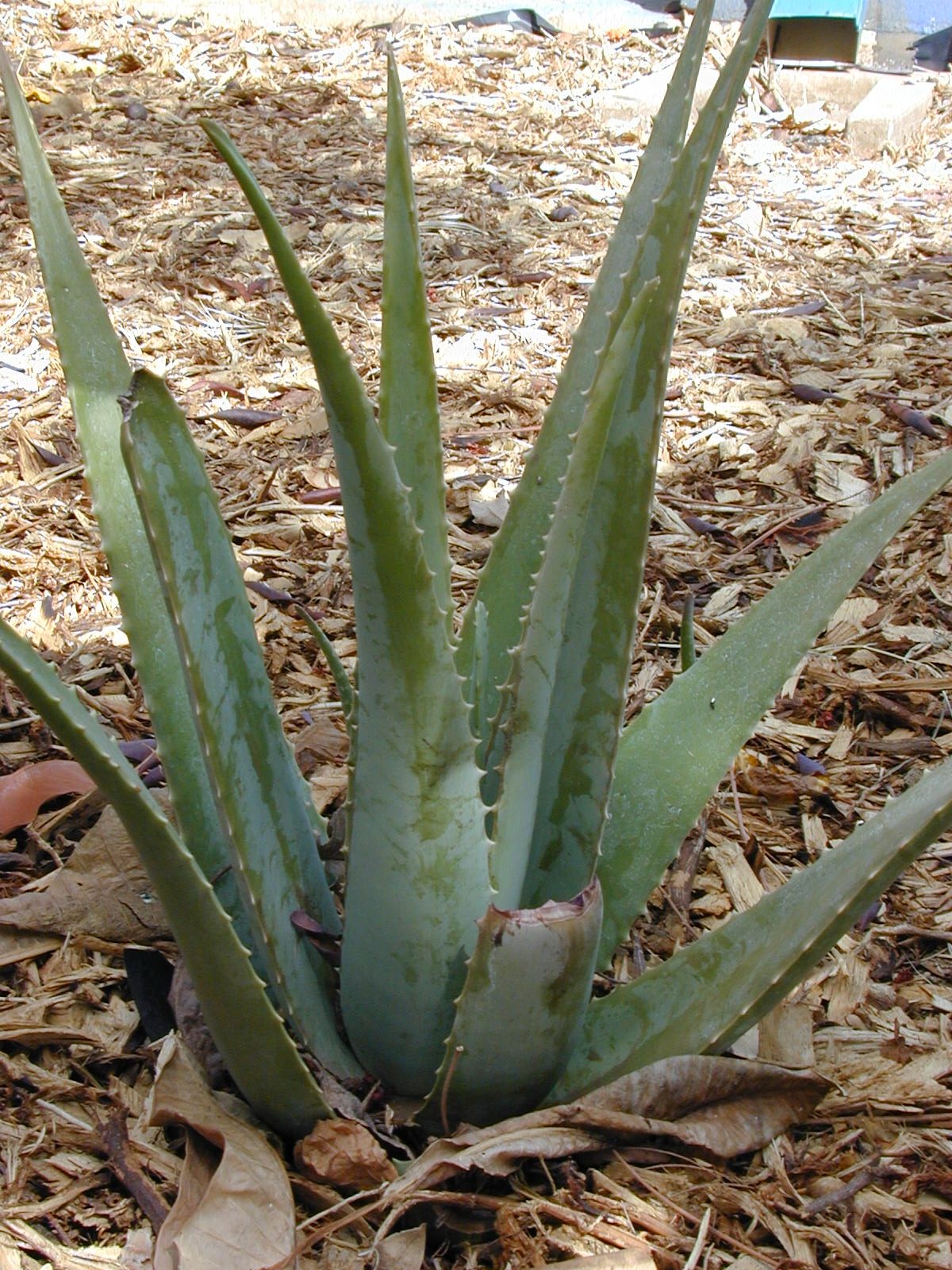
Aloe vera is a perennial succulent plant, famous the world over. It forms rosettes of long, thick, fleshy leaves, of a grey-blue green, with toothed margins and pointed tips. The leaves act as a water reservoir: inside they hold a transparent gelatinous tissue, the famous aloe gel, which allows the plant to survive long periods of drought. In favourable conditions it produces tall spikes of yellow-orange tubular flowers.
Its origin is uncertain, probably the Arabian peninsula, but it has been cultivated for millennia and is now widespread in all warm regions.
Where it grows
Being a succulent, aloe vera prefers warm, dry climates, well-drained soils and plenty of light. In the wild it grows in arid, rocky settings. In mild-climate regions it can be grown in the garden, while elsewhere it is a hugely popular houseplant and patio plant, valued for its ease of cultivation.
Cultivation and care
Aloe vera is among the easiest plants to keep. The golden rule is not to overdo the water: the main enemy is waterlogging, which rots the roots. It should be watered only when the soil is completely dry, more sparingly in winter. It loves bright light but must be gradually accustomed to direct sun. It fears frost, so in cold climates it must be sheltered during winter. It propagates easily through the offshoots, called offsets, that sprout at the base.
The gel and its uses
The gel contained in the leaves is the best-known part of the plant and has been used since time immemorial in cosmetics and folk tradition, particularly to soothe the skin. It should, however, be distinguished from the yellow juice found just beneath the skin, bitter-tasting and with very different properties. As with any natural remedy, it is wise to inform oneself and use caution.
A timeless plant
Aloe vera is not a threatened species: on the contrary, it is among the most cultivated succulents in the world. Its extraordinary resistance, the sculptural beauty of its leaves and its long history of use make it a much-loved presence in homes and gardens across the planet.
Practical tips
Water needs: Low, fears waterlogging — always check soil moisture before watering.
Prefers Bright light, indirect sun: provide the right light and rotate the plant for even growth.
Recommended soil: Very free-draining, sandy. Refresh the substrate every 1-2 years.
Dust the leaves with a damp cloth to support photosynthesis.
Feed during the growing season (spring-summer) and stop in winter.
Pros
- Very easy to grow
- Drought resistant
- Gel valued in cosmetics
- Beautiful sculptural houseplant
Cons
- Fears frost and waterlogging
- Slow growth
- The yellow juice beneath the skin is irritant