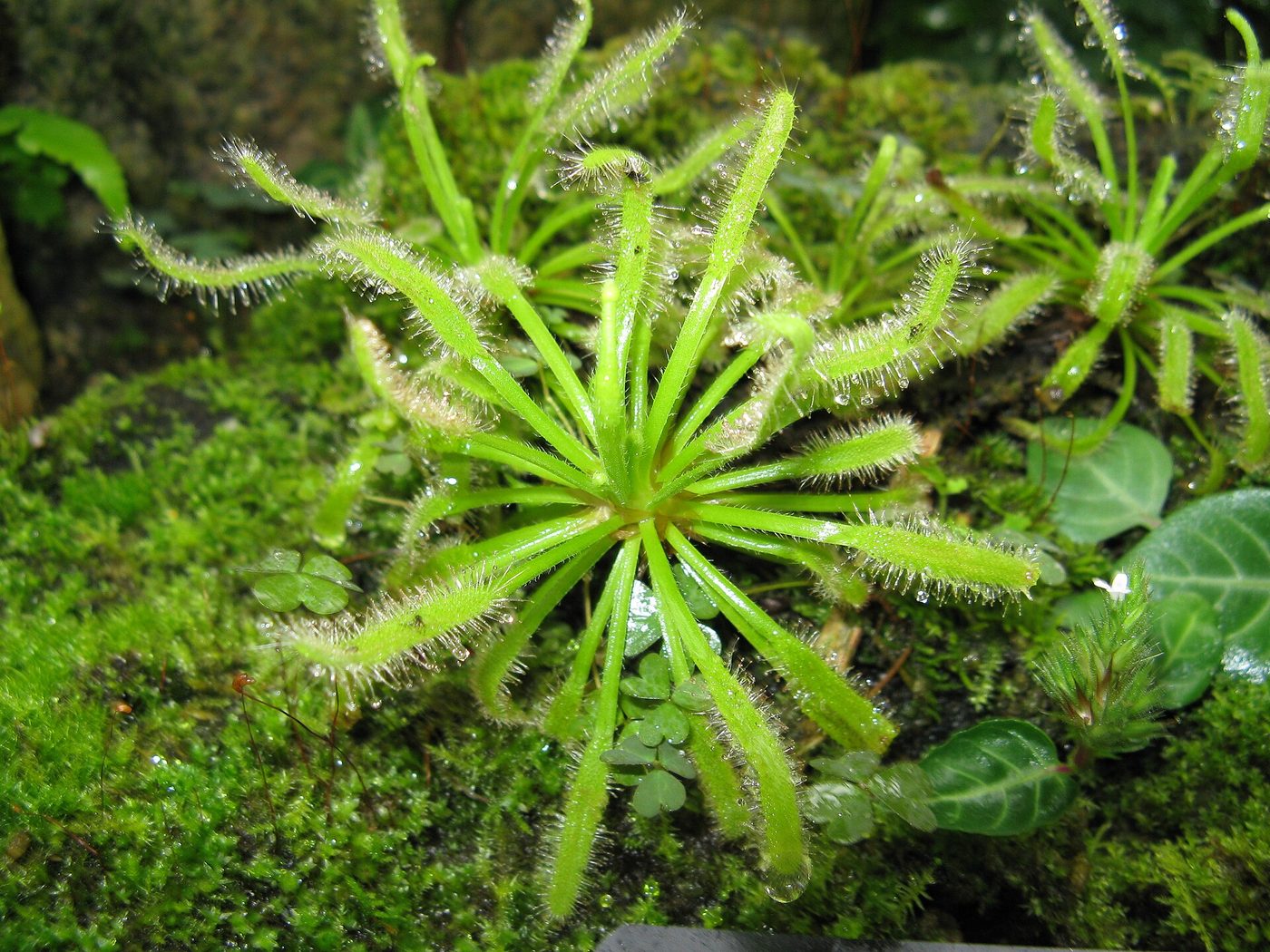
Photo: KENPEI · CC BY-SA 3.0
Cape sundew
Drosera capensis
A South African carnivorous plant with leaves covered in sticky tentacles, the Cape sundew is among the easiest to grow and ideal for beginners.
Characteristics
A carnivore with dewy tentacles
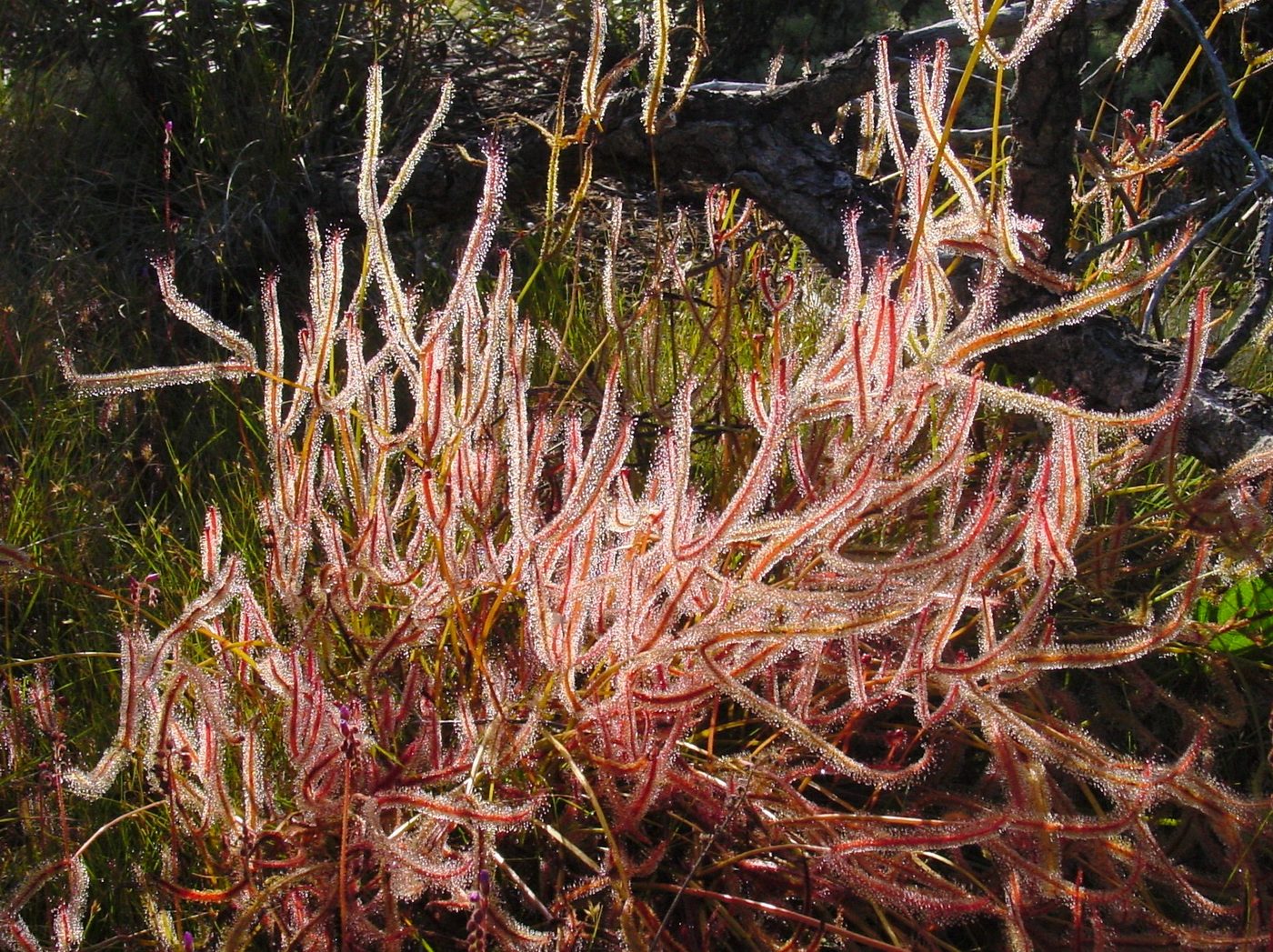
The Cape sundew is a carnivorous plant that forms rosettes of narrow, elongated leaves held semi-erect. Each leaf is covered in slender tentacles, every one tipped with a droplet of sticky mucilage that glistens in the sun like dew — hence the common name sundew. The droplets attract insects, which become stuck; the leaf then slowly curls around the prey, wrapping it up and speeding digestion.
Habitat and distribution
It is endemic to the Cape region of South Africa, where it grows in permanently wet, nutrient-poor habitats such as bogs and marshy edges, in full sun or partial shade. Catching insects provides the nitrogen that the poor soil cannot supply.
Cultivation
Unlike many carnivorous plants, it is sturdy and very easy to grow, so much so that it is the species most recommended to beginners. It wants plenty of light (even full sun), an acidic peat-and-sand substrate kept permanently wet — best by the tray method — and mineral-free water such as rain or distilled water. It grows fast, flowers with delicate pinkish blooms and produces many seeds, self-sowing readily.
Curiosities
The leaves are surprisingly mobile: they can bend around prey within a few hours. Even a single leaf detached and laid on moist substrate can give rise to a new plant.
Conservation
The species is common in cultivation worldwide and of no conservation concern; plants for sale come from propagation, not the wild.
Flowering season
Practical tips
Water needs: High: permanently wet substrate — always check soil moisture before watering.
Prefers Full sun or very bright light: provide the right light and rotate the plant for even growth.
Recommended soil: Acidic peat and sand/perlite, poor. Refresh the substrate every 1-2 years.
Dust the leaves with a damp cloth to support photosynthesis.
Feed during the growing season (spring-summer) and stop in winter.
Pros
- Very easy to grow, ideal for beginners
- Mobile leaves that wrap around prey
- Grows fast and self-sows
Cons
- Needs mineral-free water and plenty of light
- Can become weedy by self-seeding
- Substrate always wet: no drought tolerance