Photo: No machine-readable author provided. NoahElhardt assumed (based on copyright claims). · CC BY-SA 2.5
Forked sundew
Drosera binata
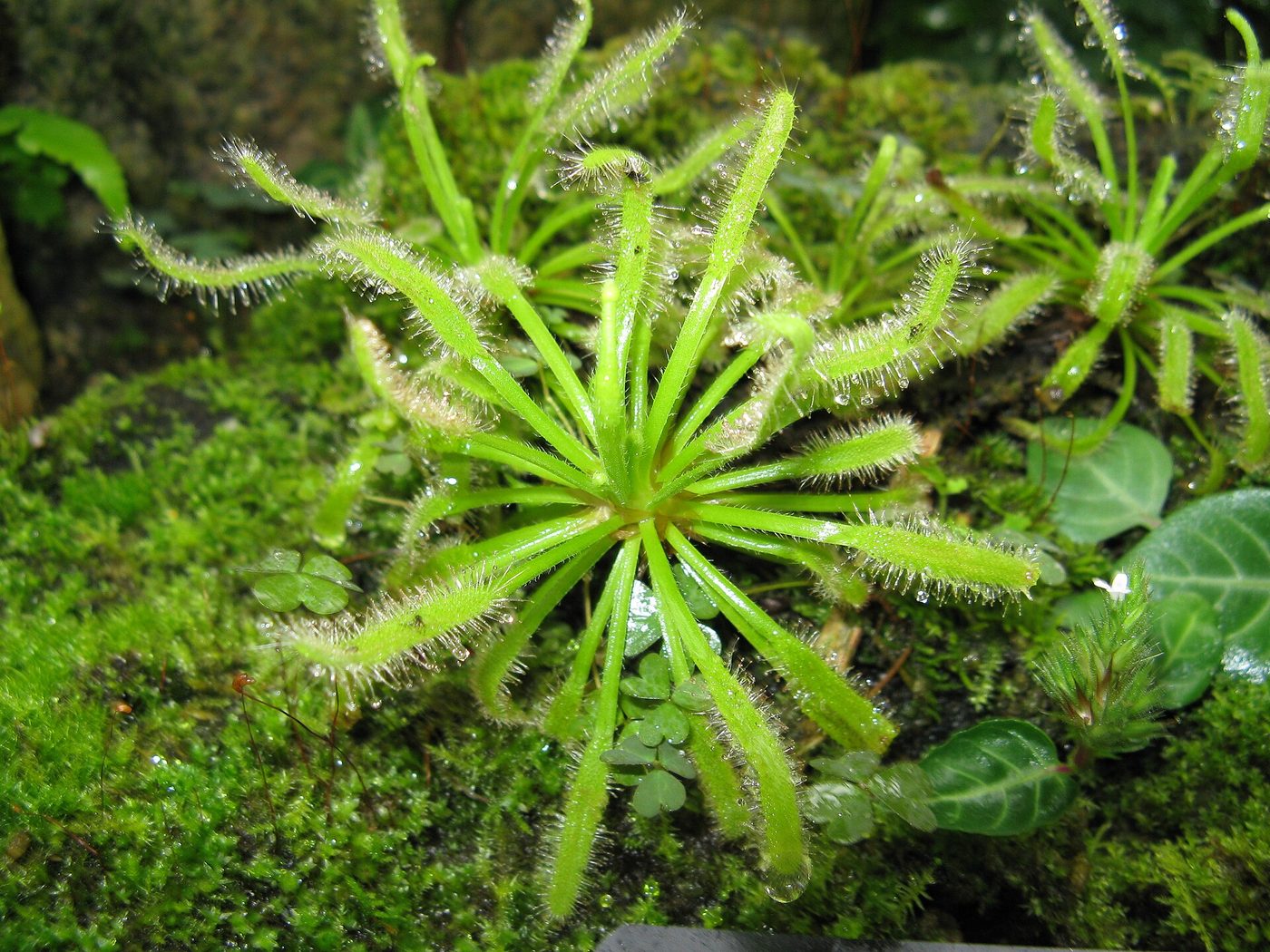
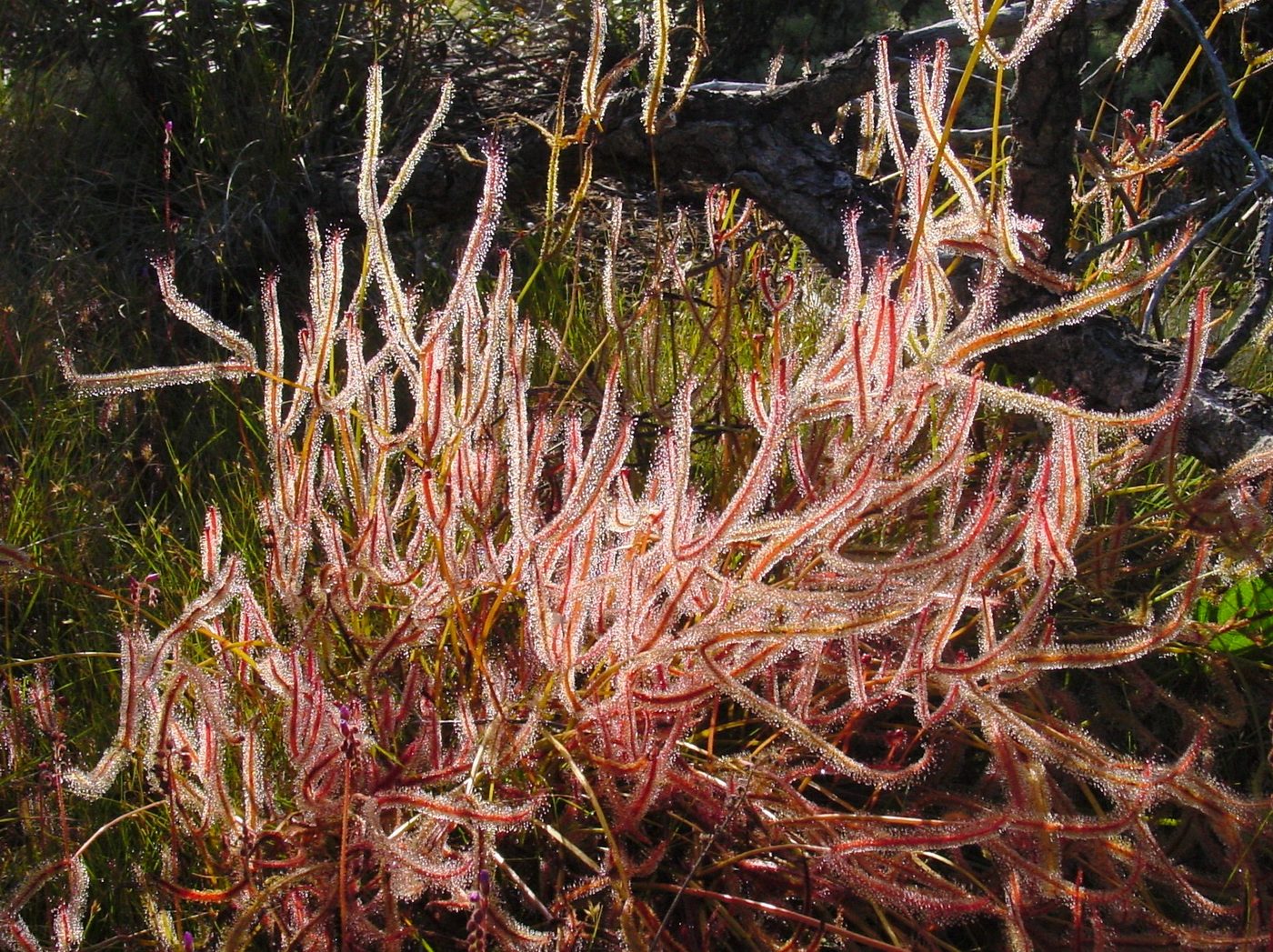
The forked sundew is a carnivorous plant with long, fork-divided leaves covered in sticky tentacles that trap insects.
Characteristics
Fork-shaped leaves covered in dew
The forked sundew is a large perennial carnivorous plant of the family Droseraceae, among the most spectacular of the genus Drosera (the sundews). Its distinctive feature is the long, upright leaves, which can exceed 60 cm, repeatedly divided into forks (dichotomous): hence the scientific name binata, "having pairs". Each leaf is covered in dense reddish tentacles, each tipped with a drop of sticky mucilage that glistens like dew.
Habitat and range
It is native to south-eastern Australia and New Zealand, where it grows in bogs, wet meadows and damp, nutrient-poor habitats.
How it catches prey
The sticky drops at the tips of the tentacles attract and trap insects. When prey sticks fast, the surrounding tentacles slowly curl toward it and sometimes the leaf itself rolls up, wrapping the insect. Digestive enzymes dissolve the prey's tissues, from which the plant absorbs nitrogen and other nutrients scarce in the soil.
Cultivation
It is one of the easiest and most widely grown sundews. It wants full sun or very bright light, a poor, acidic mix (sphagnum peat with sand or perlite) kept always moist, and watering with rainwater or deionised water only, from below. Many forms are hardy and tolerate light frost.
Care
It should never be fed like an ordinary plant: it catches the insects it needs on its own. Indoors it can go on a bright windowsill or in a terrarium. It is non-toxic to people and pets.
Flowering season
Practical tips
Water needs: Very high, substrate always moist — always check soil moisture before watering.
Prefers Full sun or very bright light: provide the right light and rotate the plant for even growth.
Recommended soil: Poor and acidic (sphagnum peat and sand). Refresh the substrate every 1-2 years.
Dust the leaves with a damp cloth to support photosynthesis.
Feed during the growing season (spring-summer) and stop in winter.
Pros
- Spectacular, unique forked leaves
- Naturally catches gnats and insects
- One of the easiest sundews to grow
Cons
- Demanding: pure water and lime-free mix
- Will not tolerate rich or fertilised soils