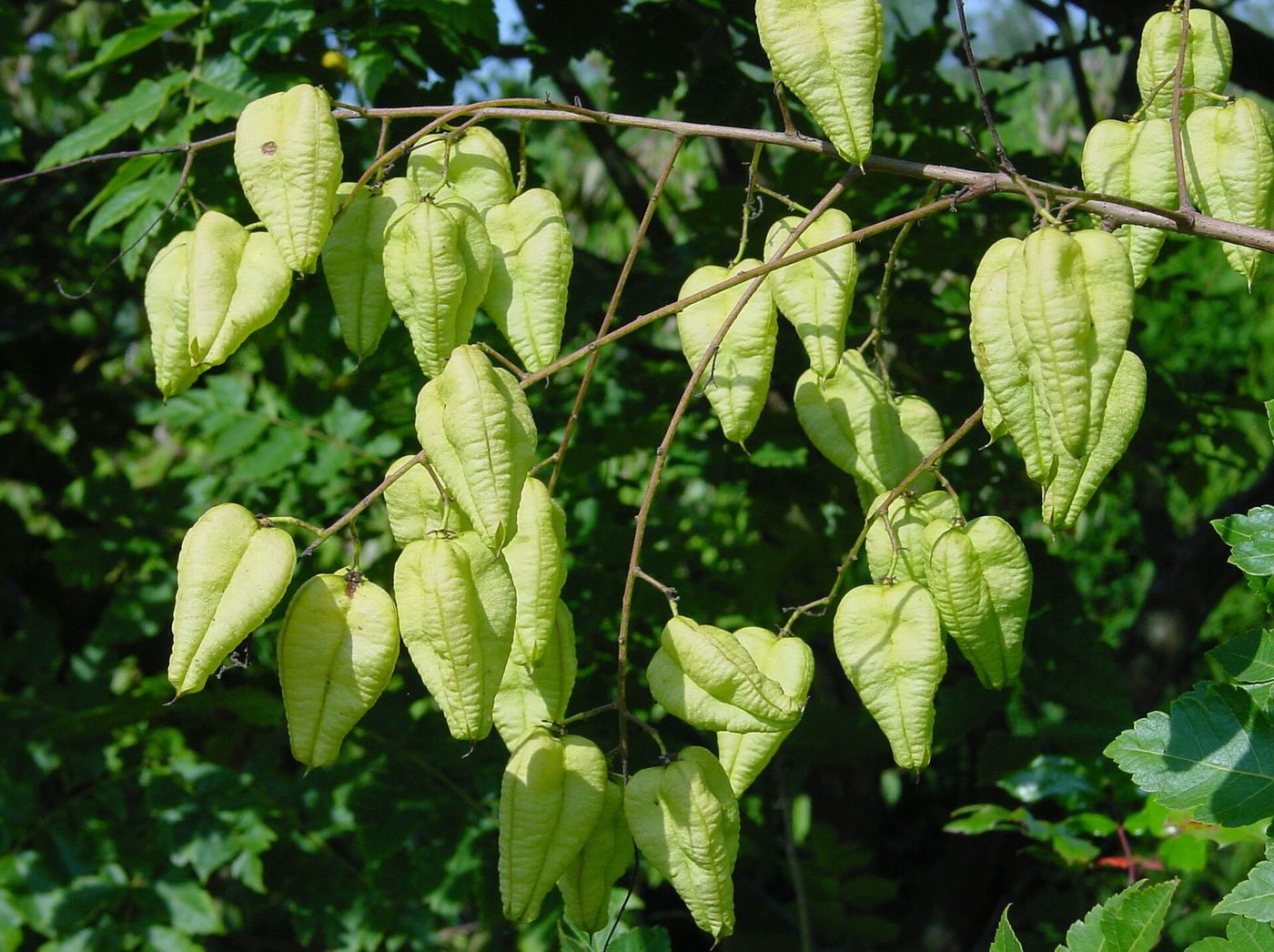
Photo: Wouter Hagens · Public domain
Goldenrain tree
Koelreuteria paniculata
The goldenrain tree is an elegant ornamental tree with a spectacular summer display of yellow flowers, followed by showy lantern-like fruits.
Characteristics
Golden rain and Chinese lanterns
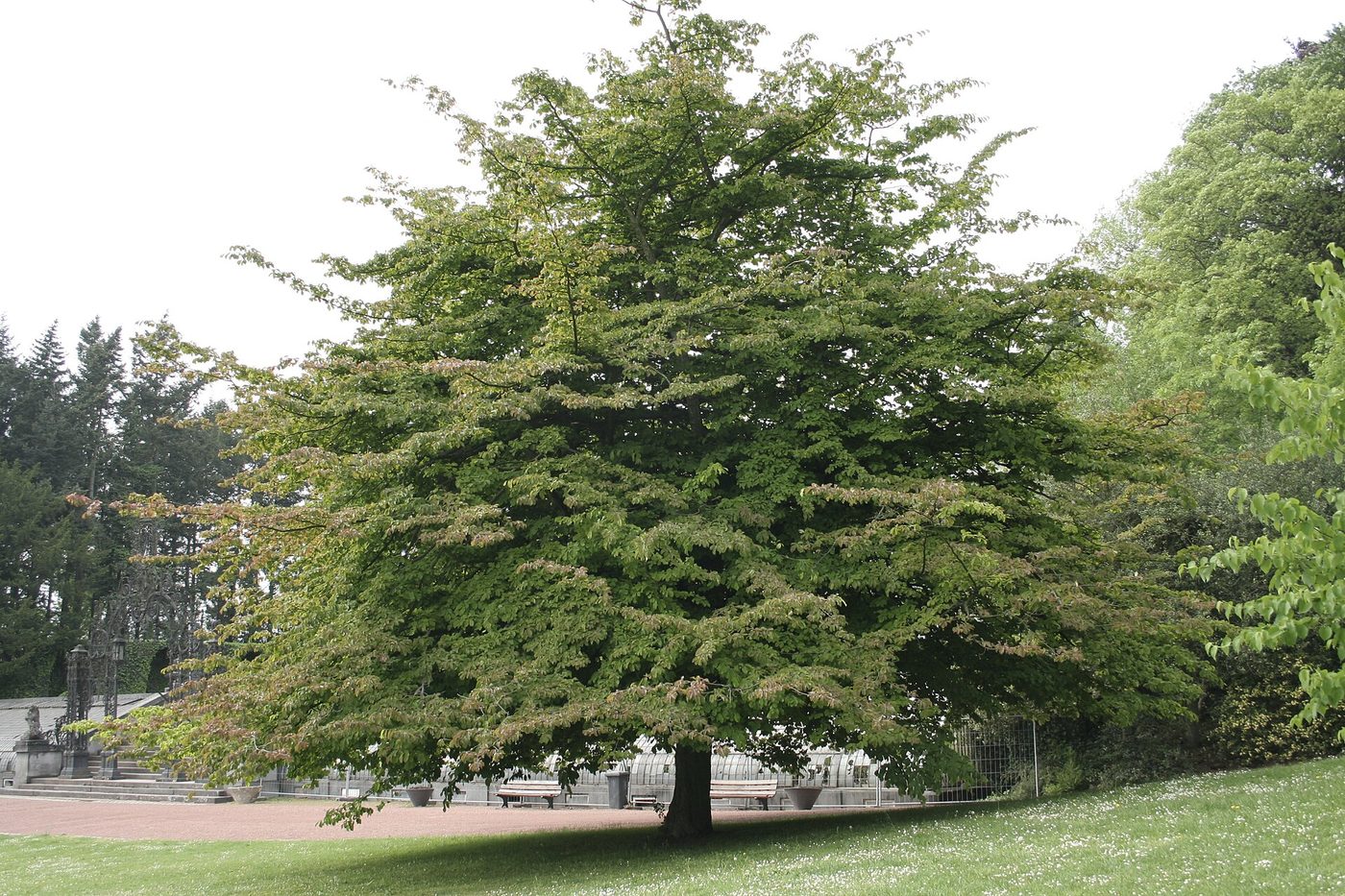
The goldenrain tree, or Koelreuteria, is an elegant medium-sized deciduous tree of the soapberry family, Sapindaceae. It has a rounded, spreading crown and large pinnate compound leaves that turn golden-yellow in autumn. In high summer it bears large upright panicles of small yellow flowers, a display that earns it the name goldenrain tree. The flowers are followed by the fruits, swollen papery capsules resembling little Chinese lanterns, at first green, then pink and finally brown.
Origin and habitat
It is native to China and Korea, naturalised for centuries in Japan and introduced to Europe in the 18th century. It has become a very popular ornamental tree throughout the temperate world.
Cultivation
It is an easy, robust tree, well suited even to urban gardens. It wants full sun and adapts to many soils, provided they drain well, tolerating drought, pollution and hot climates. It is very hardy and withstands cold winters. It grows at a moderate to fast rate.
Ornamental use
It is prized for its three seasons of interest: the summer flowering, the lantern fruits that persist for a long time and the autumn leaf colour. It is excellent as a garden, avenue or park specimen. The round black seeds were once used as beads for rosaries.
Care
It needs little pruning. When young it should be watered regularly to help it establish, then the supply is reduced. It is non-toxic, so it is safe even in gardens used by children and pets.
Flowering season
Practical tips
Water needs: Moderate, drought-tolerant when mature — always check soil moisture before watering.
Prefers Full sun: provide the right light and rotate the plant for even growth.
Recommended soil: Adaptable, well-drained, even urban. Refresh the substrate every 1-2 years.
Dust the leaves with a damp cloth to support photosynthesis.
Feed during the growing season (spring-summer) and stop in winter.
Pros
- Spectacular summer yellow flowering
- Decorative, persistent lantern fruits
- Robust and suited to urban gardens
Cons
- Can self-seed abundantly
- Branches somewhat brittle in strong winds