Photo: Averette · CC BY-SA 3.0
Royal poinciana
Delonix regia
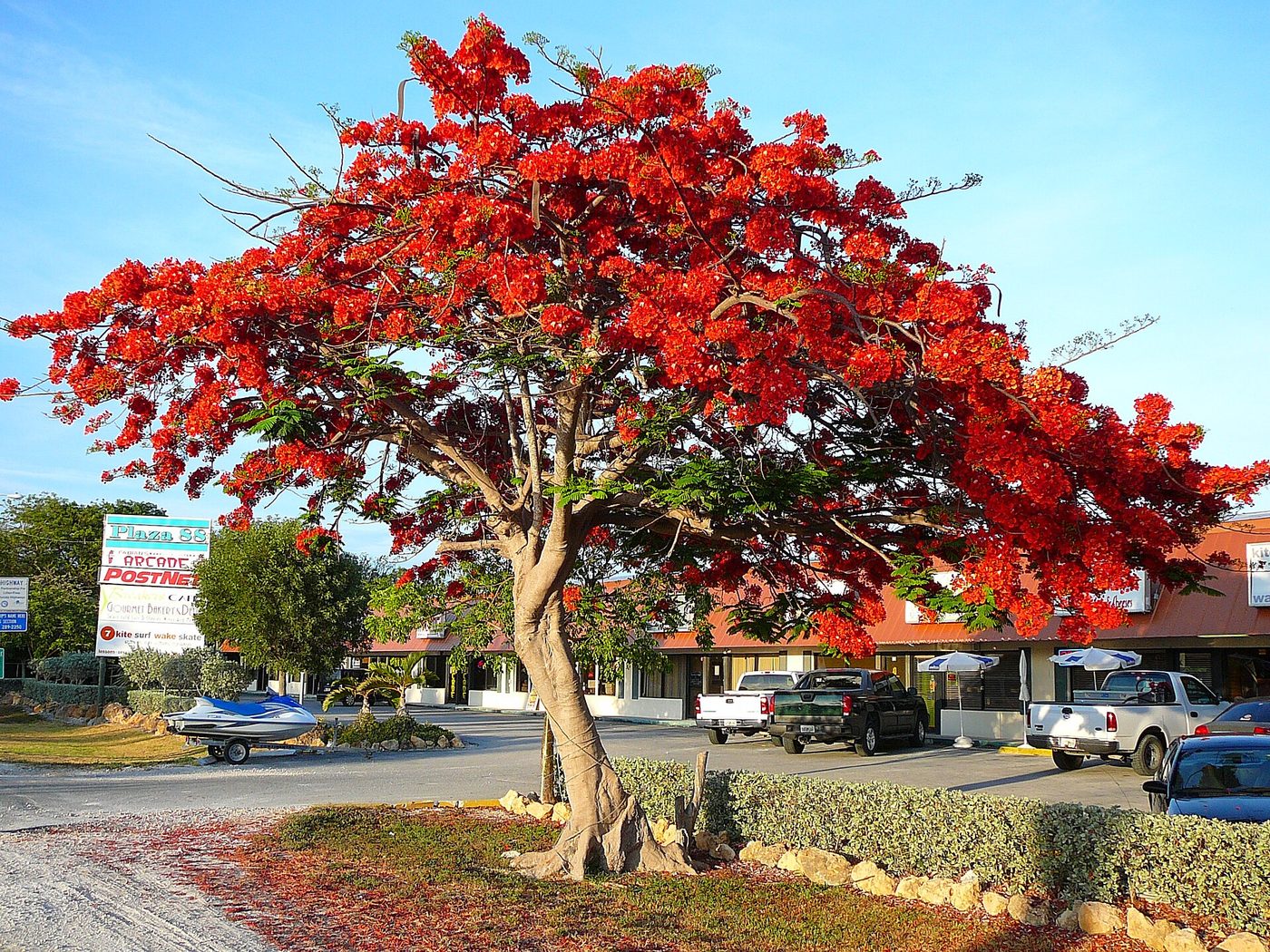
With its umbrella-shaped crown covered in orange-red flowers, the royal poinciana is considered one of the most spectacular and colourful trees of the tropical world.
Characteristics
A tree ablaze with colour
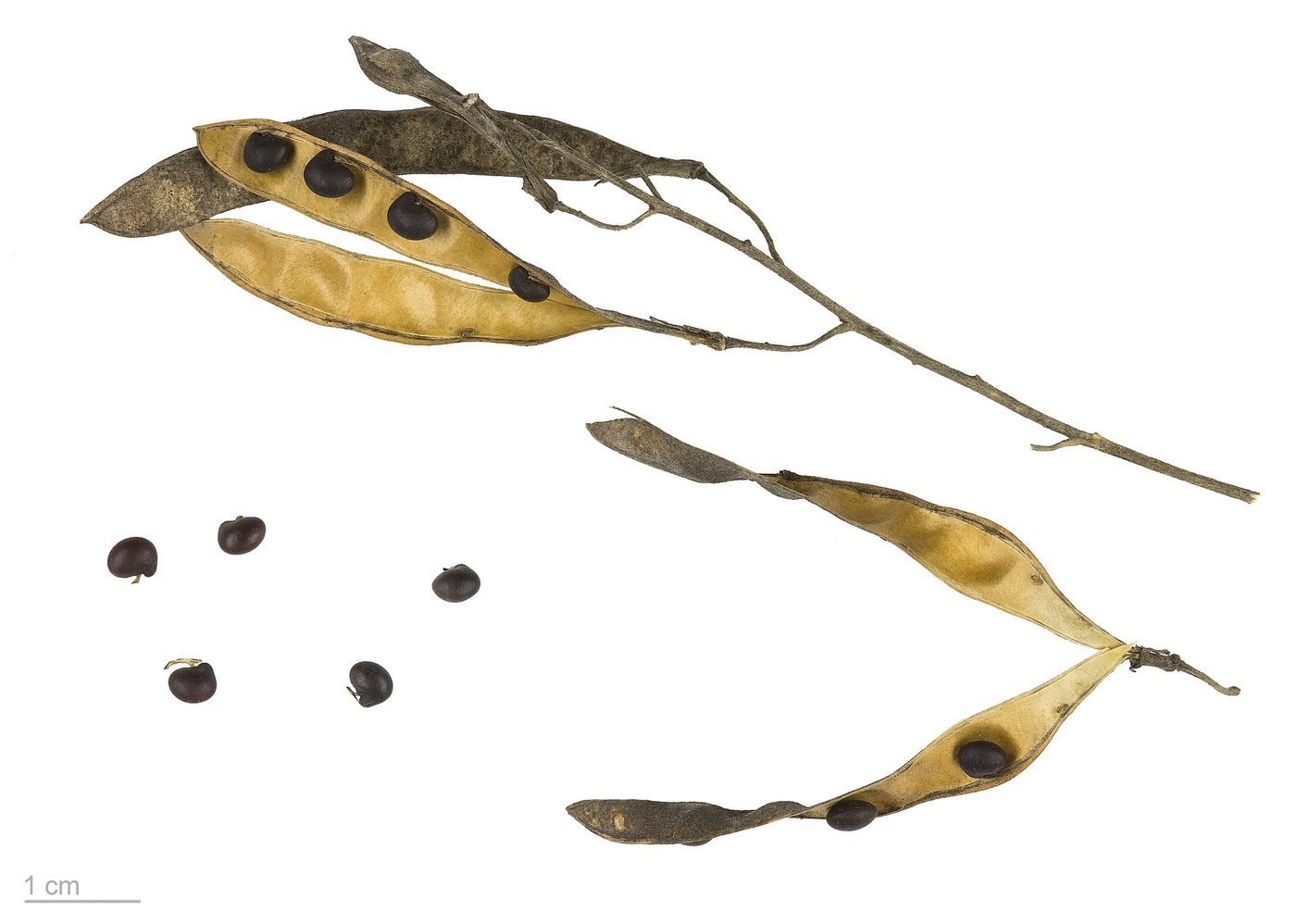
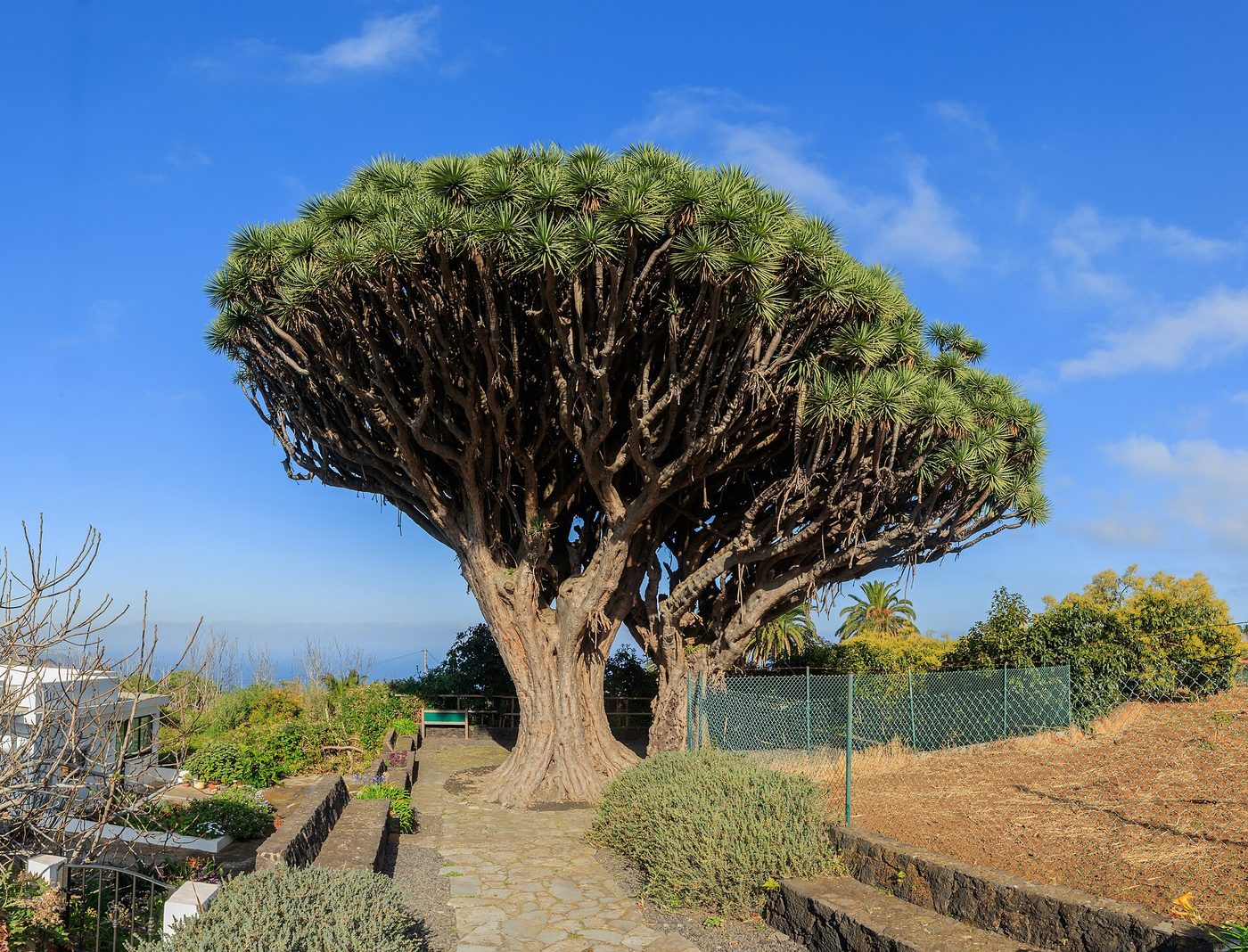
The royal poinciana is a medium-sized tree of overwhelming beauty. Its crown is wide and flattened, shaped like a great umbrella or parasol, offering dense shade. Its leaves are delicate and feathery, bipinnate and fern-like, of a bright green. But it is the flowering that makes it famous: in summer the tree covers itself with a cloud of large flowers with vivid orange-red petals, so abundant as to almost entirely hide the leaves and to earn it the reputation of one of the most colourful trees on the planet. After flowering it produces long woody pods.
Origin and distribution
It is native to Madagascar, where it grows in dry deciduous forests. Thanks to its extraordinary beauty, it is now cultivated as an ornamental tree in much of the tropical and subtropical regions of the world, where it adorns avenues, parks and gardens.
Cultivation and care
The royal poinciana loves warm climates and full sun, essential for an abundant flowering. It prefers well-drained soils and, once well established, tolerates periods of drought well. It has a fairly rapid growth and develops a very wide crown, so it needs space. It fears frost: it does not tolerate intense cold, which limits its cultivation to mild climates or greenhouses in temperate areas. It should be watered moderately, avoiding waterlogging.
Curiosities and uses
In many tropical cultures the royal poinciana is loved and used in various ways, from shading avenues to the use of its wood and pods. It is classified as a species of least concern globally, being very widespread in cultivation, although the wild populations native to Madagascar are more reduced. Note: the seeds contained in the pods can be toxic if eaten, so it is best to keep them away from children and animals.
Flowering season
Practical tips
Water needs: Moderate, drought-tolerant when mature — always check soil moisture before watering.
Prefers Full sun: provide the right light and rotate the plant for even growth.
Recommended soil: Well-drained, adapts to various soils. Refresh the substrate every 1-2 years.
Dust the leaves with a damp cloth to support photosynthesis.
Feed during the growing season (spring-summer) and stop in winter.
Pros
- Spectacular orange-red flowering
- Umbrella crown giving excellent shade
- Fast growth
- Drought-tolerant when mature
Cons
- Fears frost, only warm climates
- Wide crown, needs a lot of space
- Seeds toxic if eaten