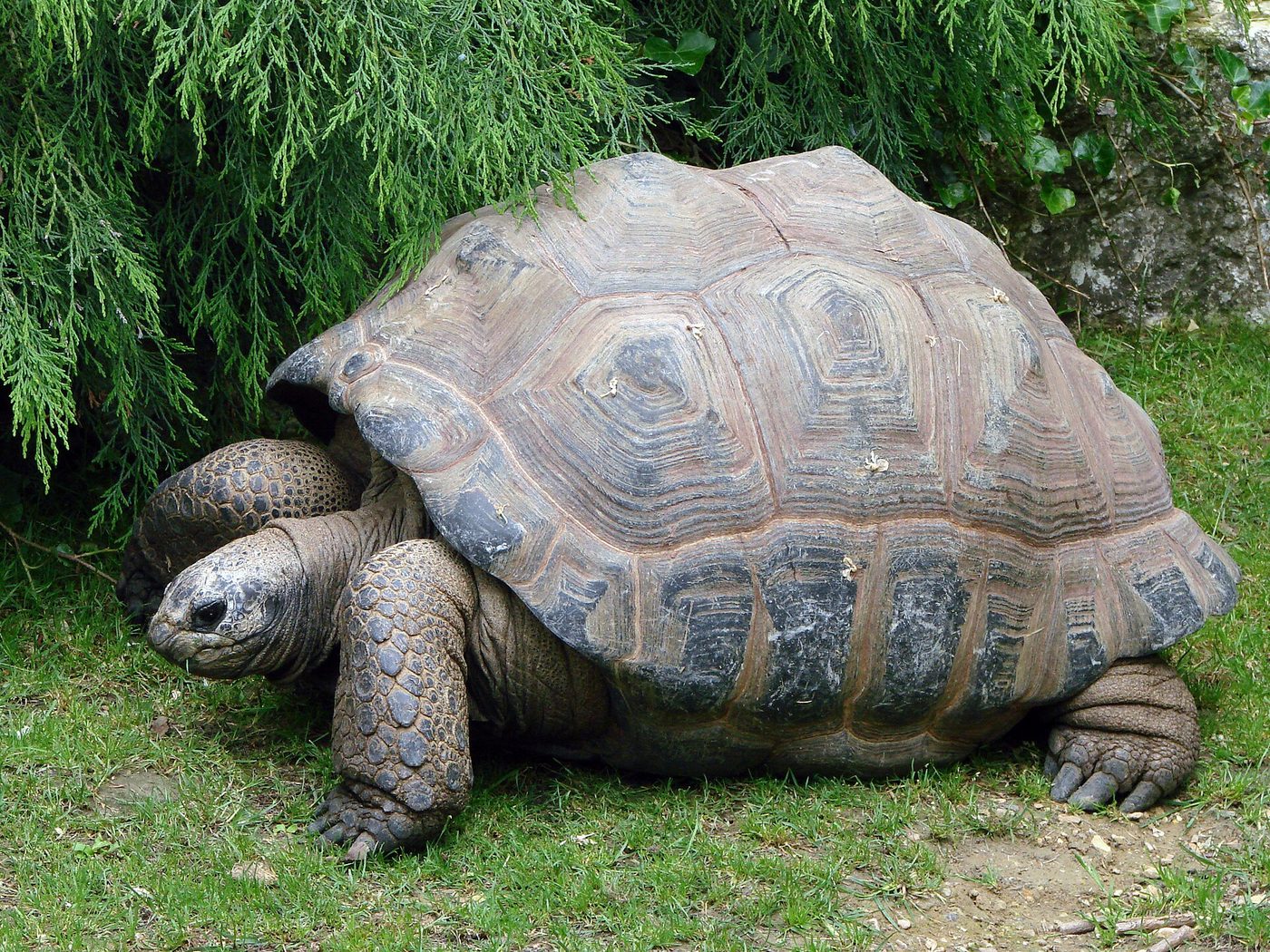
Photo: Vassil · Public domain
Aldabra giant tortoise
Aldabrachelys gigantea
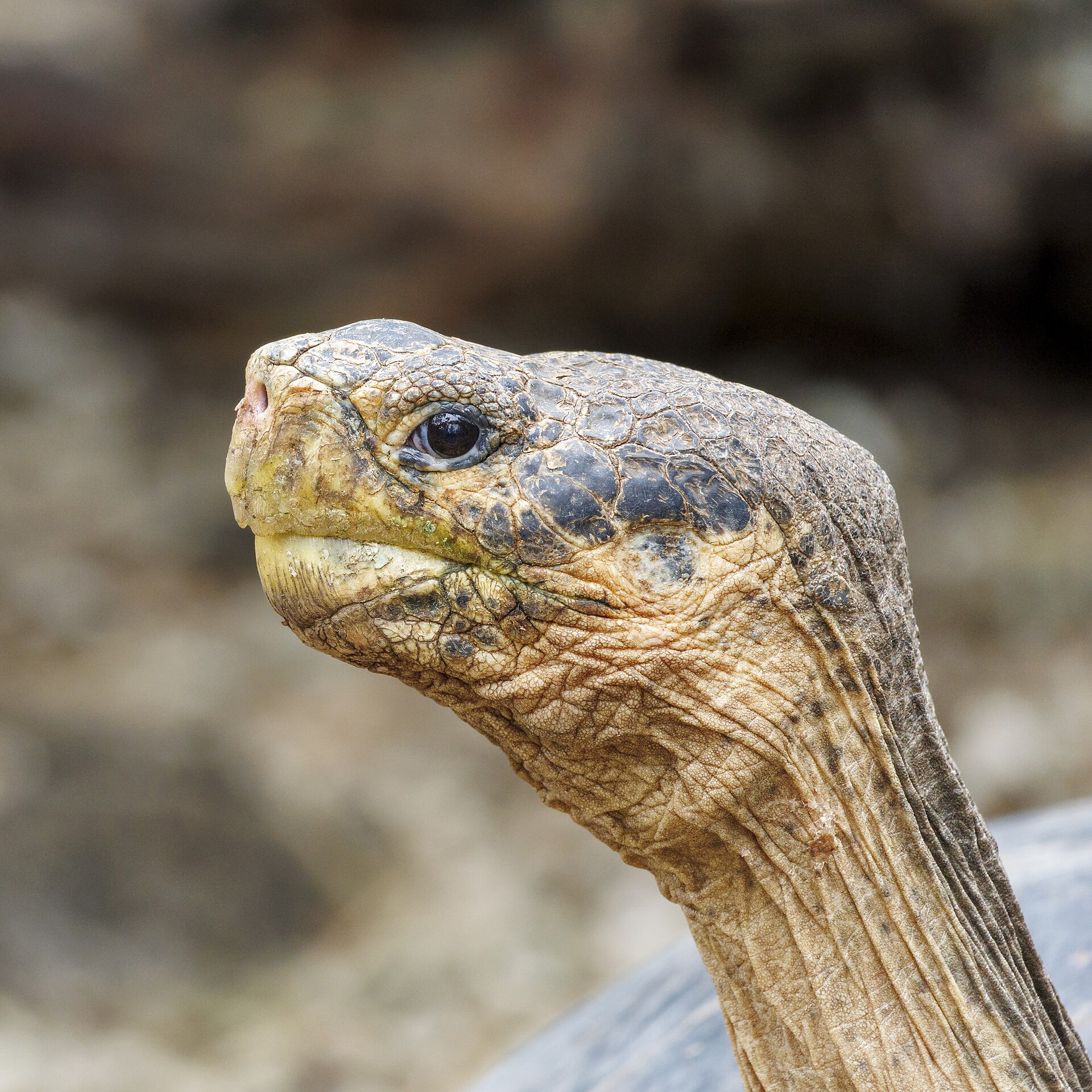
The Aldabra giant tortoise is one of the largest and longest-lived tortoises in the world, the last survivor of the giant tortoises of the Indian Ocean.
Characteristics
Temperament
Placid, slow and long-lived; a herbivorous ecosystem engineer.
Diet
Herbivorous: grasses, leaves and woody plants.
A long-lived giant of the Seychelles
The Aldabra giant tortoise (Aldabrachelys gigantea) is one of the largest land tortoises on the planet: males can exceed 250 kg. It has an imposing, domed brownish-grey shell, massive columnar legs and a long neck that lets it reach higher vegetation. It is an extremely long-lived animal: many individuals pass a century, and some are considered among the oldest land animals in the world.
Habitat and range
It is endemic to Aldabra atoll in the Seychelles, in the western Indian Ocean. Similar giant tortoises once lived on many islands of the region and on Madagascar, but were hunted almost everywhere to extinction by European sailors; the Aldabra tortoise is the main survivor, thanks to the isolation of its atoll.
Behaviour and diet
It is a placid herbivore browsing on grasses, leaves and woody plants. On the atoll it plays a key ecological role, keeping grasslands open through grazing and dispersing seeds: it is regarded as a true ecosystem engineer. In the hottest hours it shelters in shade or pools to avoid overheating.
Did you know?
Thanks to its isolation it has become the living heir of an ancient group of giant tortoises that once occurred on almost every continent. Populations have also been introduced to other Seychelles islands to recreate the ecological role of extinct species.
Conservation
The Aldabra population is now relatively numerous and protected, but remains vulnerable because it is concentrated in a single area: events such as sea-level rise, cyclones or invasive species could threaten it. The atoll is a UNESCO World Heritage Site.
Pros
- Among the largest tortoises in the world
- Extremely long-lived, over a century
- A key ecosystem engineer of the atoll
Cons
- Population concentrated on a single atoll
- Vulnerable to cyclones, rising seas and invasive species
- Very slow breeding and growth