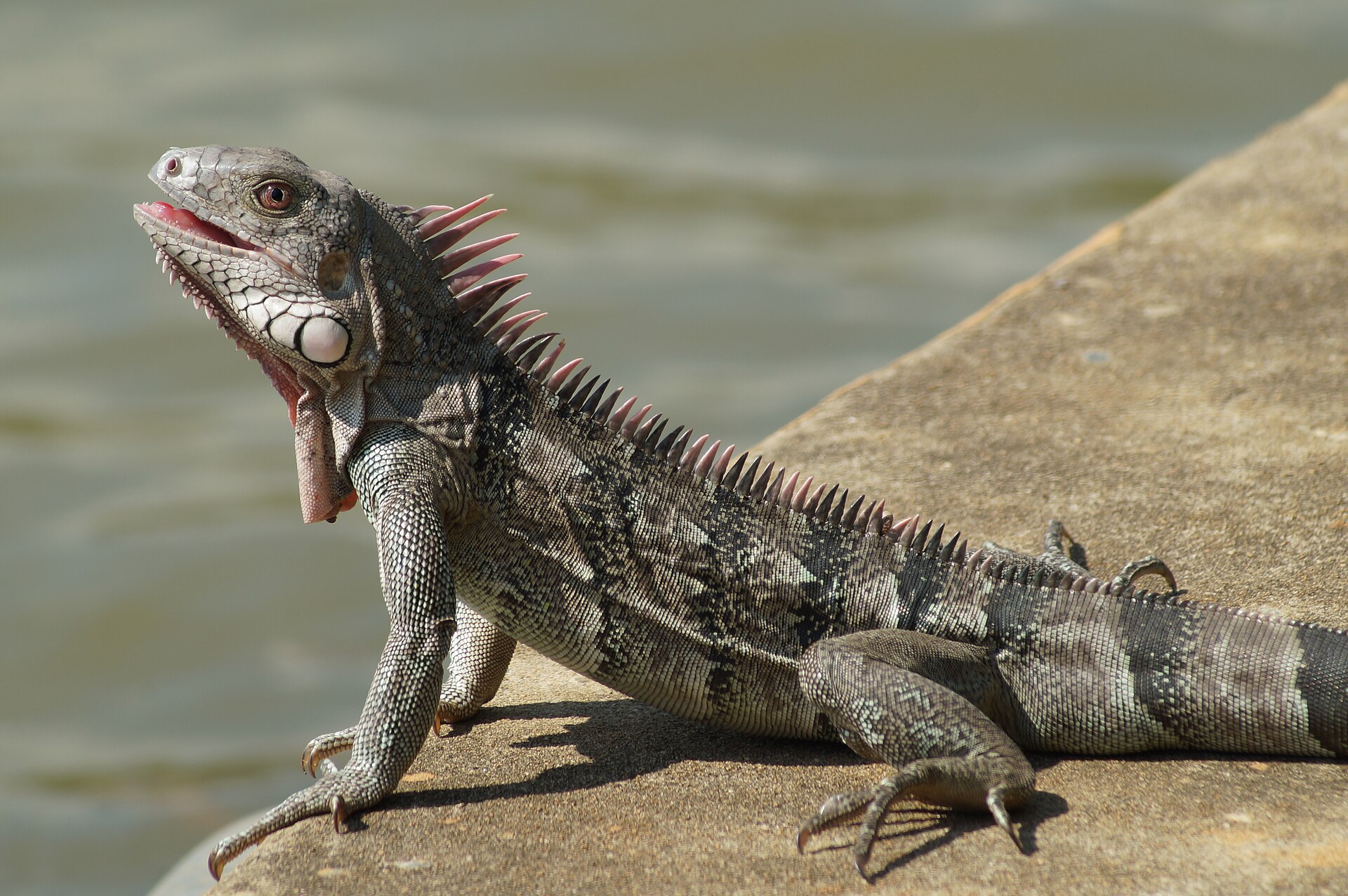
Green Iguana
Iguana iguana
Characteristics
Temperament
Diurnal and thermoregulating. Solitary and territorial; adult males can become aggressive during breeding season. Excellent climber and swimmer.
Diet
Obligate herbivore as an adult: leafy greens (dandelion, chicory, mallow), flowers, small amounts of fruit. Extra calcium and UVB exposure are essential for bone health.
The Green Iguana (Iguana iguana) is a large arboreal lizard native to the tropical forests of Central and South America. Known since pre-Columbian times, it is one of the most widespread lizards in the world, both as a key component of tropical ecosystems and as a terrarium pet. Its bright green coat, long tail and spiny dorsal crest make it one of the most recognisable reptiles.
Classification and category
The Green Iguana belongs to the order Squamata, suborder Sauria, family Iguanidae. It is the best-known species of the genus Iguana, which also includes the Lesser Antillean iguana (Iguana delicatissima). It is a large lizard: total length, including the tail, can reach 1.5-2 m, with an average weight of 4-7 kg in adult specimens. The tail alone makes up more than half of the total length.
Habitat and distribution
The natural habitat of the Green Iguana consists of tropical rainforests, gallery forests along rivers, mangroves and woodlands near watercourses. It spends most of its time in the tree canopy, where it basks in the sun and looks for food. It is also an excellent swimmer and, when threatened, drops directly from the tree into the water to escape.
Its range extends from southern Mexico through Belize, Guatemala, Honduras, Nicaragua, Costa Rica and Panama to South America (Colombia, Venezuela, Ecuador, Peru, Brazil, Paraguay) and the Lesser Antilles. Introduced — and considered invasive — populations exist in Florida, the Cayman Islands and several Caribbean islands. Its conservation status is listed as Least Concern (LC) by the IUCN, but the species is included in CITES Appendix II: international trade is regulated due to constant pressure from the pet trade and from local consumption of meat in its range countries.
Diet
The Green Iguana is strictly herbivorous in adulthood. It feeds on leaves, flowers, shoots, ripe fruit and occasionally berries. Juveniles may supplement their diet with small amounts of animal protein, but as they grow they become obligate vegetarians. In captivity the diet must consist of about 80-90% leafy greens (dandelion, chicory, corn leaves, rocket, mallow), supplemented with small amounts of fruit. Additional calcium and correct UVB exposure are essential to prevent metabolic bone disease, one of the most common pathologies in captivity.
Physical features
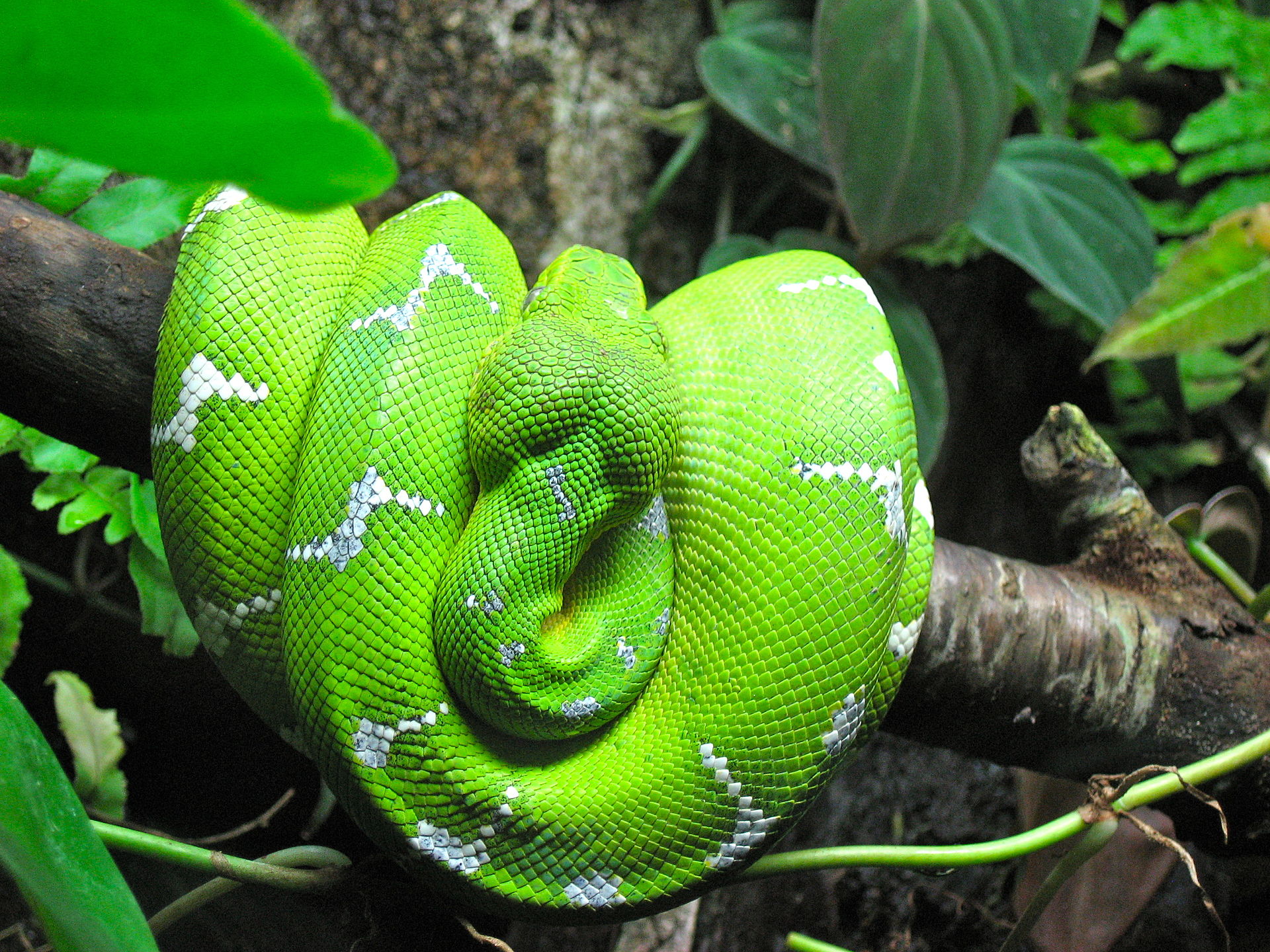
Despite its name, the Green Iguana shows colouring that varies from bright green to bluish grey, brown and orange depending on age, temperature and reproductive state. Along the back runs a crest of spiny scales, particularly developed in adult males. Beneath the throat there is a large dewlap (the "beard"), displayed during courtship and intimidation behaviours.
A unique feature is the parietal eye on the top of the skull, sensitive to light and movement, useful for detecting predators from above. The limbs are sturdy, with long toes ending in sharp claws that allow it to climb with great agility. Males are generally larger and show more prominent submandibular scales.
Behaviour and curiosities
The Green Iguana is diurnal and a thermoregulator: it spends long hours in the sun to reach an optimal body temperature of 30-35 °C. It can shed its tail in an emergency (caudal autotomy); the tail will partially regenerate over time. Communication takes place through head bobbing, dewlap displays and colour changes.
Sexual maturity is reached at 3-4 years; females usually lay 20-70 eggs in holes dug in the ground, which hatch after 90-120 days. Lifespan is about 15-20 years, with documented cases exceeding 25 in captivity. In many regions of Central America it is known as "tree chicken" thanks to a local culinary tradition that uses its meat.
Pros
- Aspetto spettacolare e iconico
- Molto longeva (15-25 anni)
- Non richiede prede vive
- Comportamenti molto osservabili (parate, cambi di colore)
Cons
- Necessita terrario molto grande (almeno 2x1x2 m)
- Maschi adulti aggressivi in stagione
- Gestione della temperatura e UVB complessa
- Malattia ossea metabolica se la dieta non è corretta