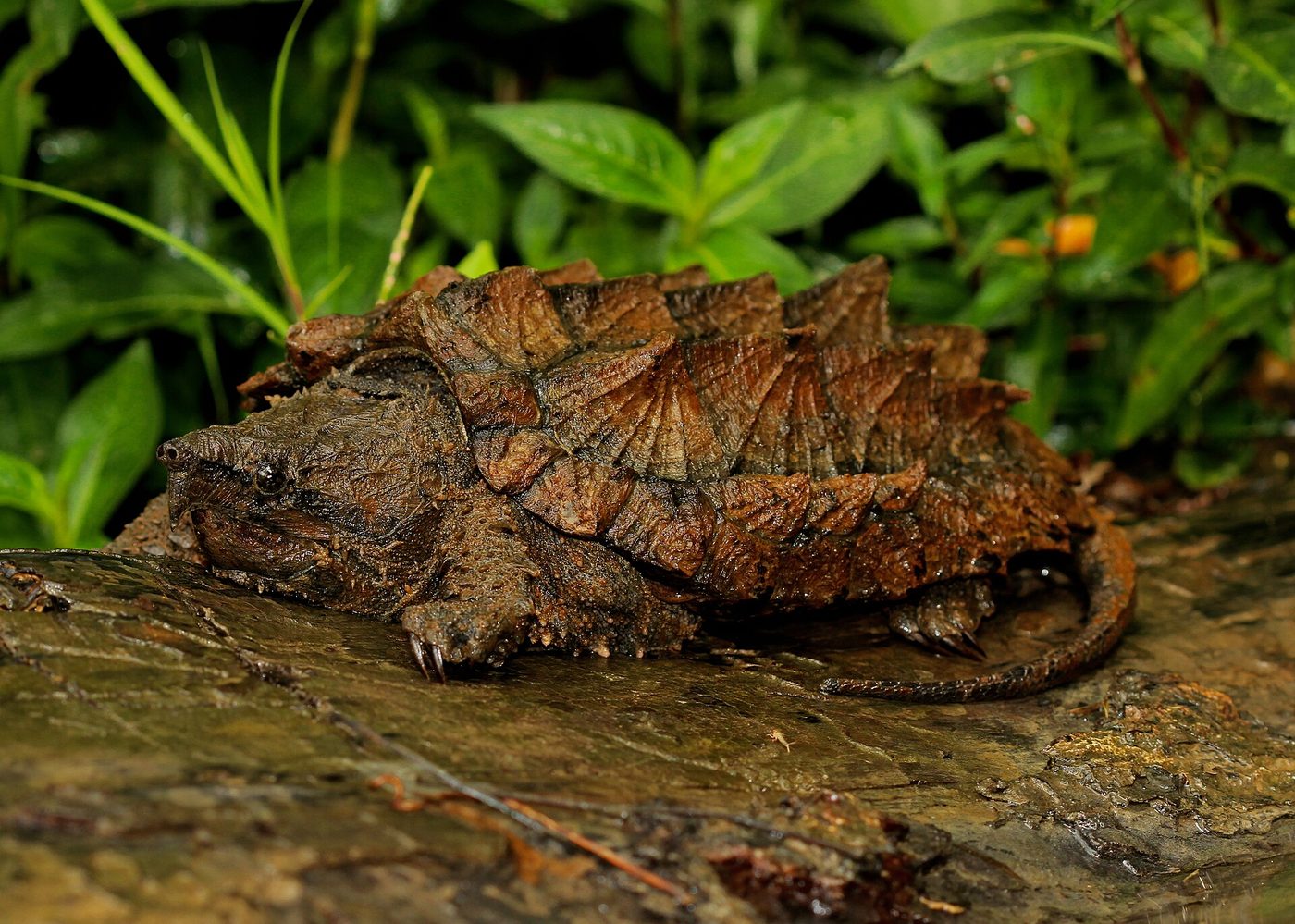
Alligator snapping turtle
Macrochelys temminckii
With its armour-plated shell like a dinosaur's and powerful beak-like jaws, the alligator snapping turtle is the largest freshwater turtle in North America.
Characteristics
Temperament
Aquatic, motionless, ambush hunter
Diet
Carnivore: mainly fish and aquatic animals
A turtle of prehistoric appearance
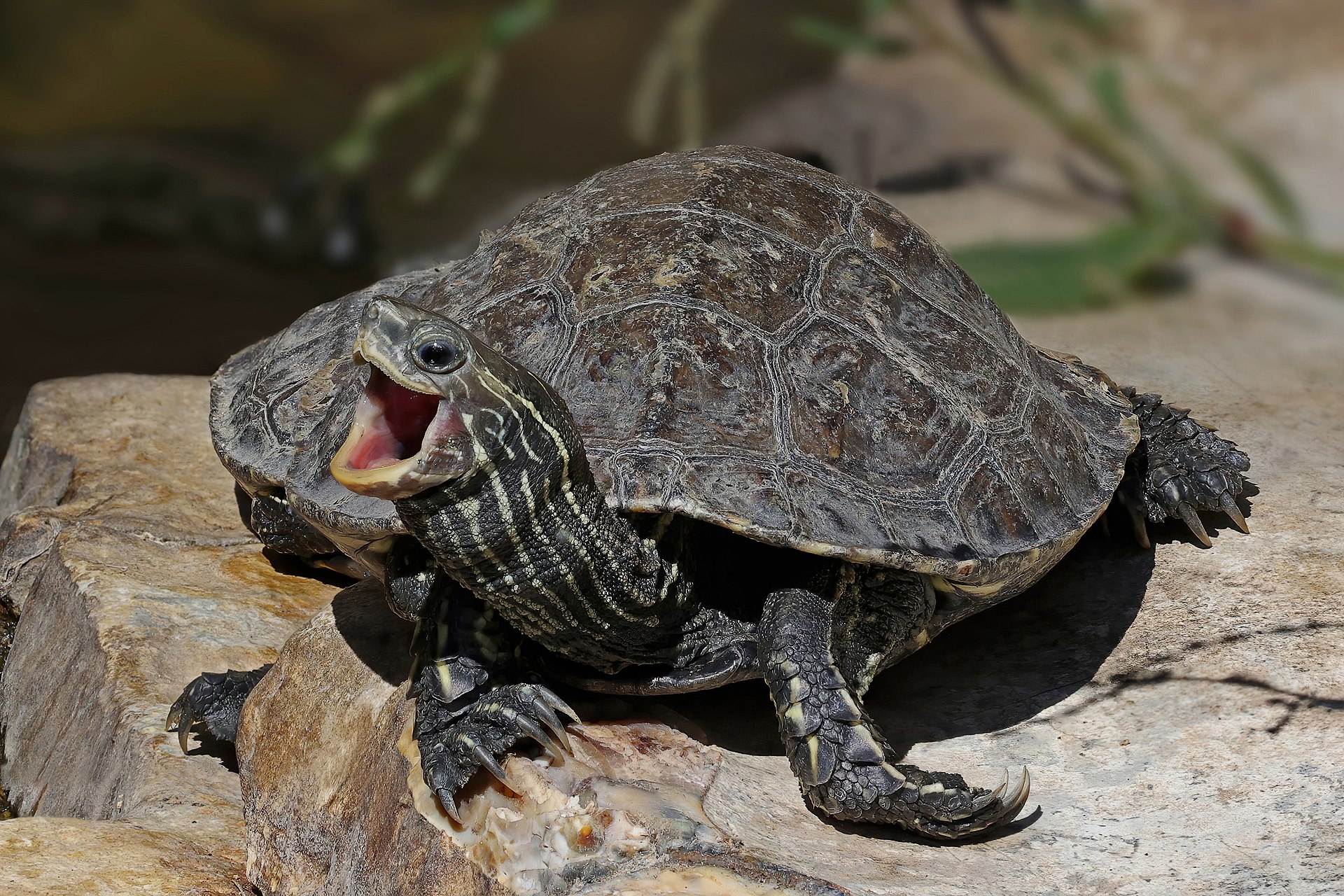
The alligator snapping turtle is one of the largest and most imposing turtles in the world, as well as the largest freshwater turtle in North America. Its shell is massive and covered with three rows of large pointed ridges, giving it an armoured, almost prehistoric appearance, like that of a small dinosaur. Its head is large, with powerful jaws ending in a sharp beak capable of a formidable bite. Its skin is a dark grey-brown, often covered with algae that increase its camouflage.
Habitat and distribution
It is endemic to the fresh waters of the south-eastern United States, where it inhabits rivers, lakes, swamps and canals with slow, muddy waters. It spends much of its life on the bottom, almost motionless, and comes up to the surface only to breathe. It is an extremely long-lived species, which can live for many decades.
The living 'fishing rod'
The most fascinating feature of the alligator snapping turtle is its hunting technique. On the floor of its mouth it has a pink, worm-like appendage which, holding its mouth open and motionless, it moves with small jerks, perfectly imitating a worm. Fish, attracted by what looks like an easy meal, come closer and enter the gaping mouth: at that point the jaws snap shut with lightning force. It is a true ambush predator, hunting mainly fish, but also other aquatic animals.
Conservation
The alligator snapping turtle is classified as an endangered species. Overharvesting, especially in the past for its meat, and the degradation of aquatic habitats have reduced its populations. It should also be remembered that this is a wild animal with a dangerous bite, not to be handled or disturbed in the wild.
Pros
- The largest freshwater turtle in North America
- Extraordinary worm-like 'lure' on the tongue
- Armoured, prehistoric appearance
- Extremely long-lived
Cons
- Endangered species
- Powerful, dangerous bite
- Threatened by capture and habitat degradation