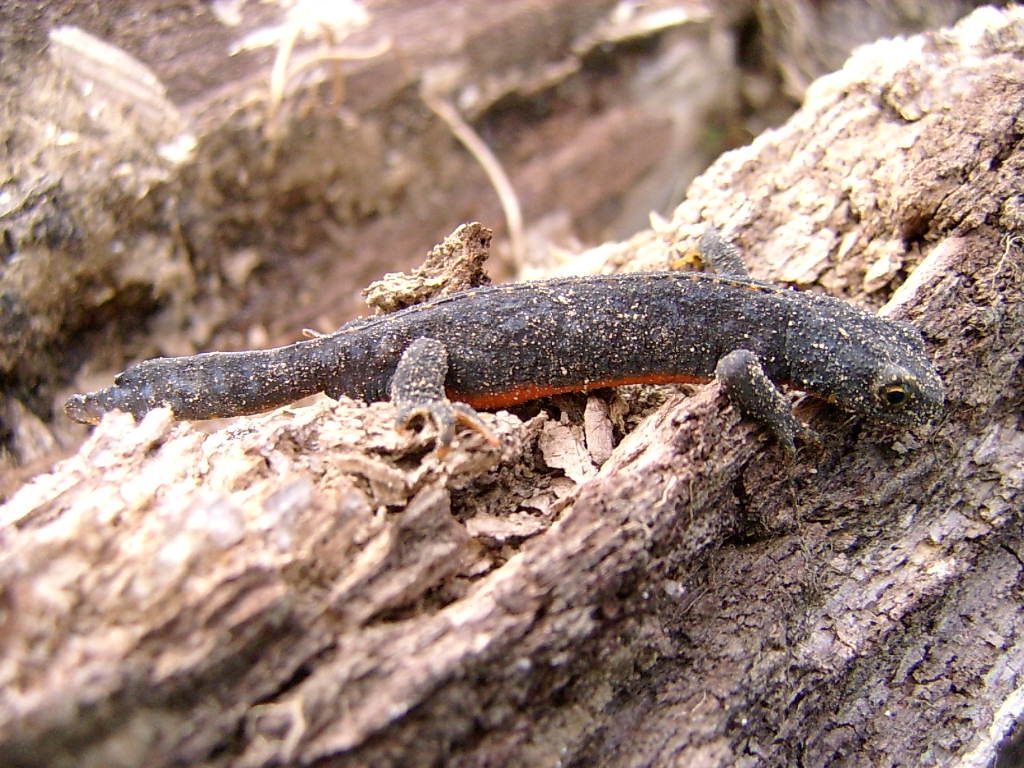
Photo: Kalmar Gabor · Public domain
Alpine newt
Ichthyosaura alpestris
With a vivid orange belly and speckled flanks, the alpine newt is a small amphibian of double life, between the water of ponds and the land of woods.
Characteristics
Temperament
An amphibian of double life: aquatic in spring, terrestrial and nocturnal the rest of the year. Shy and slow, it shelters under stones and in the leaf litter.
Diet
Carnivore: in water tadpoles, insect larvae and small crustaceans; on land insects, earthworms and other invertebrates.
An amphibian of vivid colours
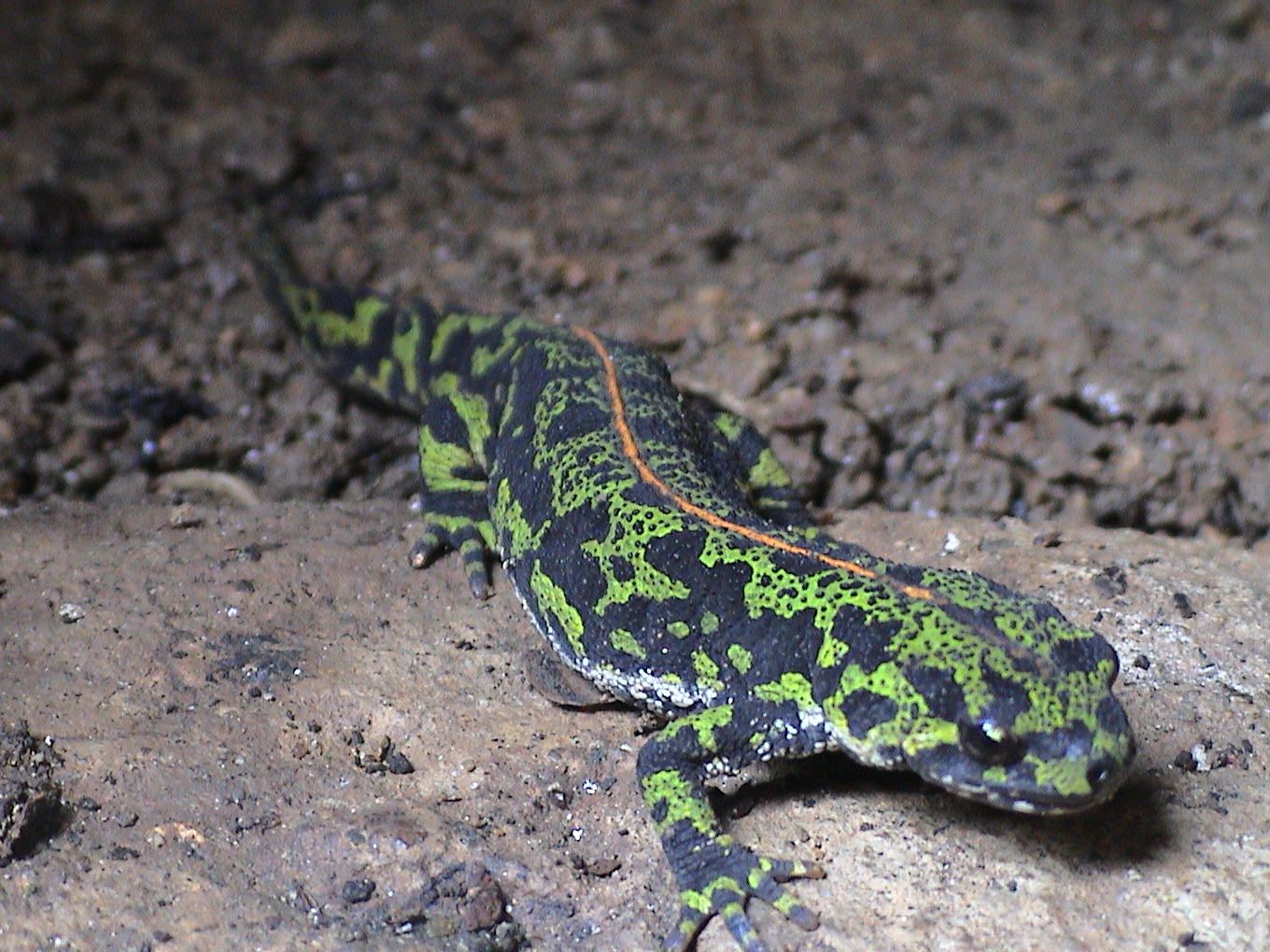
The alpine newt is a small urodele, that is, an amphibian with a tail, of elegant appearance. Its most characteristic feature is its belly of a vivid orange, often unspotted, which contrasts with its darker back. In the breeding season the male turns into a small creature of display: it develops a low dorsal crest of light and dark bands, and its flanks become speckled with white and blue spots. The female is soberer, in brown and greenish tones.
Despite its name, it does not live only in the Alps: it is widespread across much of Europe, from the lowlands to high mountain elevations.
A double life
Like many amphibians, the alpine newt alternates two distinct life phases. In spring it reaches water, where it spends the breeding phase: here it swims nimbly thanks to its flattened tail and develops smoother skin. Once breeding is over, many individuals return to land, where they lead a more hidden, nocturnal life, sheltering under stones, logs and in the leaf litter of damp woods.
Habitat and diet
It favours small bodies of still, cool water free of fish: pools, ponds, troughs, tanks and even small collections of water in gardens. In water it hunts tadpoles, insect larvae, small crustaceans and eggs; on land it feeds on insects, earthworms and other invertebrates. It is a slow but patient predator.
Breeding
During courtship the male performs a true dance before the female, waving its tail to spread its pheromones. The female lays her eggs one by one, carefully wrapping them in the leaves of aquatic plants to protect them. From the eggs hatch aquatic larvae with external gills, which complete their metamorphosis over the summer.
Conservation
The alpine newt is listed as least concern, but like all amphibians it depends on the presence of small, clean wetlands. The loss of pools and ponds, the introduction of predatory fish and water pollution threaten many local populations. Preserving even small bodies of water is essential to its survival.