Photo: Petr Hamerník · CC BY-SA 4.0
Titicaca water frog
Telmatobius culeus
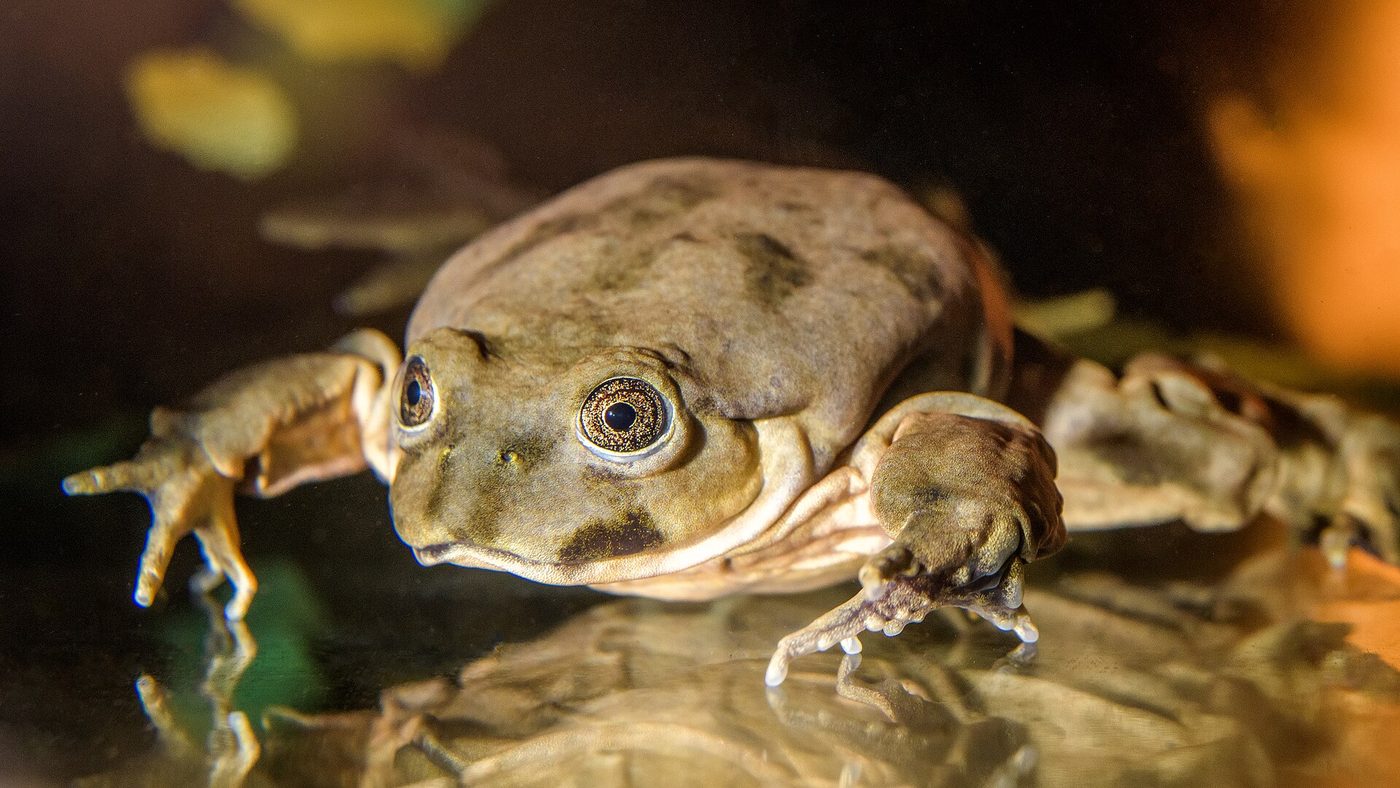
An entirely aquatic, endangered amphibian, the Titicaca water frog breathes through the folded skin that hangs around its body like an oversized cloak.
Characteristics
Temperament
Aquatic, sedentary, with folded skin
Diet
Carnivore: amphipods, snails, tadpoles, small fish
The frog that breathes through its skin
The Titicaca water frog is one of the most unusual amphibians in the world. It lives entirely in water and has a striking feature: its skin is hugely folded and hangs around its body in wide, floppy flaps, like a cloak several sizes too large. This somewhat comical look has earned it the joking nickname of "scrotum frog". The folds are not a mere quirk but a vital adaptation: they increase the skin's surface area, letting it absorb oxygen directly from the water without having to surface to breathe.
Habitat and distribution
It is endemic to the Lake Titicaca basin, the great high-altitude lake between Peru and Bolivia, and its connected waters. It lives on the cold, oxygen-poor beds of this Andean lake, at over 3,800 metres above sea level, where few other amphibians could survive.
Behaviour and adaptations
To cope with the scarcity of oxygen, besides its folded skin it has small, numerous red blood cells and a slow metabolism. It is often seen doing a series of "push-ups" on the bottom to move the water around its body and boost gas exchange. It feeds on amphipods, snails, tadpoles, small fish and aquatic insects.
Curiosities
It is one of the largest entirely aquatic frogs in the world. Sadly it is collected to be blended into a "frog juice", wrongly believed to be a tonic in Andean folk medicine — a practice that, together with pollution, is pushing it towards extinction.
Conservation
The IUCN classifies the species as Endangered. The main threats are lake pollution, collection for consumption, introduced fish species and disease. Captive-breeding programmes are trying to save it.
Pros
- Breathes from the water through its folded skin
- Extraordinary high-altitude adaptation
- Among the largest aquatic frogs in the world
Cons
- Endangered species
- Threatened by pollution and collection for consumption
- Depends on the cold, clean waters of Titicaca