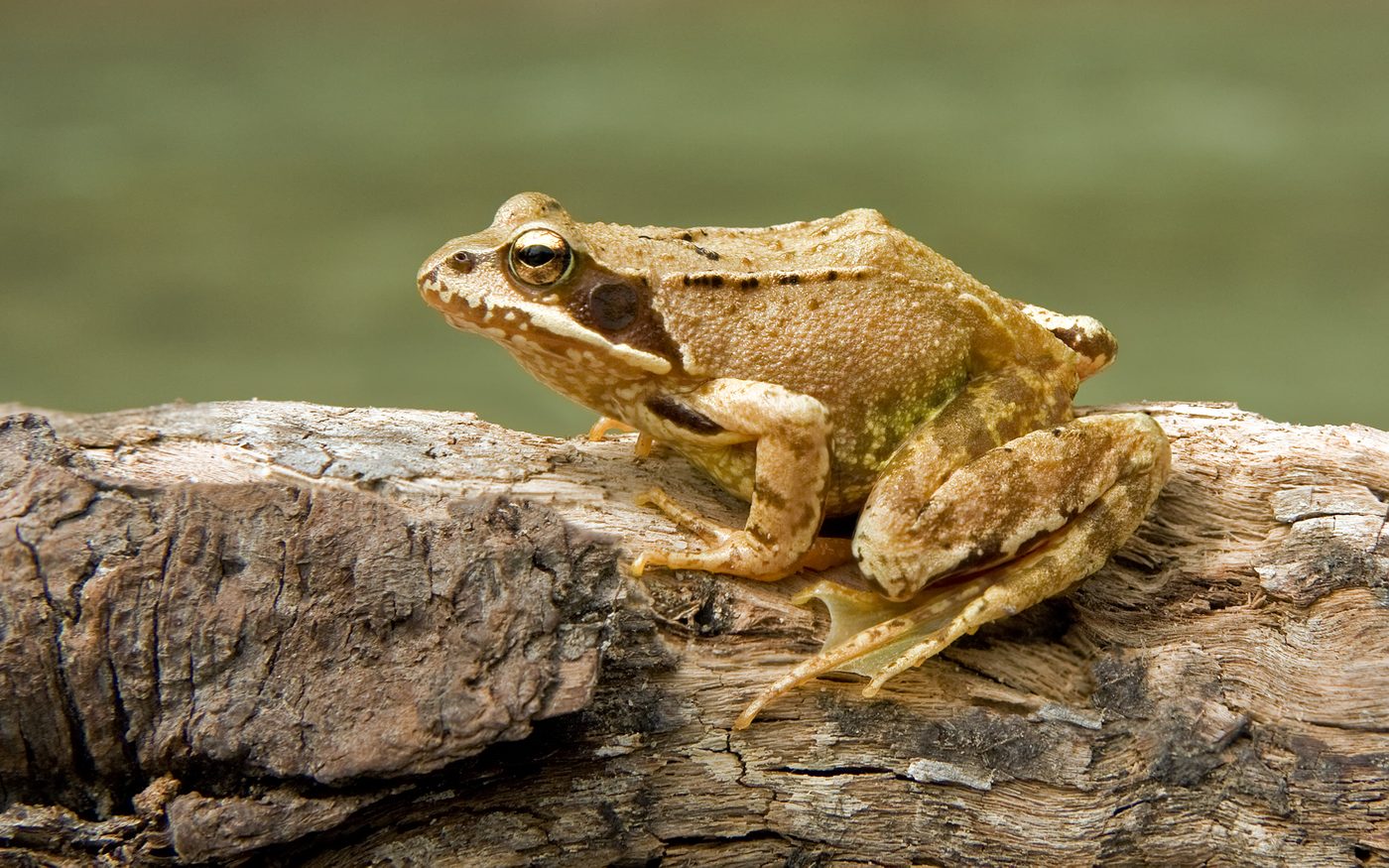
Common frog
Rana temporaria
The most widespread amphibian in Europe: the common frog lives in woods and damp meadows and in spring brings the ponds to life with its spawning.
Characteristics
Temperament
Terrestrial and jumping, active at dusk and by night. It lives away from water for much of the year, returning in spring to breed in large numbers.
Diet
Carnivore: insects, earthworms, spiders and other small invertebrates; the tadpoles feed on algae and detritus.
The frog of our woods
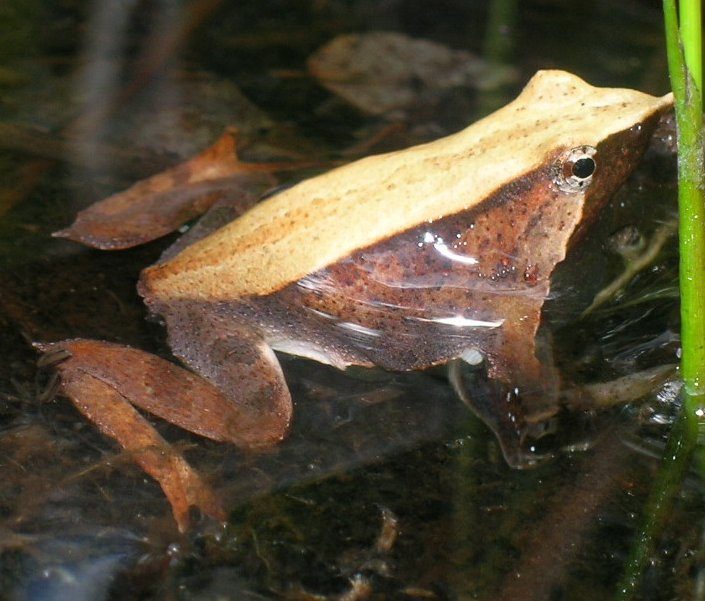
The common frog, or Rana temporaria, is one of the most common and widespread amphibians in Europe. Its colour ranges from brown to reddish to olive, often with dark blotches, which gives it excellent camouflage among leaves and mud. It has a characteristic dark patch behind the eye and a sturdy build. Unlike tree frogs, it has no adhesive discs on its toes: it is a terrestrial, jumping frog that moves with agile leaps.
A life between land and water
For much of the year the common frog lives away from water, in damp woods, meadows, along hedges and in gardens, where it hunts insects, earthworms, spiders and other small invertebrates. It returns to water mainly to breed. It is active especially at dusk and by night, and in cold climates it spends the winter in a resting phase, sheltering under the leaf litter, in mud or in burrows.
The great spring spawning
With the first warm spring days, often all together, common frogs reach ponds and pools to breed. The females lay huge gelatinous masses of eggs, which float in clearly visible clumps. From the eggs hatch the tadpoles, tiny aquatic larvae with a tail and gills, which over the weeks gradually transform: they develop legs, reabsorb the tail and finally leave the water as small frogs ready for terrestrial life.
A link in the food chain
The common frog plays an important role in ecosystems: on one hand it controls the populations of insects and invertebrates it feeds on, on the other it is a vital prey for numerous predators, from birds to snakes to mammals. Its eggs and tadpoles in turn feed many aquatic animals.
Conservation
The common frog is classified as least concern and is still common, but like all amphibians it is sensitive to the loss of wetlands, water pollution and disease. Keeping ponds and pools clean, avoiding pesticides and preserving damp woods are important actions to protect this and many other amphibian species.