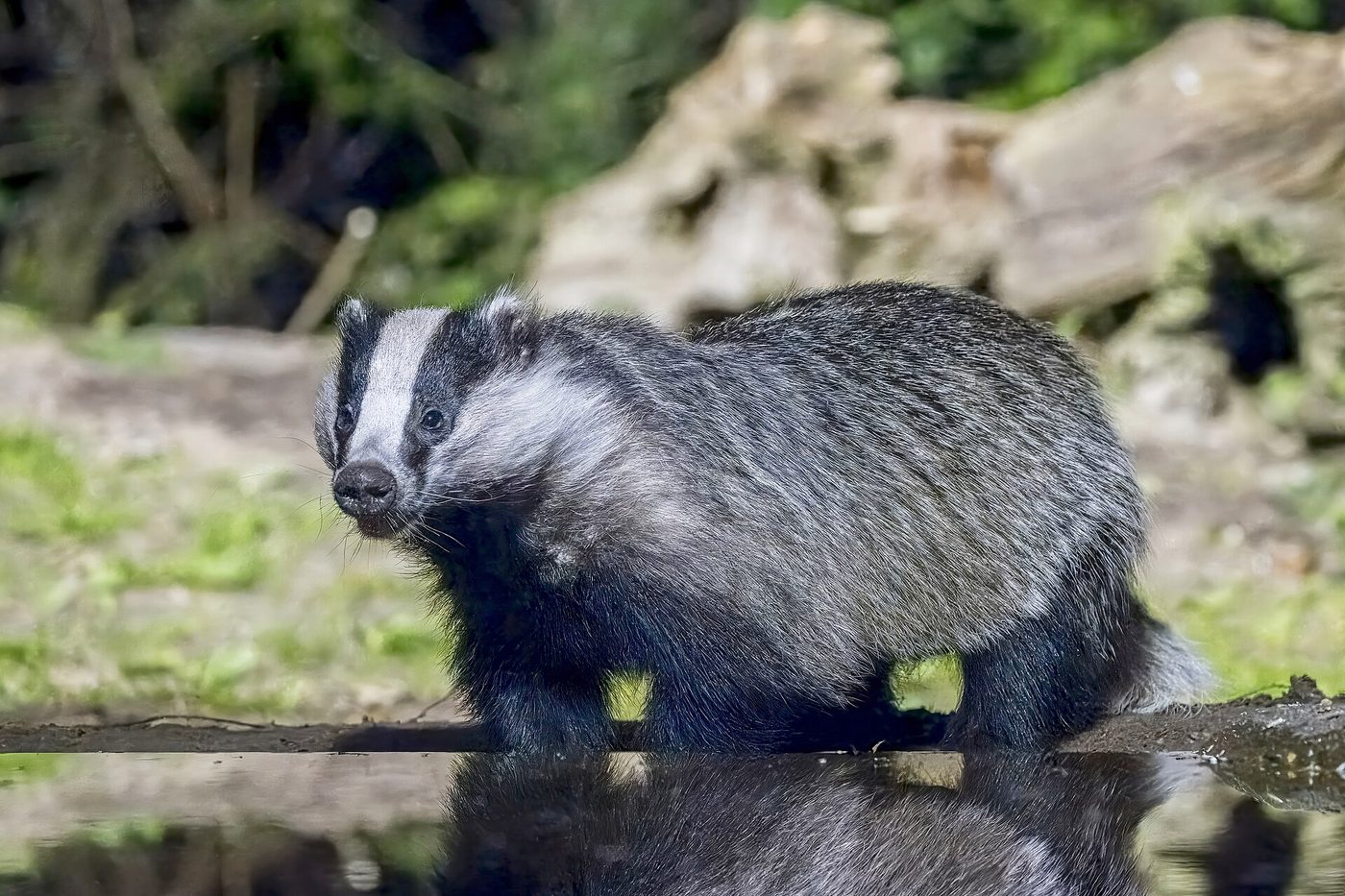
Photo: Charles J. Sharp · CC BY-SA 4.0
European badger
Meles meles
An engineer of the underground and a nocturnal resident of Europe's woods: the badger digs tunnels that can outlast generations, yet is seldom seen.
Characteristics
Temperament
Reserved and cautious, nocturnal in habit. It lives in family groups but avoids people; when cornered it defends itself vigorously, helped by its bulk and claws.
Diet
Omnivore: earthworms for the most part, then insects, small mammals, roots, fruit and acorns according to season.
A mustelid that breaks the mould
The badger belongs to the same family as weasels, martens and otters, the mustelids, yet resembles none of them. Where its relatives are lithe and slender, it is squat and low-slung, built for power rather than speed. The white face crossed by two black stripes that run from the nose and enclose the eyes is unmistakable: no other European animal wears this mask.
The forepaws end in sturdy, slightly curved claws, genuine digging tools. It is with these that the badger reshapes the ground it lives in.
The sett, a collective work
The heart of a badger's life is its den, known as a sett. It is not a simple burrow but a complex of tunnels and chambers that can stretch for tens of metres and house several individuals. The largest setts are enlarged and reused across generations, so much so that some are probably older than the farmhouses around them. The badger is fastidious: it regularly changes its bedding material and keeps latrines set apart from the entrance.
What it eats
Despite its classification among the carnivores, the badger is a broad-tasting omnivore. Earthworms often make up the largest part of its diet, supplemented by insects, small mammals, roots, fruit and acorns. This versatility lets it thrive in woodland and along cultivated edges alike, where food is plentiful.
A nocturnal, social life
The badger emerges from the sett at dusk and spends the night foraging along habitual routes. It lives in family groups that share territory and den, yet forages alone. In colder regions it reduces its activity through winter without entering true hibernation.
Conservation
On a continental scale the badger is in good health and listed as least concern, with wide and stable populations. In many countries, Italy among them, it is a protected species. The main threats stem not from scarcity but from encounters with people: road collisions are a significant cause of death, and in some areas the destruction of setts remains a problem.