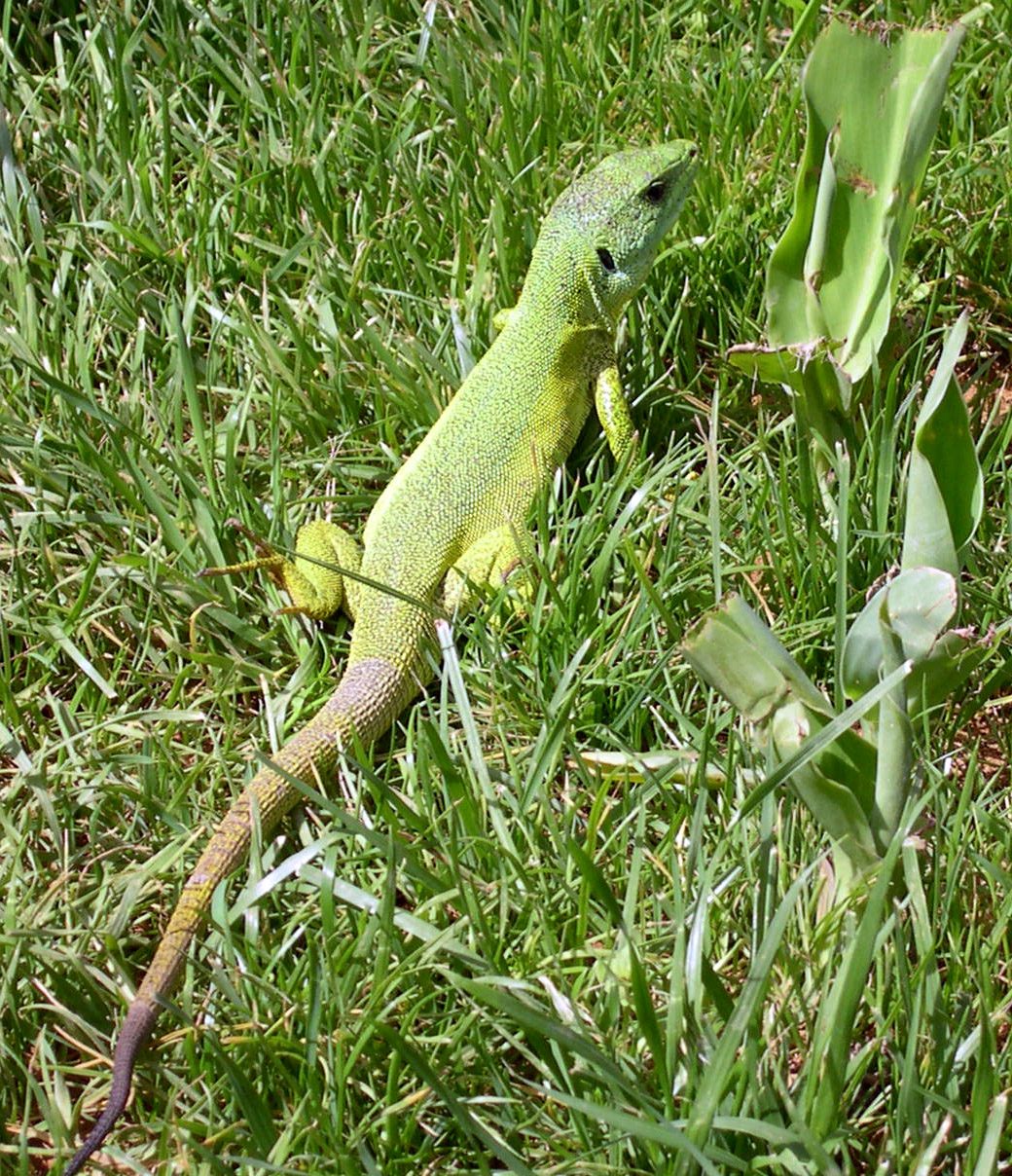
Photo: father of Magalhães · Public domain
Balkan green lizard
Lacerta trilineata
The Balkan green lizard is a large, bright green lizard of the Balkans, agile and lively, fond of basking in the sun among the Mediterranean scrub.
Characteristics
Temperament
Diurnal, agile, shy
Diet
Insects, spiders, snails, small vertebrates and fruit
Description
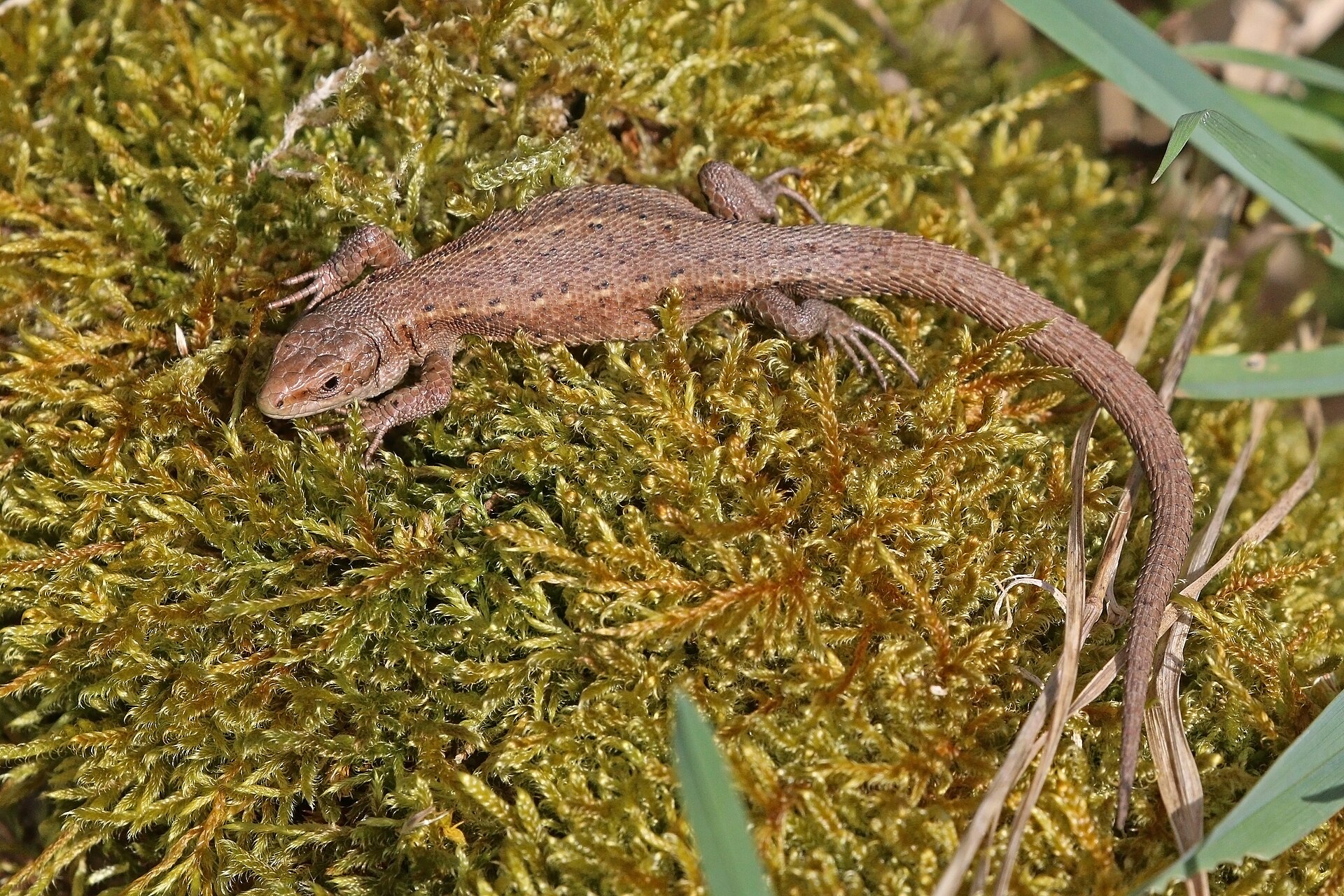
The Balkan green lizard is one of the largest European lizards, belonging to the family Lacertidae. Adults can exceed 40 centimetres including the tail. The body is a bright green, often finely speckled with black, while juveniles are brownish with pale longitudinal stripes. In the breeding season the male develops a vivid blue throat.
Habitat and distribution
It is the most widespread of the Balkan green lizards, occurring from Albania and Greece to Turkey and the Near East. It frequents the warm, sunny habitats typical of the Mediterranean: scrub, thickets, stony slopes, cultivated land, pastures and rural gardens.
Behaviour
It is a diurnal reptile, agile and fast, an excellent climber and runner. It likes to bask in the sun on rocks and low walls before setting off to hunt. It feeds on large insects, spiders, snails and other invertebrates, but also on small vertebrates and, occasionally, on fruit. If seized by the tail, it can shed it to escape; it will regrow shorter.
Did you know?
The male's blue throat in the breeding season signals its condition to rivals and females. Despite its size, it is shy and, at the slightest threat, quickly takes refuge in vegetation or in rock crevices.
Conservation
It is classed as least concern, but suffers locally from habitat loss due to agricultural and urban expansion. Conserving open Mediterranean habitats rich in cover favours its populations.
Pros
- Large and striking green lizard
- Useful predator of insects and invertebrates
- Adaptable to Mediterranean habitats
Cons
- Sensitive to habitat loss
- Shy and hard to approach
- Vulnerable to fragmentation of open habitats