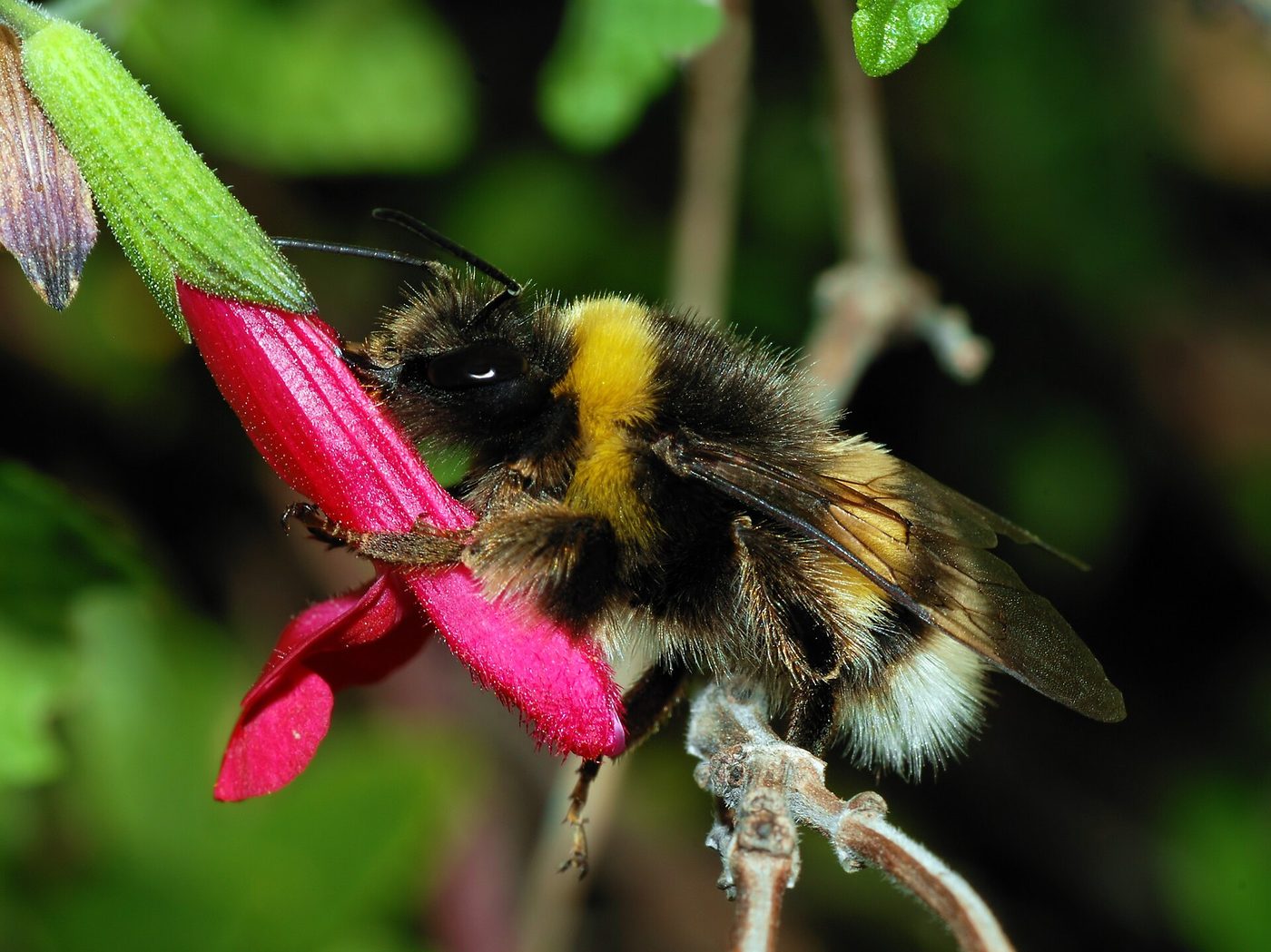
Photo: Alvesgaspar · CC BY-SA 3.0
Buff-tailed bumblebee
Bombus terrestris
The buff-tailed bumblebee is one of Europe's commonest and sturdiest bumblebees, a tireless pollinator recognisable by its buff-tipped abdomen.
Characteristics
Temperament
Eusocial, industrious, not aggressive
Diet
Nectar and pollen from flowers
Description
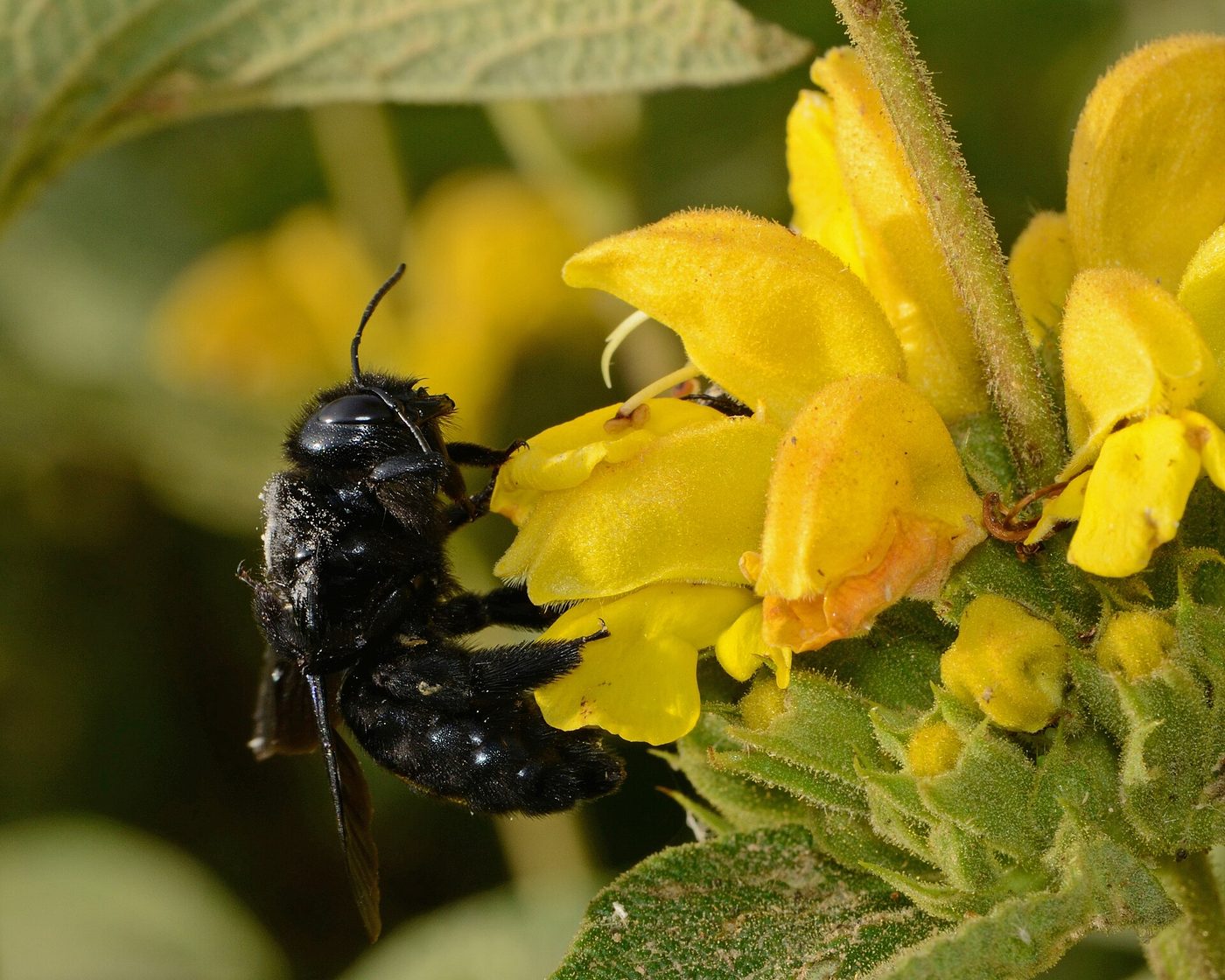
The buff-tailed bumblebee is one of the largest and commonest bumblebees in Europe, a hymenopteran of the family Apidae. It has a black, stocky body covered with dense hair, with two yellow bands and the characteristic buff or whitish tip to the abdomen, which gives it its name. The queen is larger than the workers and has a long proboscis to reach the nectar of flowers.
Habitat and distribution
It is very widespread across much of Europe, but has also been introduced to other parts of the world for pollination. It frequents meadows, gardens, countryside and any flowery habitat, from the lowlands to the mountains. It nests underground, often in the abandoned burrows of small mammals.
Colony life
It is a eusocial insect: it forms annual colonies with division of labour. In spring the young queen, among the first to appear, founds the nest alone; workers then hatch to gather food and care for the brood. Late in the season new queens and males appear, and only the mated queens survive the winter in hibernation.
Role as a pollinator
It is one of the most valuable pollinators: the workers learn to recognise flower colours and forage very efficiently. For this reason it is bred commercially and used to pollinate greenhouse crops, such as tomatoes, thanks to its "buzz pollination".
Did you know?
The buff-tailed bumblebee is among the first insects to appear in late winter. Its commercial spread, however, raises ecological concerns when it is introduced outside its natural range.
Pros
- Tireless and efficient pollinator
- Among the first insects active in late winter
- Not aggressive towards people
Cons
- Annual colonies, all die in autumn except queens
- Commercial breeding can cause ecological problems
- Can sting if disturbed at the nest