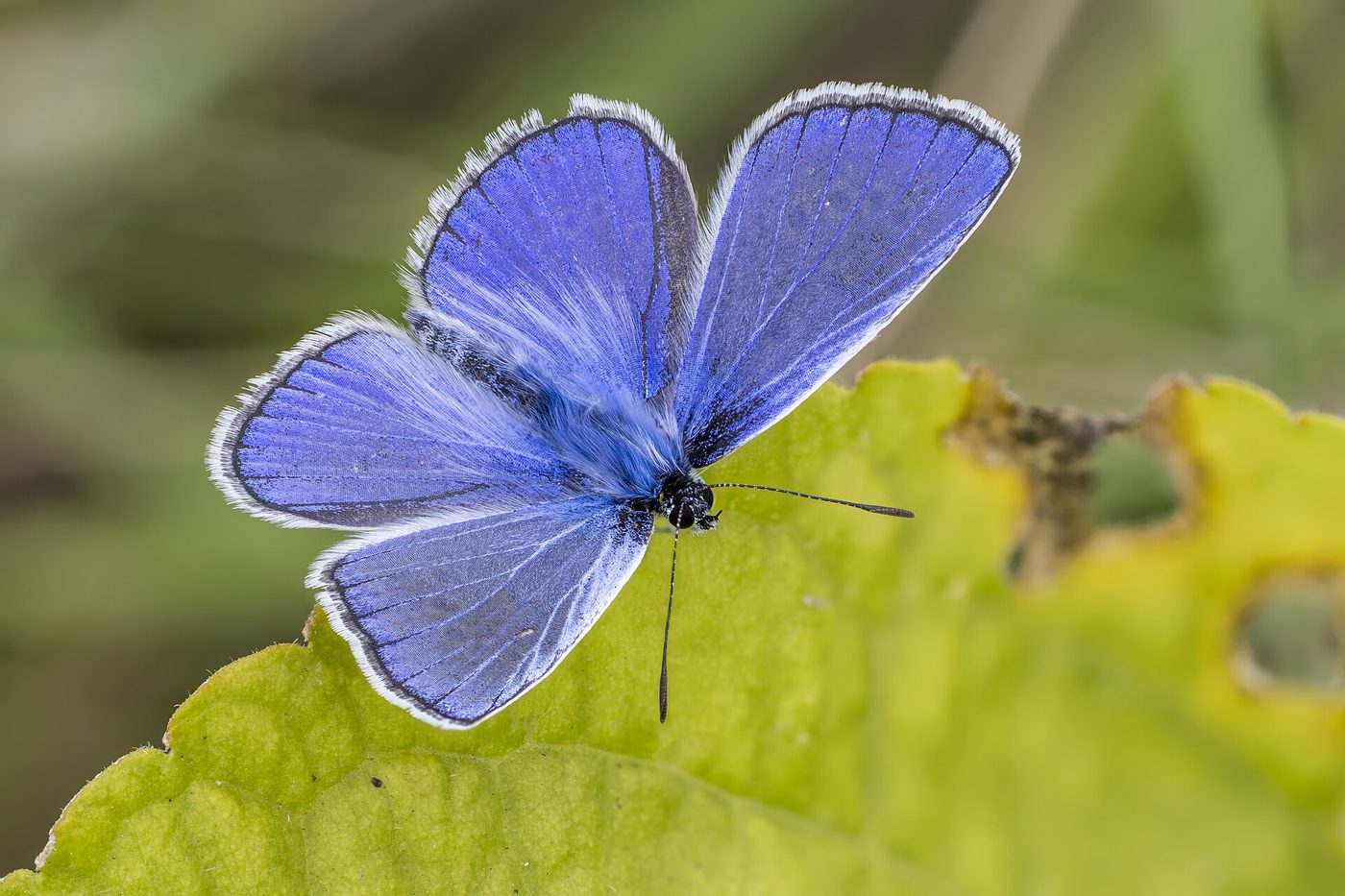
Photo: Charles J. Sharp · CC BY-SA 4.0
Common blue butterfly
Polyommatus icarus
The common blue is one of Europe's most widespread blue butterflies: males flaunt bright blue wings, females brownish tones with orange spots.
Characteristics
Temperament
Lively, diurnal, sun-loving
Diet
Adults: nectar; caterpillars: legumes
Description
The common blue is a small butterfly of the family Lycaenidae, among the most widespread and common in Europe. It shows marked sexual dimorphism: the male has the upperside of its wings a bright, vivid blue edged with dark brown, while the female is mostly brown with a dusting of blue and a row of orange lunules along the margin. The underside, greyish-brown with black spots ringed in white and orange markings, is similar in both sexes.
Habitat and distribution
It occurs throughout Eurasia and North Africa. It frequents open, sunny, flower-rich habitats: meadows, waste ground, roadsides, clearings and gardens. It is a highly adaptable species, found from lowlands to the mountains.
Life cycle
The caterpillars feed on leguminous plants, particularly bird's-foot trefoil and related species. Like many lycaenids, the larvae have a mutualistic relationship with ants: they produce sugary secretions the ants are fond of, and in return receive protection from predators.
Behaviour
The adults fly from spring to late summer, in several generations a year, feeding on flower nectar. It is a lively but unwary butterfly, readily settling to bask in the sun with wings spread.
Conservation
It is a common, unthreatened species, but like all grassland butterflies it suffers from the loss of flowery habitats and pesticide use. Untreated meadows rich in legumes favour its presence.
Pros
- One of Europe's most common blue butterflies
- Useful pollinator of flowery meadows
- Adaptable, present in many open habitats
Cons
- Sensitive to the loss of flowery meadows
- Locally threatened by pesticide use
- Caterpillars depend on legumes