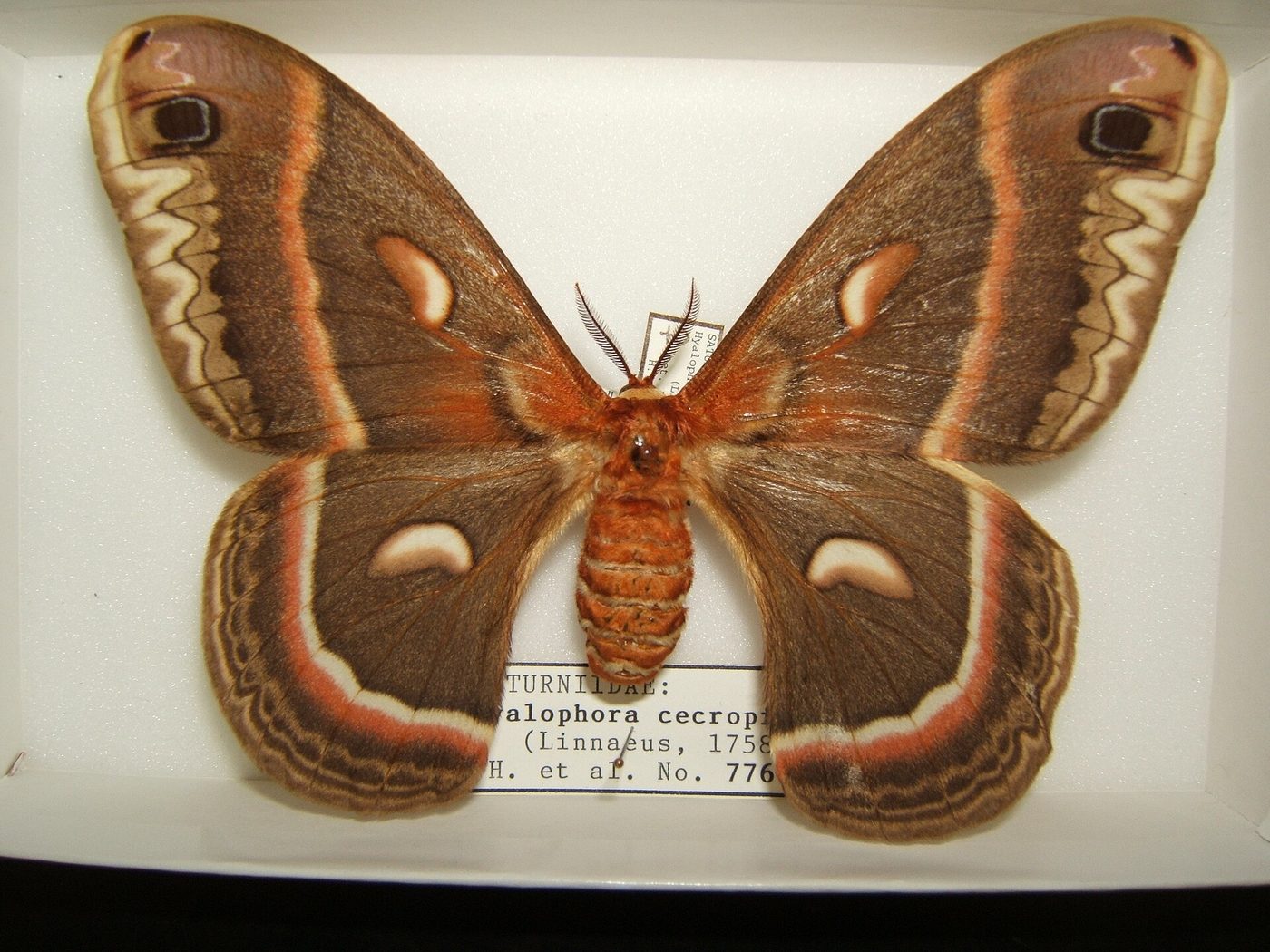
Photo: No machine-readable author provided. Kugamazog~commonswiki assumed (based on copyright claims). · CC BY-SA 2.5
Cecropia moth
Hyalophora cecropia
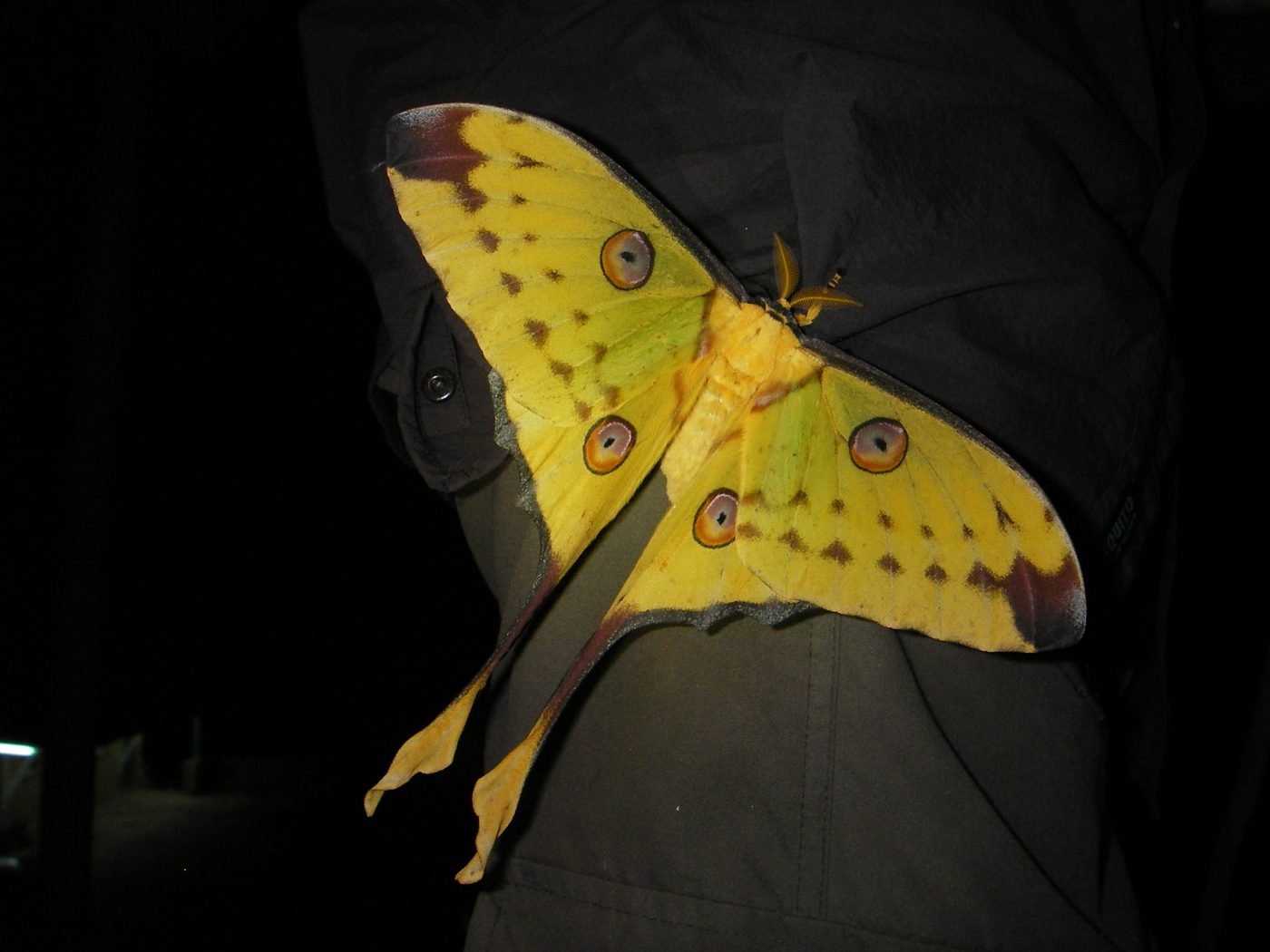
The cecropia moth is North America's largest native moth: a nocturnal giant with brown wings marked by red, white and crescent-shaped bands.
Characteristics
Temperament
Nocturnal and harmless; adults very short-lived.
Diet
Caterpillars: maple, cherry, birch leaves; adults: do not feed.
North America's largest moth
The cecropia moth (Hyalophora cecropia) is the largest native moth in North America, a member of the family Saturniidae, the giant silk moths. Females can reach a wingspan of 15–18 cm or more. Its wings, an elegant grey-brown, are crossed by reddish and white bands and adorned with bold crescent-shaped spots and dark eyespots near the tips; its body is stout and furry, with the abdomen ringed in red and white. It is a masterpiece of soft colours and geometric patterns.
Habitat and range
It lives predominantly in eastern North America, ranging west to Washington state and north into most Canadian provinces. It frequents wooded and open habitats, including urban areas with trees and shrubs.
Life cycle
The large green caterpillars, adorned with colourful tubercles, feed on the leaves of maples, cherries, birches and many other trees. The adults, like all saturniids, have no functional mouthparts: they do not feed at all and live only about a week, just long enough to breed, drawing on the reserves built up as caterpillars. They are active at night.
Did you know?
Males locate females using their large feathery antennae, which can detect pheromones over great distances. The species was first described by Linnaeus in 1758.
Conservation
It has no major species-specific IUCN assessment and is considered widespread across its range. As with many moths, its conservation depends on the health of woodlands and on reducing pesticide use and light pollution.
Pros
- North America's largest native moth
- Wings with spectacular colours and patterns
- Widespread and not threatened
Cons
- Adults very short-lived (about a week)
- Sensitive to pesticides and light pollution
- Depends on broadleaf woodlands