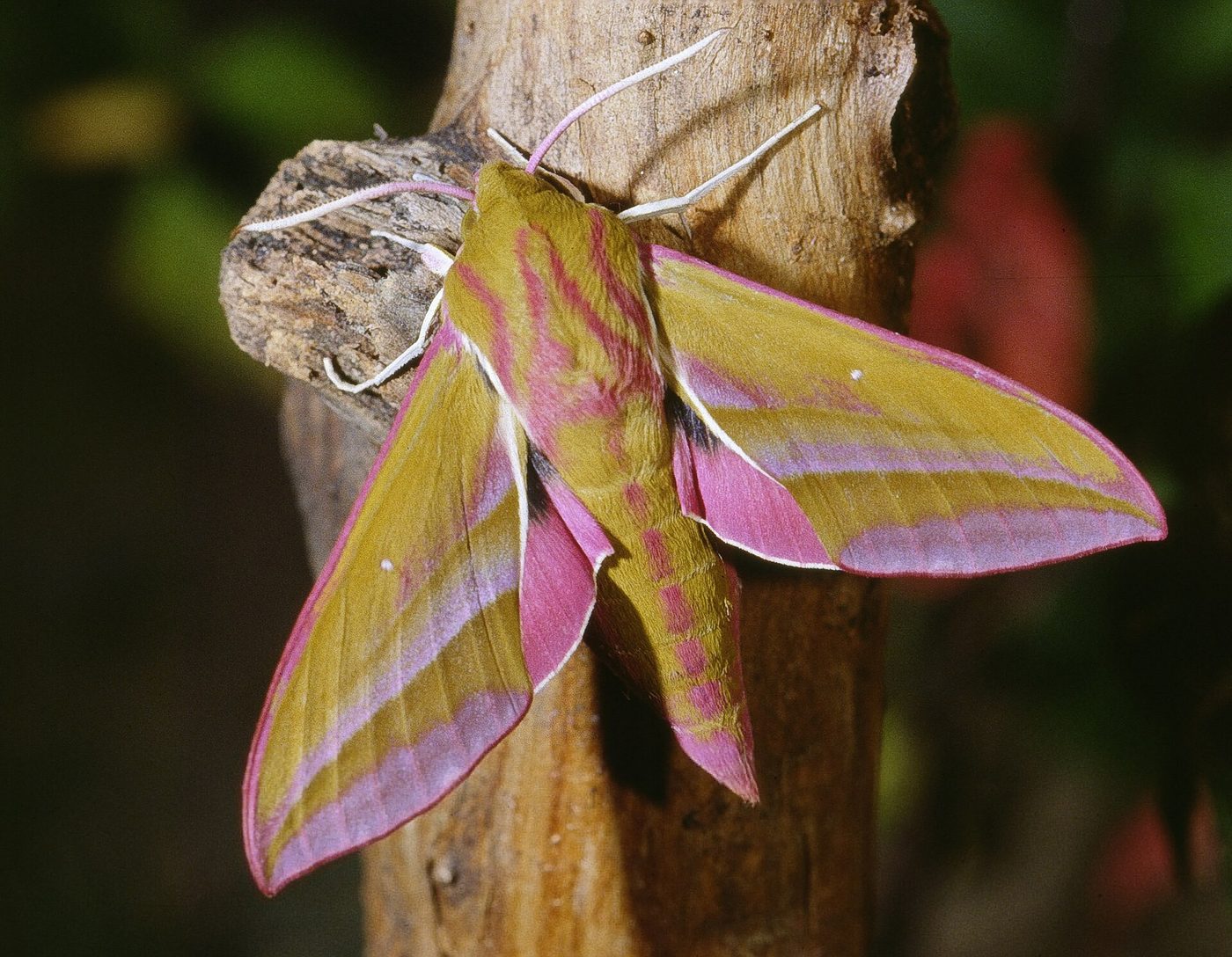
Photo: jean pierre Hamon (14) · CC BY-SA 3.0
Elephant hawk moth
Deilephila elpenor
An elegant Eurasian moth in pink and olive-green, the elephant hawk moth has a caterpillar that mimics a snake to frighten predators.
Characteristics
Temperament
Nocturnal/crepuscular, with hovering flight
Diet
Adult: nectar. Caterpillar: willowherb, vine and other plants
A moth of vivid colours
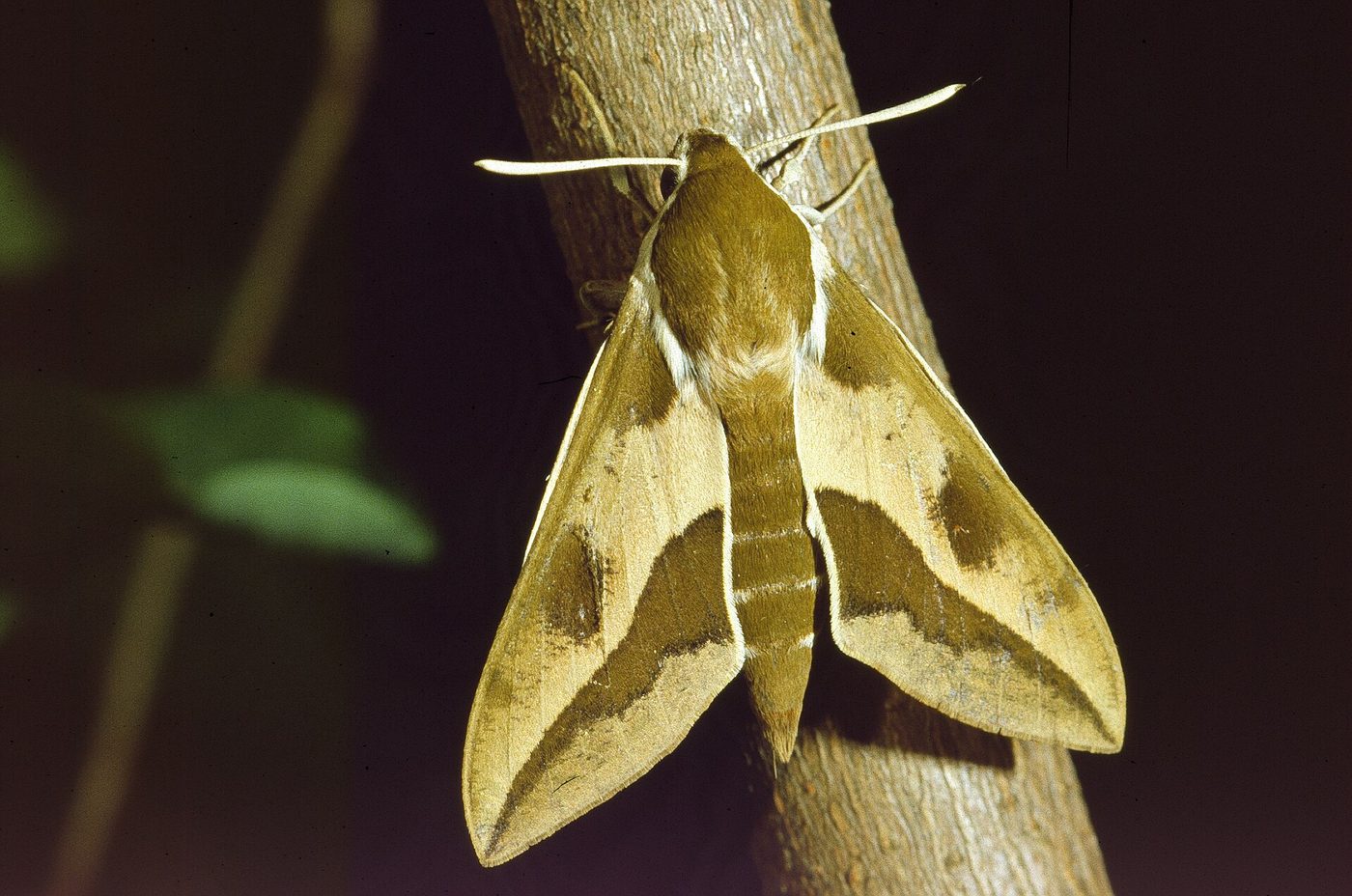
The elephant hawk moth is one of the most beautiful and recognisable moths in Europe. Its body and wings combine bright magenta pink with olive green, in a pattern that looks painted. It belongs to the hawk moth family, the Sphingidae, known for their stout, streamlined bodies and powerful flight. Like many members of this family, it can hover in front of flowers, rather like a hummingbird, while sipping nectar with its long proboscis.
Habitat and distribution
It is widespread across much of Eurasia, from central Europe to Asia, and has also been introduced to North America. It frequents varied habitats — clearings, gardens, wasteland and even urban areas — wherever the caterpillar's food plants are plentiful.
The caterpillar that mimics a snake
The caterpillar is the real star: large and greyish-brown, it bears two big rounded eye-like spots near the front of the body. When threatened, it retracts its head and swells the front, which takes on the appearance of a snake's head ready to strike. This bluff, together with the false eyes, sends many predators fleeing. It feeds mainly on willowherb and on climbing plants including the grape vine.
Curiosities
The name "elephant hawk moth" comes from the shape of the caterpillar, which resembles a small elephant's trunk. The adult is active at dusk and at night, when it visits fragrant flowers. The elephant hawk moth also has exceptional colour night vision.
Conservation
It is a common and widespread species, not considered threatened. As with many insects, habitat loss and pesticide use can nonetheless have local effects.
Pros
- Pink-and-olive colours among the finest of moths
- Spectacular snake-mimicking caterpillar
- Common and widespread, even in gardens
Cons
- The caterpillar may strip favourite ornamental plants
- Active only at dusk and at night
- Sensitive to pesticides and habitat loss