Photo: Wikimedia Commons · Public domain
Wallace's flying frog
Rhacophorus nigropalmatus
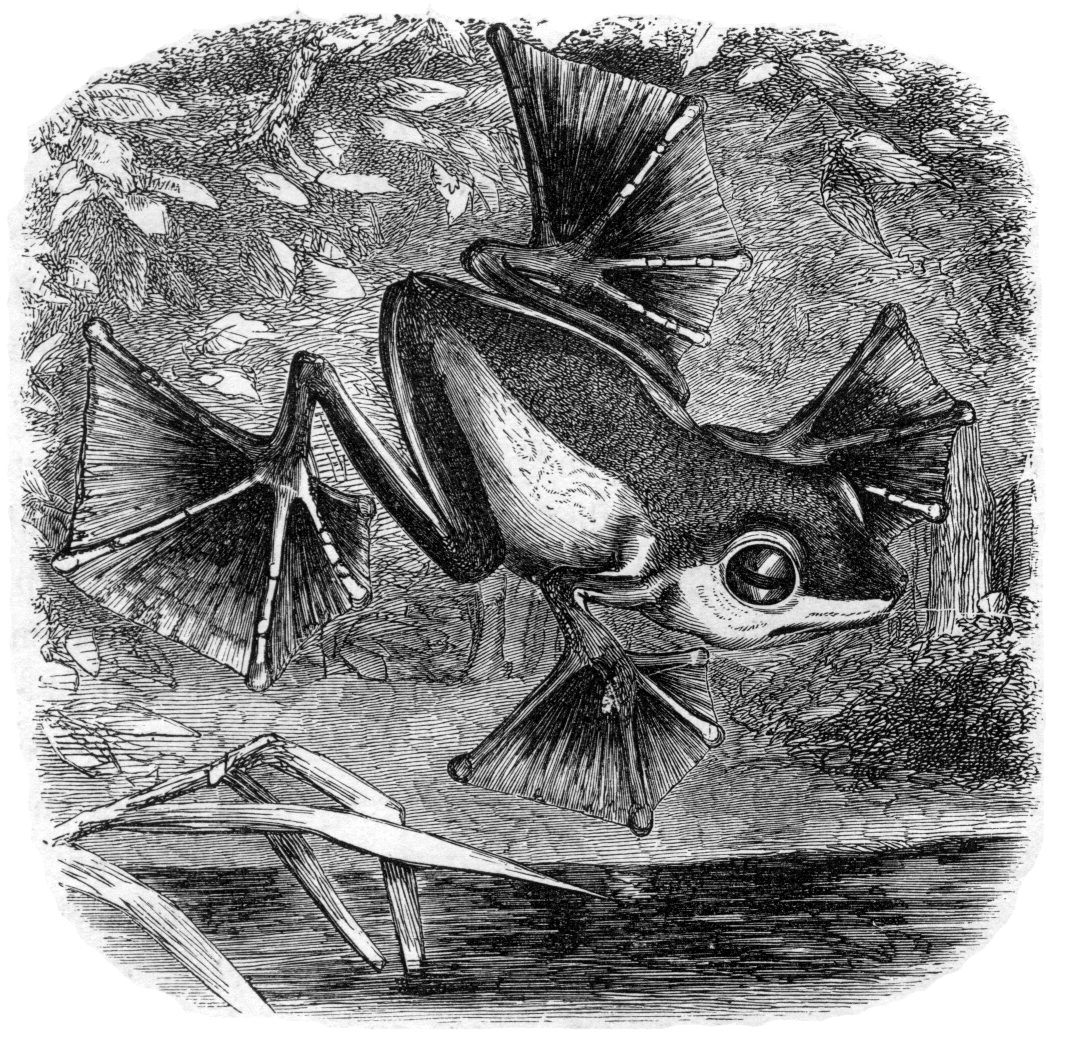
A tree frog of Southeast Asia, Wallace's flying frog glides from tree to tree using huge webbed feet, like a small living parachute.
Characteristics
Temperament
Nocturnal, arboreal, gliding
Diet
Insectivore: insects hunted among foliage
The frog that glides
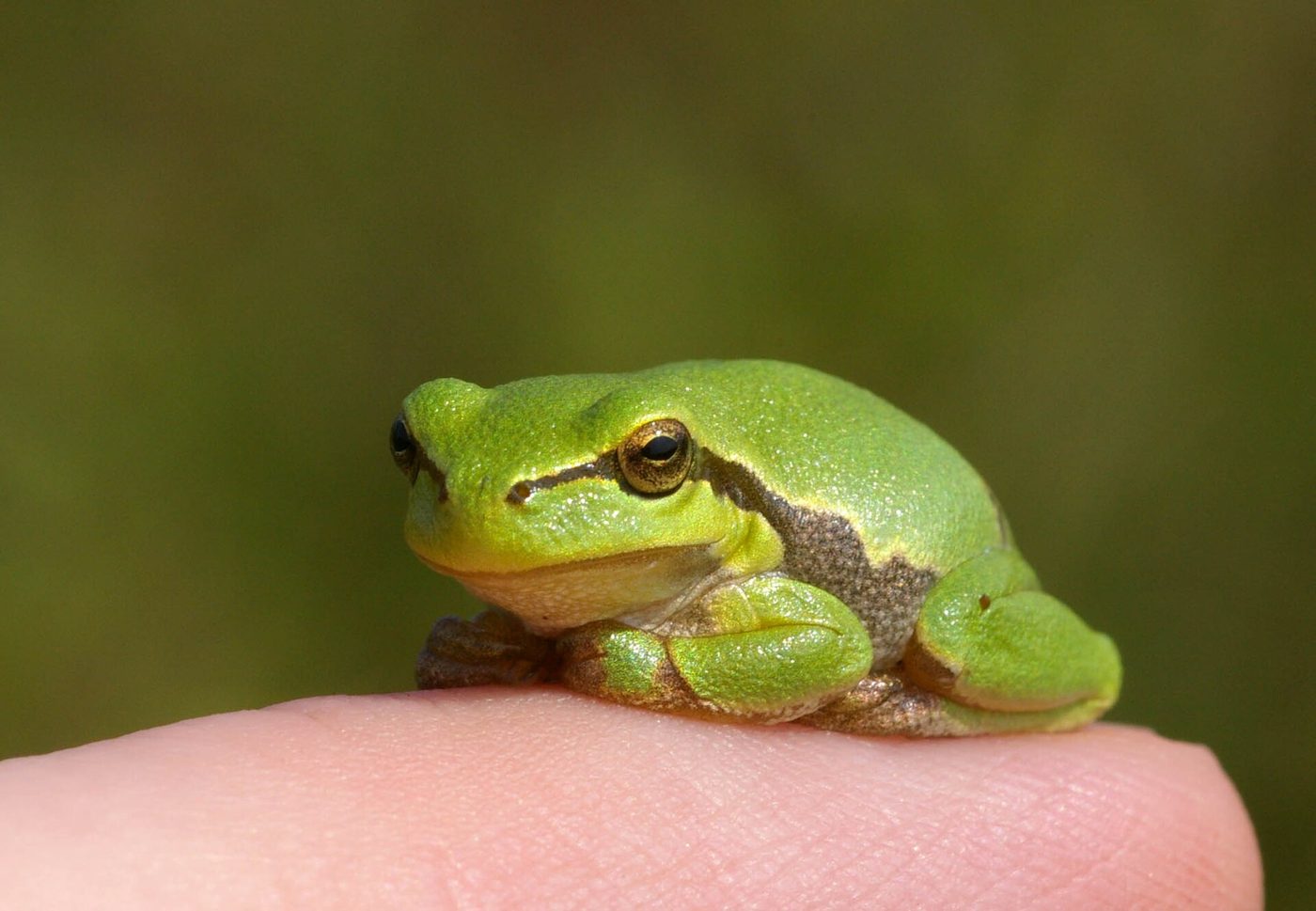
Wallace's flying frog is a brightly coloured tree frog, vivid green on the back with flanks and webbing often marked in yellow and black. Its defining feature is its feet: long toes joined by broad webbing that, when spread, form four small "sails". Flaps of skin along the limbs add to them. When the frog launches into the air from a branch, it splays its feet and uses these surfaces like a parachute to slow its fall and glide, covering distances of fifteen metres or more.
Habitat and distribution
It lives in the tropical rainforests of the Malay Peninsula, southern Thailand, Borneo and Sumatra. It spends most of its life in the trees, rarely coming down to the ground, and moves elegantly from one canopy to another.
Behaviour and reproduction
It is nocturnal and insectivorous, feeding mainly on insects it hunts among the foliage. To breed, pairs build "foam nests": the female secretes a frothy mass, whipped up with the legs, which she attaches to a branch above a pool of water. The eggs develop protected in the foam and, at hatching, the tadpoles drop straight into the water below.
Curiosities
It is named after Alfred Russel Wallace, the naturalist who collected the first known specimen during his explorations of the Malay Archipelago in the mid-nineteenth century. Its "sails" are a classic example of an adaptation for gliding flight, which evolved independently in various tree-dwelling animals.
Conservation
The IUCN lists the species as Least Concern, thanks to its relatively wide range. The destruction of rainforest nonetheless remains a long-term threat to this and many other tree-dwelling species.
Pros
- Glides between trees like a living parachute
- Bright colours and spectacular adaptations
- Wide range, not threatened
Cons
- Depends on intact rainforest
- Not a terrarium animal for beginners
- Nocturnal and elusive, hard to observe